Marketing Strategies for Travel Agents – 12 Strategies to Get More Bookings

By: Frank DePino | July 30, 2026


Loading the Elevenlabs Text to Speech AudioNative Player...
Marketing strategies for travel agents are the tactics used to attract ideal travelers, build trust, generate inquiries, and turn those inquiries into booked trips.
The strongest travel agency marketing plans combine a clear niche, a professional website, SEO, local visibility, email, referrals, social media, paid ads, and consistent follow-up.
The goal is not to be everywhere. It is to show up where your best clients are already searching, browsing, comparing, and asking for recommendations.
Below are 12 practical marketing strategies travel agents can use to grow visibility, bring in qualified leads, and build a more predictable booking pipeline.
What Are the Best Marketing Strategies for Travel Agents?
The best marketing strategies for travel agents combine visibility, trust, lead generation, and follow-up.
Instead of relying on one channel, travel agents should build a simple marketing funnel that helps travelers discover their agency, understand their value, submit an inquiry, and book with confidence.
The 12 most effective strategies are:
- Define your niche and unique selling proposition
- Build a website that turns visitors into leads
- Improve local SEO and Google Business Profile visibility
- Create helpful travel content
- Use email marketing to nurture leads
- Build a review and referral system
- Post consistently on social media and short-form video platforms
- Run paid ads for high-intent searches
- Retarget visitors who are still comparing options
- Promote user-generated content and strategic partnerships
- Use AI for personalization and faster follow-up
- Track the right marketing KPIs
Together, these strategies help travel agents attract the right audience, build trust before the sales call, and turn more inquiries into booked trips.
Is Your Hotel Showing Up in ChatGPT?
Travelers are increasingly using AI tools to research destinations before they ever reach a booking site. See how your hotel appears in these AI-generated answers, where competitors or OTAs may be gaining visibility, and whether there are opportunities to strengthen your presence.
12 Marketing Strategies for Travel Agents
1. Define Your Niche and USP
A strong travel agency brand starts with a clear unique selling proposition. Instead of marketing yourself as a general travel agent, focus on the travelers, destinations, or experiences you know best.
For example, your niche could be luxury honeymoons, family cruises, Disney vacations, Italy itineraries, corporate retreats, destination weddings, adventure travel, or wellness escapes.
Use this simple positioning formula:
I help [traveler type] plan [trip type] so they can [desired outcome] without [common frustration].
Example: “I help busy couples plan luxury honeymoons in Italy so they can enjoy a seamless romantic trip without spending months researching hotels, transfers, and activities.”
This makes your marketing sharper, your content easier to plan, and your sales conversations more persuasive.
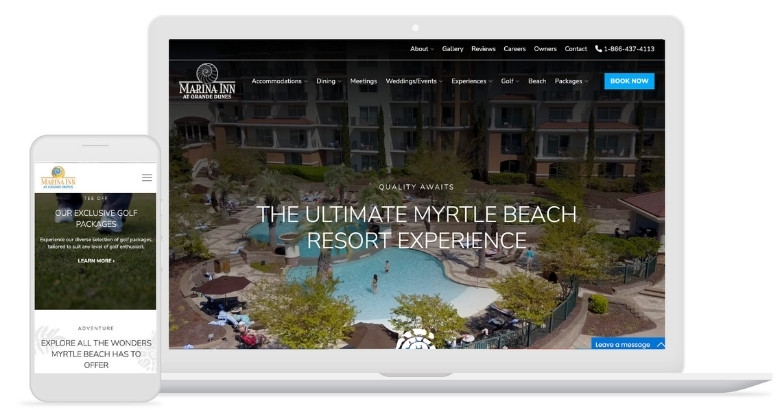
2. Build a Website That Converts Visitors Into Leads
Your website should do more than look polished. It should explain who you help, what trips you plan, why travelers should trust you, and how they can start the booking process.
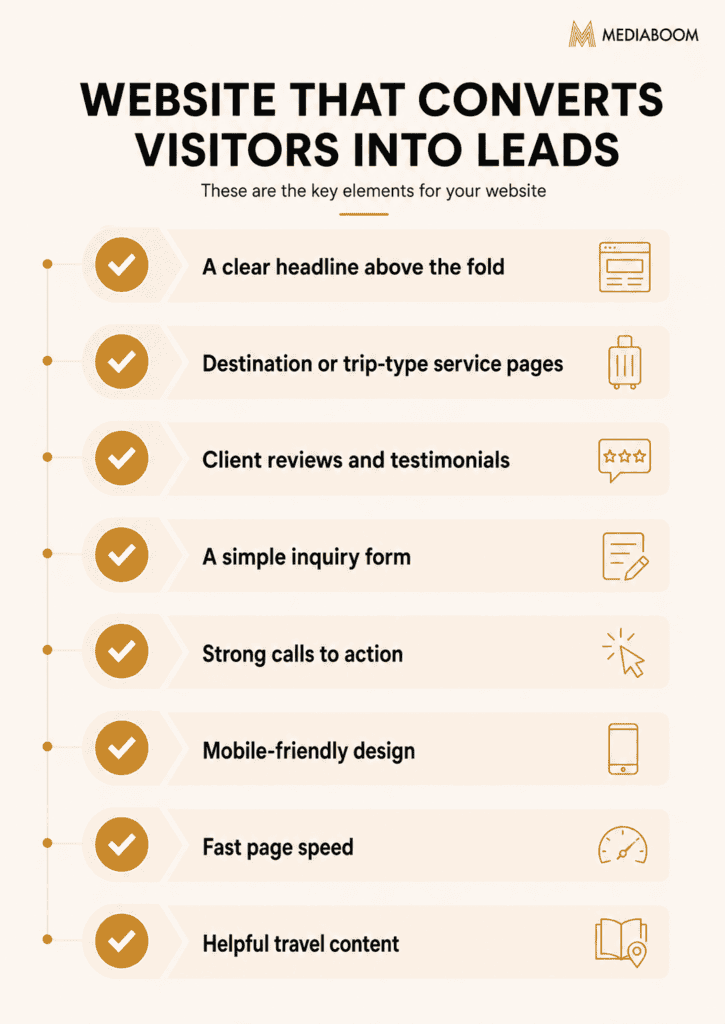
A high-converting travel agency website should include:
- A clear headline above the fold
- Destination or trip-type service pages
- Client reviews and testimonials
- A simple inquiry form
- Strong calls to action
- Mobile-friendly design
- Fast page speed
- Helpful travel content
Make the next step obvious. Use CTAs like “Schedule a Consultation,” “Start Planning Your Trip,” or “Request a Custom Itinerary.”
Travelers are often comparing multiple options. A clean, credible website can be the difference between someone filling out your form or leaving to book elsewhere.
3. Optimize for Local SEO and Google Business Profile
Local SEO helps your agency appear when people search for terms like “travel agent near me,” “travel agency in [city],” or “honeymoon travel planner [location].”
Start by creating or optimizing your Google Business Profile. Google says a free Business Profile can help turn people who find you on Search and Maps into customers, and businesses can personalize their profiles with photos, offers, posts, and more.
Add complete and accurate information, including your business name, service area, phone number, website, hours, photos, services, and booking link.
Google also says complete and accurate Business Profile information can help customers know what you do, where you are, and when they can visit.
Then create location-focused website content, such as:
- “Luxury Travel Agent in [City]”
- “Honeymoon Travel Planner in [City]”
- “Best Cruises From [Nearby Port]”
- “Destination Wedding Travel Agent in [Region]”
This helps capture both local and niche search demand.
Elevate Your Hospitality Brand Today
Schedule Your Free Consultation
Seeking to elevate your business? Let Mediaboom guide you. Secure your exclusive, free consultation with our digital marketing experts today.
4. Create Helpful Travel Content
Content marketing is one of the best long-term marketing strategies for travel agents because it shows expertise before a traveler ever contacts you.
Create content that answers real planning questions, such as:
- Best time to visit a destination
- Cost of a sample itinerary
- Where to stay for different traveler types
- Mistakes to avoid
- 3-day, 7-day, or 10-day itinerary ideas
- Resort, cruise, or hotel comparisons
- Travel checklist by destination
For SEO and GEO, make each article easy to scan. Start with a direct answer, use descriptive headers, include examples, and add practical takeaways.
Instead of writing “Why Visit Greece,” write “7-Day Greece Honeymoon Itinerary: Athens, Santorini, and Mykonos.” Specific content is more useful, more searchable, and more likely to attract qualified leads.

5. Use Email Marketing to Nurture Leads
Not every traveler books the first time they visit your website. Email marketing keeps your agency top of mind until they are ready.
Offer a simple lead magnet, such as a honeymoon planning checklist, cruise packing guide, destination comparison PDF, or “best time to book” guide. Then send a short welcome sequence.
A simple email flow can include:
- Welcome email with your planning process
- Destination inspiration or travel guide
- Client success story or testimonial
- Common planning mistakes
- Consultation invitation
After that, send a monthly newsletter with travel tips, destination spotlights, seasonal deals, and planning reminders.
Email works best when it feels personal and useful, not like a constant sales pitch.
6. Build a Review and Referral System
Travel is trust-based. People want to know that other travelers had a great experience before they hand over their vacation plans.
Ask satisfied clients for reviews after the trip ends. Make it easy by sending a short email with direct links to your preferred review platforms.
Do not offer discounts, gifts, or incentives in exchange for Google reviews.
Google’s policy says reviews should reflect genuine experiences and prohibits incentives such as payment, discounts, free goods, or services in exchange for reviews.
Referral marketing is different. You can create a referral program that rewards clients for sending qualified leads or booked clients, as long as you are not buying or manipulating public reviews.
For example, offer a travel credit, gift card, or small thank-you gift when a referral becomes a booked client.
7. Use Social Media and Short-Form Video
Social media is ideal for travel inspiration. Use platforms like Instagram, TikTok, Facebook, Pinterest, and YouTube Shorts to show destinations, answer planning questions, and build familiarity with your brand.
Post content such as:
- Hotel room tours
- “3 mistakes to avoid in Paris”
- Cruise cabin comparisons
- Destination wedding tips
- Before-and-after itinerary planning
- Client trip recaps
- Packing tips
- “Where I would stay in…” videos
Short-form video works especially well because it turns travel expertise into quick, visual content. Use captions, strong hooks, and clear CTAs such as “DM me ‘Italy’ for help planning your trip.”
Pick one or two platforms where your ideal clients already spend time. Consistency matters more than being everywhere.
8. Run Paid Ads for High-Intent Searches
Paid advertising can help travel agents reach people who are already searching for planning help.
Google Search Ads are useful for high-intent keywords like:
- luxury travel agent
- honeymoon travel planner
- destination wedding travel agent
- family cruise planner
- travel agency near me
- Italy travel planner
Google’s Keyword Planner is designed to help advertisers discover, research, estimate, and plan keywords for campaigns.
Social ads work better for inspiration and remarketing. Use Facebook, Instagram, or TikTok ads to promote destination guides, lead magnets, consultation calls, or seasonal trip packages.
Start with a small budget, test one audience and one offer, then scale what produces qualified inquiries.

9. Retarget Visitors Who Are Still Comparing Options
Travelers often take days or weeks to make a decision. Retargeting helps you stay visible after someone visits your site but does not inquire.
Use retargeting ads to remind visitors about:
- Your consultation offer
- A destination guide they viewed
- Client testimonials
- Limited seasonal planning windows
- Trip planning deadlines
For example, someone who reads your “Italy honeymoon itinerary” article could later see an ad inviting them to schedule a custom honeymoon planning call.
Retargeting works best when it feels helpful, not aggressive. Focus on reminders, social proof, and next steps.

10. Promote User-Generated Content and Partnerships
User-generated content gives future clients a real-world view of the trips you help create. With permission, share client photos, videos, testimonials, and trip highlights.
You can also build partnerships with:
- Wedding planners
- Luxury real estate agents
- Event planners
- Photographers
- Local businesses
- Tourism boards
- Hotels and resorts
- Influencers in your niche
For example, a honeymoon specialist could partner with bridal boutiques and wedding photographers. A cruise advisor could collaborate with local retirement communities or family travel bloggers.
Partnerships work because they put your agency in front of people who already need travel help.
Download Our FREE Guide
Attract More Travelers & Boost Bookings With Our Hospitality Digital Marketing Guide
Uncover how travel brands are using content, SEO, and paid media to reach ideal audiences, build loyalty, and increase direct engagement across the booking journey.
11. Use AI for Personalization and Faster Follow-Up
AI can help travel agents save time without removing the personal touch.
Use AI tools to:
- Segment leads by destination or trip type
- Draft itinerary summaries
- Personalize email follow-ups
- Answer basic website questions through chat
- Identify repeat-client opportunities
- Create first drafts of social captions or blog outlines
The key is to use AI as an assistant, not a replacement for expertise. Travelers still want human judgment, personal recommendations, and problem-solving.
For example, AI can help you draft a follow-up email, but your value comes from knowing which resort, cruise line, or itinerary actually fits the client.

12. Track the Right Marketing KPIs
A travel agency marketing plan should be measured monthly. Otherwise, it is difficult to know what is working.
Track metrics such as:
- Website traffic
- Organic keyword rankings
- Inquiry form submissions
- Consultation bookings
- Email subscribers
- Email open and click rates
- Cost per lead
- Lead-to-client conversion rate
- Referral leads
- Repeat bookings
- Revenue by marketing channel
Do not focus only on likes or followers. The best marketing strategies for travel agents are the ones that create qualified conversations and profitable bookings.

Best Marketing Tools for Travel Agents
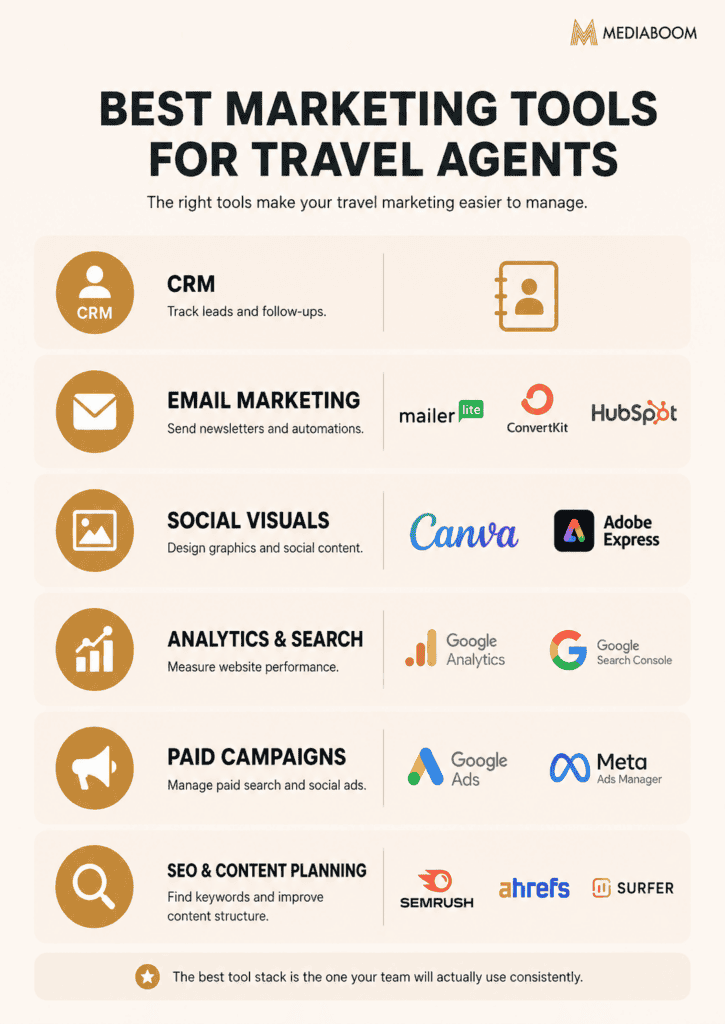
The right tools make your travel marketing easier to manage.
Use a CRM to track leads and follow-ups.
Use an email platform like MailerLite, ConvertKit, or HubSpot to send newsletters and automations.
Canva or Adobe Express for social media visuals.
Use Google Analytics and Google Search Console to measure website performance.
Google Ads and Meta Ads Manager for paid campaigns.
For content planning, tools like Semrush, Ahrefs, or Surfer SEO can help identify keywords and improve article structure.
The best tool stack is the one your team will actually use consistently.
Travel Marketing Case Study Examples
Overland Summers
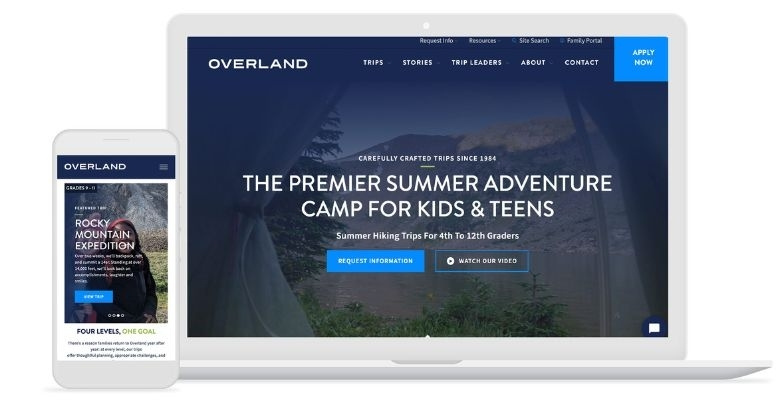
Mediaboom partnered with Overland Summers to build a stronger digital presence for its adventure-based summer programs for students from 4th through 12th grade.
Website Design & Development: Created a custom website that reflects Overland’s adventurous programs and helps families explore trip options with ease.
Custom WordPress CMS: Built a tailored CMS so Overland can update pages, adjust sections, duplicate templates, and manage site content more efficiently.
User Experience & SEO: Restructured the sitemap, improved navigation, and optimized content, meta tags, and descriptions for stronger search visibility.
Facebook Ads: Launched a campaign with targeted messaging and creative visuals to expand reach and drive interest in Overland’s programs.
Results: The campaign delivered a 1,860% increase in leads, 410% more clicks, and 114.7% higher impressions, helping Overland grow engagement and lead generation.
Aspen Luxury Concierge
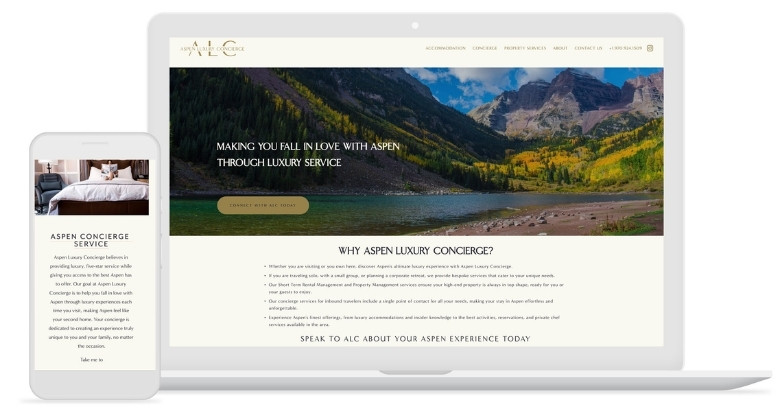
Mediaboom worked with Aspen Luxury Concierge to grow online visibility and attract elite travelers, property owners, and Aspen visitors seeking premium concierge support.
SEO & Content Marketing: Built a targeted keyword strategy to help travelers find Aspen trip-planning content through Google. Within 90 days, six or more keywords reached Google’s top 10 results.
Paid Google Ads: Created campaigns for users searching for Aspen rentals, driving qualified traffic and new conversions.
Email Marketing: Developed a branded newsletter, The Aspen Advisor, to support lead nurturing and client relationships.
Results: Aspen Luxury Concierge saw a 9,530% increase in new organic users, a 50% improvement in average open rate, and a 54% lift in conversions. Organic traffic from new users grew by 118%, supporting stronger lead generation across search and email.
WHAT OUR CLIENTS SAY
FAQs About Marketing Strategies for Travel Agents
I. What is the best marketing strategy for a travel agency?
The best strategy is an integrated funnel: define a niche, build a conversion-focused website, use SEO and content to attract travelers, collect leads through email, and turn happy clients into reviews and referrals.
II. How do travel agents get clients?
Travel agents get clients through referrals, Google searches, social media, email marketing, local networking, paid ads, partnerships, reviews, and helpful content that answers planning questions.
III. How do I advertise a new travel agency?
Start with low-budget, high-intent channels. Optimize your Google Business Profile, create a professional website, run Google Search Ads for niche keywords, post helpful social content, and ask your personal network for referrals.
IV. What should travel agents post on social media?
Post destination tips, hotel tours, itinerary ideas, packing advice, client trip recaps, travel mistakes, seasonal planning reminders, and short videos that answer common traveler questions.
V. Is SEO important for travel agents?
Yes. SEO helps travel agents appear when people search for destination advice, trip planners, local travel agencies, and specific services like honeymoon planning or cruise booking.
Elevate Your Hospitality Brand Today
Schedule Your Free Consultation
Seeking to elevate your business? Let Mediaboom guide you. Secure your exclusive, free consultation with our digital marketing experts today.
Build a Travel Marketing Strategy That Converts
Marketing strategies for travel agents work best when they are clear, consistent, and measurable.
Start with your niche, build a website that turns visitors into leads, create helpful content, and use email, reviews, referrals, social media, and paid ads to support the full booking journey.
As a travel and hospitality marketing agency, Mediaboom helps brands improve visibility, generate qualified leads, and turn digital traffic into real business growth.
Contact Mediaboom to build a marketing strategy that gets your travel agency more bookings.
By: Frank DePino
Frank DePino is the Principal and Founder of Mediaboom, a top hotel marketing agency partnering with leading hotel and hospitality brands. With 30+ years of experience, he has led strategic digital initiatives for names including Four Seasons, Ritz-Carlton, JW Marriott, Millennium Partners, and Guardian Jet. Frank helps hospitality businesses strengthen brand presence, drive qualified leads, and elevate guest experiences through website design, SEO, content marketing, and paid media. Under his leadership, Mediaboom is a trusted partner for brands pursuing measurable digital growth in a competitive hospitality landscape.