Hotel Email Marketing – A Guide to More Direct Bookings

By: Frank DePino | October 23, 2026


Loading the Elevenlabs Text to Speech AudioNative Player...
Hotel email marketing is the use of targeted emails to encourage reservations, offer relevant extras, and bring past guests back. It connects your property with prospective and returning guests through messages based on their interests, booking activity, and stay history.
This email marketing for hotels guide covers how to build your mailing list, plan guest-journey campaigns, and measure bookings rather than just inbox activity.
Is Your Hotel Showing Up in ChatGPT?
Travelers are increasingly using AI tools to research destinations before they ever reach a booking site. See how your hotel appears in these AI-generated answers, where competitors or OTAs may be gaining visibility, and whether there are opportunities to strengthen your presence.
How to Build a Hotel Email Marketing Strategy
Build your strategy by setting a booking goal, growing a permission-based list, connecting guest data, segmenting audiences, mapping campaigns, designing clear emails, and protecting delivery.
1. Choose a Booking or Revenue Goal
When using email marketing to increase direct bookings, hotels should begin with a specific demand gap. Are you trying to fill midweek rooms, recover unfinished reservations, or bring previous guests back?
Choose one audience, one offer, and one success measure.
For example, a midweek campaign could target past business travelers with a relevant package for selected dates. Review availability and package costs with your revenue team before sending, rather than discounting every room to your entire database.
2. Build a Permission-Based Hotel Mailing List
Grow your hotel mailing list through website signup forms, optional booking-stage subscriptions, and invitations at check-in or checkout. Explain what subscribers will receive and let them choose whether to join.
Offer a useful reason to subscribe: a local guide, early access to packages, or updates about experiences that match their interests. Avoid making discounts your only incentive.
Record the signup source, date, consent wording, and preferences. Avoid purchased lists, synchronize marketing unsubscribes across your systems, and keep essential reservation messages separate from promotions.
3. Connect Guest Data With Your Email Platform
Check what your property management system (PMS), customer relationship management platform (CRM), and booking engine can share with your email tool.
For email marketing, hotel industry teams need reservation data, not just email addresses. Prioritize reservation status, arrival and departure dates, booking source, guest preferences, and marketing permission.
Set cancellation updates to stop irrelevant pre-arrival emails. Remove guests from booking-recovery messages once they reserve.
Before launch, test a complete journey using an internal account: subscribe, start a reservation, book, change the dates, and cancel. Check which messages trigger at each stage.
4. Segment by Stay History and Guest Needs
Start with segments you can act on: new subscribers, upcoming guests, previous guests, and people who have not returned within their usual booking cycle.
Then add relevant details, such as stated trip purpose, preferred language, length of stay, or interest in dining and spa experiences.
For example, send an event-weekend package to subscribers interested in that event rather than everyone who previously stayed at the hotel. Use information guests shared or behavior your systems can reliably identify, not assumptions about their personal lives.
Elevate Your Hospitality Brand Today
Schedule Your Free Consultation
Seeking to elevate your business? Let Mediaboom guide you. Secure your exclusive, free consultation with our digital marketing experts today.
5. Map Hotel Email Marketing Campaigns to the Guest Journey
Match each campaign to a guest’s next useful action.
For a direct-booking goal, start with booking recovery when you have enough eligible abandoned reservations and the necessary system connections. Otherwise, begin with a welcome sequence or a relevant return-stay campaign.
Use these timing suggestions as starting points to test, not universal industry benchmarks.
| Campaign and timing to test | Message and main action | Measure |
| Welcome: after confirmed signup | Introduce the property and a reason to book directly | First direct bookings |
| Booking recovery: within hours of an eligible abandoned reservation | Answer common questions and link back to availability | Recovered reservations |
| Pre-arrival: around 3–7 days before arrival | Offer relevant, available extras | Paid add-on revenue |
| In-stay: when relevant during the stay | Share useful services or available experiences | Service requests or add-on sales |
| Post-stay: around 1–3 days after checkout | Thank the guest and request feedback | Feedback completion |
| Return-stay: before the guest’s likely next planning window | Suggest a relevant reason to return | Repeat direct bookings |
| Seasonal newsletter: before the audience typically books | Present a package for dates you want to fill | Attributed room nights |
Send booking confirmations and essential arrival information based on the reservation itself, separately from promotional eligibility.
Booking recovery requires an identifiable contact, permission to send under applicable marketing rules, and a booking engine that supports the trigger. An anonymous website visit alone is not enough.
Build recovery emails around current availability. Never claim a room is being held or a rate is guaranteed unless that is true.
6. Make the Message Easy to Read and Act On
Give each email one main job. Pair a specific subject line with useful preview text, a short message, and a clear call to action.
For a returning-guest campaign, “Your next long weekend, with breakfast included” communicates more than “An exclusive offer awaits.” Use it only when breakfast is genuinely included.
Choose a mobile-friendly, single-column layout with readable text and tappable buttons. Compress images, add descriptive alternative text, and keep prices, dates, and conditions in live text rather than inside a graphic.
Link to the relevant offer or booking page, not a homepage that makes guests search again. Test the complete path on a phone before sending.
7. Protect Delivery and Respect Guest Choices
Ask your provider to verify SPF, DKIM, and DMARC domain authentication. Google’s email sender guidelines require SPF or DKIM for all senders to personal Gmail accounts. Senders exceeding 5,000 daily messages to those accounts face additional requirements, including all three and one-click unsubscribe for marketing messages.
Follow the FTC’s CAN-SPAM guidance for U.S. commercial emails, including truthful sender information and subject lines, a valid postal address, and a clear opt-out process. A previous guest relationship does not automatically make a promotional message transactional.
Check privacy and electronic-marketing rules for the markets you serve, including GDPR where applicable. In the UK, unsolicited marketing to individuals generally requires consent or a qualifying soft opt-in. A previous stay alone does not establish that exception.
Suppress hard bounces and retain unsubscribe records so later imports do not restart unwanted marketing. Review inactive contacts using clicks and booking activity as well as opens.
Is Your Hotel Showing Up in ChatGPT?
Travelers are increasingly using AI tools to research destinations before they ever reach a booking site. See how your hotel appears in these AI-generated answers, where competitors or OTAs may be gaining visibility, and whether there are opportunities to strengthen your presence.
How Can Hotels Reduce OTA Dependence With Email Marketing?
Give guests who discovered your property through an online travel agency (OTA) a clear reason to book their next stay directly, then make that action simple.
Using email marketing to reduce OTAs’ share of repeat bookings starts with an optional marketing signup during the guest relationship. Check your distribution agreements before building these campaigns, and focus on future stays rather than redirecting existing reservations.
Explain genuine direct-booking benefits, such as a package inclusion or a published flexibility benefit, and link to the exact offer.
Compare the economics before adding an incentive. A direct booking is not automatically more profitable if discounts, benefits, campaign costs, and booking fees consume the commission saving.
Track the direct-booking share of returning guests alongside net booking value. The aim is a healthier distribution mix, not abandoning a useful source of new demand.
What Should Luxury Hotel Email Marketing Do Differently?
Luxury hotel email marketing should lead with relevant experiences, recognition, and attentive service rather than constant discounts.
For an illustrative campaign, segment subscribers who selected dining as an interest. Pair the subject line “Your next stay, with a seat at our chef’s table” with a dinner-and-stay package and a “View the Dining Package” button. Link to the package’s dates, inclusions, and booking conditions.
Use restrained design and photography that accurately represents the experience. Personalization should feel useful, not intrusive: rely on stated interests rather than sensitive details from a previous stay.
Protect the promise, too. Confirm availability and qualify upgrades or late checkout when they are subject to availability. The email should reflect the service the guest will actually receive.
How Do You Measure Hotel Email Marketing?
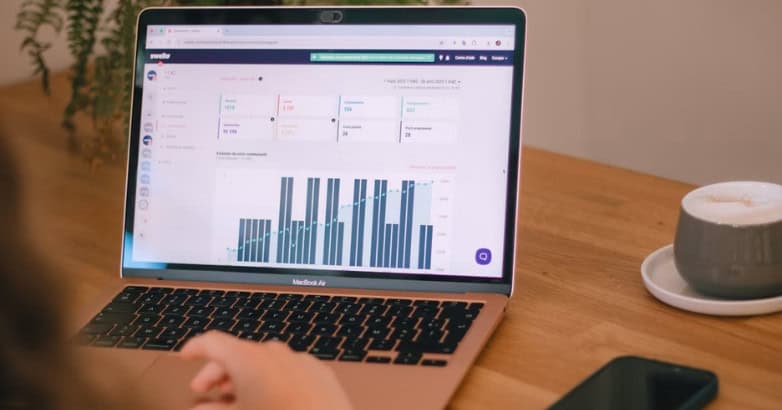
Measure attributed bookings, room nights, and revenue first. Use clicks, unsubscribes, bounces, and complaints to diagnose why performance changed.
Use consistent definitions across reports and separate room revenue from add-on revenue when assessing each campaign.
| Metric | Practical definition |
| Email booking conversion rate | Attributed bookings ÷ delivered emails × 100 |
| Revenue per delivered email | Attributed revenue, adjusted for cancellations and refunds, ÷ delivered emails |
| Attributed room nights | Rooms booked × nights, summed across attributed reservations and excluding cancellations |
| Upsell revenue | Paid add-on revenue attributed to an email campaign |
| Repeat direct-booking share | Direct repeat reservations ÷ all repeat reservations × 100 |
Choose an attribution window and reconcile campaign results with booking-engine records. Deduplicate by reservation ID so multiple systems do not count the same booking twice. Test that campaign tracking continues through checkout.
Apple’s Mail Privacy Protection prevents senders from reliably seeing whether protected recipients opened an email. Treat open rates as a limited diagnostic, not proof of booking intent.
Test one meaningful variable at a time, such as the offer, subject line, or landing page. Judge results against the campaign’s goal.
Attributed revenue is not automatically additional revenue caused by the campaign. With a large enough audience, compare results against a randomly selected group that does not receive the promotion.
Hotel Email Marketing Examples and Templates
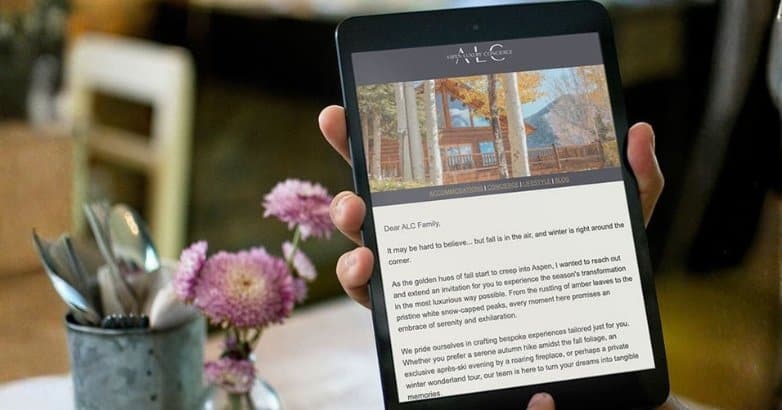
Revinate reports 33 room nights booked for The July’s three-email newsletter welcome series. The sequence introduced the properties, guest benefits, and nearby developments. This is one brand’s reported result, not a forecast for every hotel.
The useful lesson is to give new subscribers context before repeatedly asking them to book.
A Return-Stay Email Template
Good hotel email marketing templates give guests one relevant reason to act and a direct route to booking. Adapt this example for past guests who have agreed to receive promotions:
Subject: Your next stay in [Destination], with [included benefit]
Preview: A familiar favorite, with a new reason to return.
Hi [First Name],
Planning another visit to [Destination]? Book our [Package Name] directly with [Hotel Name] for stays between [dates] and receive [included benefit].
Spend your time [specific local experience], then settle into [room feature].
[Key package terms and availability.]
Button: View Package and Dates
Replace the bracketed fields with confirmed details, add your standard email footer, and link the button to the matching package page.
See our hotel email marketing examples for more real campaigns and formats for welcome, pre-arrival, recovery, and return-stay messages.
Hotel Email Marketing FAQs
I. How Often Should Hotels Send Marketing Emails?
Start by testing one or two promotional emails per month, alongside relevant guest-journey messages. Adjust frequency using bookings, clicks, unsubscribes, and complaints. Set limits across campaigns so a welcome sequence, seasonal offer, and return-stay email do not arrive together.
II. What Should Hotels Look for in Email Marketing Software?
Prioritize compatibility with your existing systems, reliable stay-date triggers, permission management, mobile-friendly templates, and booking reporting. Ask providers to demonstrate your actual workflows. A tool that imports contacts but cannot update cancellations or recognize completed bookings may not support your planned automation.
III. How Do You Choose the Best Hotel Email Marketing Agency?
The best hotel email marketing agency for your property should understand hotel demand, work with your existing systems, and report reservations and revenue. Ask for relevant work, a clear initial plan, transparent fees, and confirmation that your hotel retains access to its accounts and data.
Elevate Your Hospitality Brand Today
Schedule Your Free Consultation
Seeking to elevate your business? Let Mediaboom guide you. Secure your exclusive, free consultation with our digital marketing experts today.
Turn Guest Relationships Into Direct Bookings
Start with the biggest gap in your guest journey, not the longest campaign calendar. Choose one audience, build a useful message, check the booking path, and measure what happens before expanding.
Mediaboom’s hospitality email marketing services cover strategy, copywriting, mobile-friendly design, segmentation, automation, testing, and reporting.
Contact Mediaboom to discuss an email strategy built around your hotel’s direct-booking goals.
WHAT OUR CLIENTS SAY

By: Frank DePino
Frank DePino is Principal and Founder of Mediaboom. Since 2002, Frank has led Mediaboom’s award-winning staff of creative and technical professionals building the most effective marketing and advertising solutions for its clients.