Lead Generation for Hotels – 10 Strategies to Drive More Direct Bookings

By: Frank DePino | September 7, 2026


Loading the Elevenlabs Text to Speech AudioNative Player...
Hotels invest heavily in attracting website visitors, but many potential guests never make it from initial interest to a direct booking or sales conversation. The challenge is not only generating more traffic. It is capturing demand, understanding intent, and creating a clear path from discovery to revenue.
Effective hotel lead generation connects every stage of the guest journey, from SEO and paid advertising to landing pages, booking experiences, email campaigns, and sales follow-up. When these channels work together, hotels can turn anonymous visitors into qualified opportunities, increase direct bookings, and build stronger relationships with future guests.
The best hotel lead generation strategies focus on attracting the right audiences, creating meaningful conversion points, and measuring success based on revenue outcomes rather than clicks or form submissions alone.
Key takeaways:
- Focus on qualified prospects, not traffic alone.
- Give each campaign a clear conversion point, such as a booking, inquiry, call, or offer signup.
- Treat leisure travelers differently from wedding, group, and corporate buyers.
- Record lead source, intent, timing, and value.
- Judge performance by bookings and revenue, not clicks or form fills alone.
What Is Lead Generation for Hotels?
Lead generation for hotels turns traveler or buyer interest into a contactable opportunity.
A visitor becomes a lead after taking an action that allows the hotel to continue the conversation, such as requesting rates, joining an offer list, calling the property, submitting an event inquiry, or sharing contact details during the booking process.
Hotel lead generation can cover leisure travelers, corporate planners, wedding couples, meeting organizers, sports teams, tour groups, and past guests.
A confirmed reservation is no longer just a lead. It becomes a guest relationship that may produce repeat stays, referrals, reviews, and additional on-property revenue.

Why Is Lead Generation for Hotels Important?
Hotel lead generation gives properties greater control over the path from discovery to booking.
Instead of relying only on third-party booking platforms or hoping travelers return after an initial website visit, hotels can build first-party audiences and continue communicating with people who have already shown interest.
That direct relationship can have substantial value. SiteMinder’s 2026 Hotel Booking Trends found that hotel websites generated an average of $516 per booking in 2025, compared with $312 for OTAs.
A dependable lead system can help hotels:
- Generate more direct bookings
- Build useful first-party guest data
- Promote offers during lower-demand periods
- Find higher-value group, wedding, and corporate opportunities
- Identify which marketing sources produce profitable demand
- Stay in contact with interested travelers who are not ready to book immediately
The value comes from the full process. Collecting an email address without relevant follow-up creates a larger contact list, but not necessarily more bookings.
Is Your Hotel Showing Up in ChatGPT?
Travelers are increasingly using AI tools to research destinations before they ever reach a booking site. See how your hotel appears in these AI-generated answers, where competitors or OTAs may be gaining visibility, and whether there are opportunities to strengthen your presence.
How Does Hotel Lead Generation Work?
Effective hotel sales lead generation follows five connected stages:
Attract → Capture → Qualify → Nurture → Convert and Measure
A weak point at any stage can reduce the value of the entire campaign.
Attract the Right Audience
SEO, paid search, hotel advertising, social media, destination content, referrals, and local partnerships introduce the hotel to relevant travelers or buyers.
Targeting should reflect the property’s market, season, location, amenities, and revenue goals instead of chasing the largest possible audience.
Capture Contact and Booking Intent
Once a potential guest arrives, give them an action that matches their level of intent.
This may include:
- Booking a room
- Requesting group rates
- Submitting a wedding inquiry
- Joining a package or special-offer list
- Calling reservations
- Downloading a useful trip-planning resource
The goal is not to put a form in front of every visitor. It is to make the next logical action clear.
Qualify and Route Each Lead
Not every contact deserves the same response.
Travel dates, party size, trip purpose, budget, requested services, and booking window help distinguish casual interest from a valuable sales opportunity.
The hotel can then route the lead to reservations, group sales, weddings, events, corporate sales, or an automated email path.
Nurture the Lead
Some travelers book immediately. Others need answers, reminders, package information, social proof, or a proposal before making a decision.
Email, phone, retargeting, and personal sales follow-up should address the reason the person has not yet booked rather than sending the same promotion to everyone.
Convert and Measure
The final result may be a confirmed reservation, signed group agreement, booked wedding, or another defined revenue action.
Lead-source and campaign data should remain connected to that conversion so the hotel can compare booking value, conversion rate, and acquisition cost across marketing channels.
10 Hotel Lead Generation Strategies
The best channel mix depends on the property and the type of demand it wants to attract.
Each strategy below connects audience acquisition with a practical path toward an inquiry or booking.
1. Publish High-Intent SEO and Destination Content
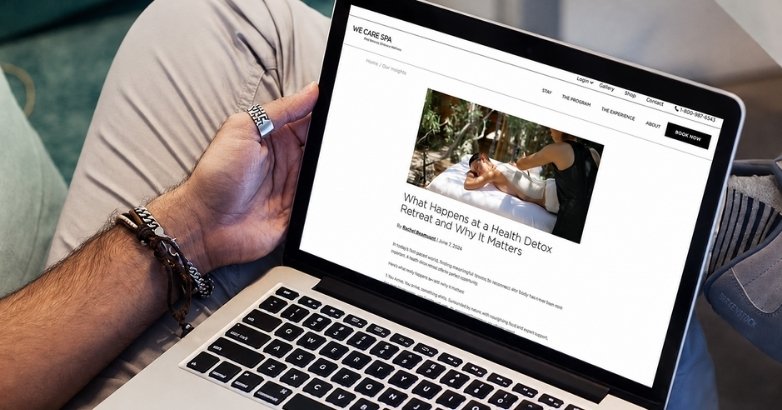
SEO content works best when it answers questions travelers ask while actively planning a trip.
Useful topics can include:
- Hotels near major venues or attractions
- Seasonal destination guides
- Upcoming local events
- Wedding accommodations
- Corporate travel information
- Weekend itineraries
- Family or romantic getaway ideas
Match each page with a relevant next step.
A wedding-venue guide should point visitors toward a room-block inquiry. An article about a major festival can direct readers to rooms or packages available around the event dates.
This turns content from a traffic source into part of the lead-generation system.
2. Build Focused Landing Pages for Each Offer
A lead-generation landing page should focus on one audience, one offer, and one primary action.
Its headline, benefits, property details, proof points, imagery, and form should match the campaign that brought the visitor there.
Instead of sending every campaign to the homepage, consider dedicated pages for:
- Romantic packages
- Weddings
- Meetings
- Sports teams
- Extended stays
- Corporate rates
- Seasonal offers
- Group room blocks
Reducing distractions makes it easier for visitors to understand what is being offered and what they should do next.
Is Your Hotel Showing Up in ChatGPT?
Travelers are increasingly using AI tools to research destinations before they ever reach a booking site. See how your hotel appears in these AI-generated answers, where competitors or OTAs may be gaining visibility, and whether there are opportunities to strengthen your presence.
3. Improve the Website and Mobile Booking Path
A hotel’s website should make the path from interest to reservation easy to understand.
Room information, rates, amenities, policies, trust signals, contact options, and booking buttons should be easy to find across desktop and mobile devices.
Mobile matters in particular. Expedia Group reports that 59% of hotel guests book through a mobile website or app.
Keep inquiry forms short and ask only for information needed at that stage.
Standard room shoppers should generally be able to move directly toward booking, while higher-consideration visitors should have an easy way to request additional information.
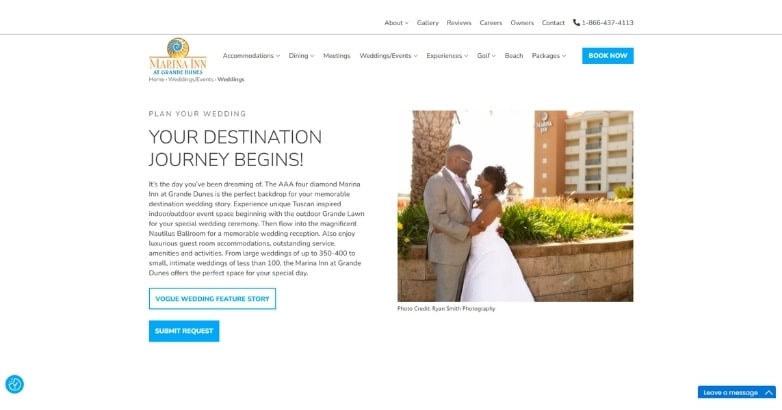
Our work for Marina Inn at Grande Dunes combined a redesigned website and booking experience with SEO. SEO work improved search visibility, brought more organic traffic, and contributed to increased bookings.
This case demonstrates an important point: attracting visitors and converting them should be treated as connected parts of the same system.
4. Run Paid Search and Hotel Advertising
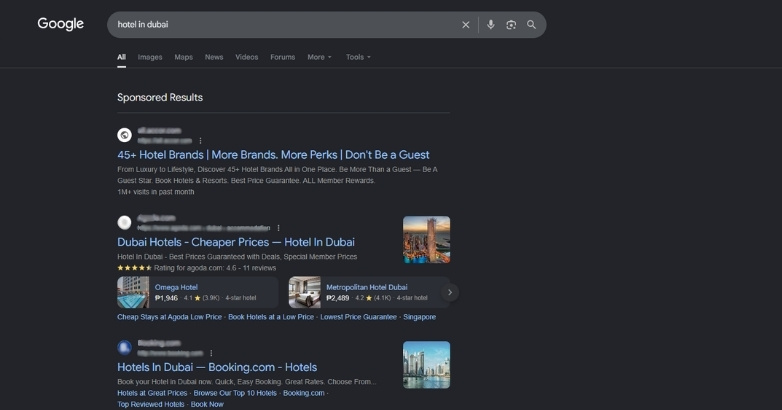
Paid search can put the hotel in front of people already searching for a property, location, package, event, or travel date.
Separate campaigns by intent rather than sending every visitor to the same page.
For example:
Location search → relevant accommodation page
Wedding search → wedding or room-block page
Branded search → direct booking page
Seasonal package ad → package landing page
Hotel-specific advertising can also reach travelers comparing rates and availability.
Measure qualified calls, inquiries, booking starts, and completed reservations alongside clicks.
High click volume means little if those visitors rarely become qualified leads or guests.
5. Turn Packages and Itineraries Into Lead Magnets
Not every traveler is ready to reserve a room during the first website visit.
Give visitors a useful reason to remain connected with the hotel.
Possible lead magnets include:
- Weekend itineraries
- Wedding planning guides
- Local event calendars
- Group travel checklists
- Seasonal package alerts
- Early access to special offers
The content should provide enough value to justify asking for contact information.
Avoid gating basic information travelers need to decide whether the hotel is right for them. Lead magnets work better when they provide additional planning value rather than withholding essential details.
6. Build Segmented Email Campaigns
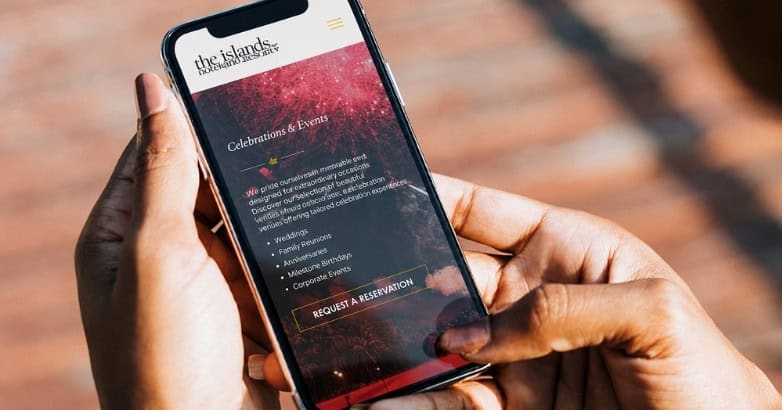
Email gives hotels a way to continue the conversation after initial interest.
Segment contacts based on information such as:
- Lead source
- Travel dates
- Trip purpose
- Requested package
- Past stays
- Group type
- Booking stage
A traveler who joined a seasonal offer list may receive several relevant deals and destination ideas.
A wedding inquiry should receive event information, relevant proof, and contact from the appropriate sales person.
The goal is relevance. More emails do not automatically mean more bookings.

7. Retarget Visitors and Recover Abandoned Bookings
Many prospective guests research several hotels before making a reservation.
Retargeting keeps the property visible after an interested visitor leaves the website.
Build audiences around behavior rather than showing everyone the same advertisement.
For example:
- Room viewers can see the rooms or direct-booking proposition again.
- Package visitors can see the specific experience they considered.
- Wedding-page visitors can see wedding imagery, testimonials, or inquiry options.
- Booking-engine visitors may receive a reminder to return and complete their reservation.
Exclude recent bookers and avoid excessive ad frequency.
The goal is to bring relevant prospects back, not repeatedly advertise to people who have already converted.
8. Turn Social Media Into a Lead Channel
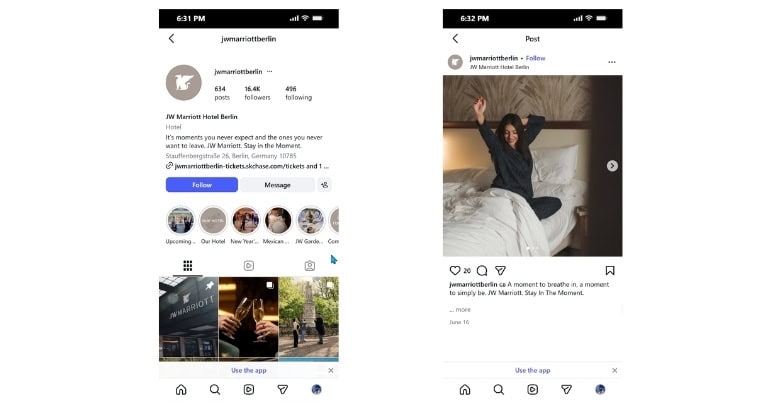
Social media can introduce potential guests to the property long before they search for a specific hotel.
Use property tours, destination content, guest experiences, short-form video, creator partnerships, events, and packages to create interest.
Then connect that attention to a measurable next step:
- View the package
- Check availability
- Request group information
- Join the offer list
- Send an inquiry
- Visit the booking page
Social engagement can support awareness, but hotel lead generation begins when the audience has a clear route from that engagement toward an identifiable action.
9. Build Local Referral Partnerships
Hotels often share potential customers with businesses and organizations nearby.
Useful partners may include:
- Wedding venues
- Corporate offices
- Hospitals
- Universities
- Sports facilities
- Event organizers
- Restaurants
- Attractions
- Tour operators
Give partners a simple way to refer people to the hotel.
Dedicated landing pages, partner codes, campaign parameters, or source fields can help identify which relationships are producing business.
Judge these partnerships by room nights, conversion rate, booking value, event revenue, and repeat potential rather than referral count alone.
10. Use Local SEO, Reviews, and Guest Content
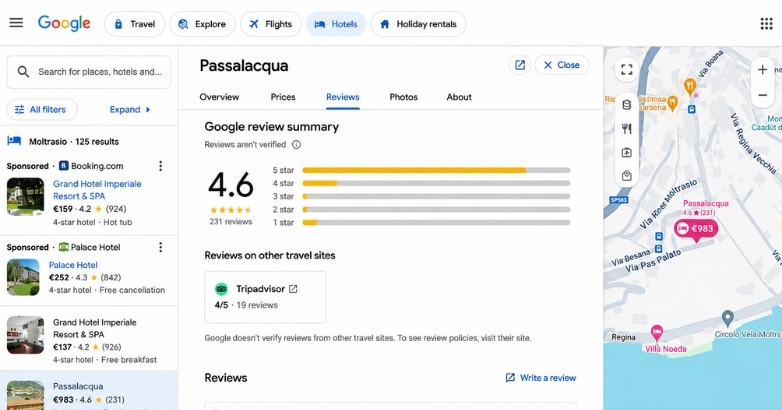
Local visibility matters when travelers search for accommodations around a specific destination, attraction, neighborhood, venue, or event.
Keep the hotel’s Google Business Profile accurate and maintain current photos, contact information, amenities, and website links.
Build useful pages around genuine location-based demand, such as accommodation near important venues or attractions.
Reviews and guest content can then help reduce uncertainty once a traveler reaches the property website.
Place strong testimonials and other trust signals close to relevant booking or inquiry actions instead of isolating them on a single reviews page.
Download Our FREE Guide
Outrank OTAs & Drive Direct Bookings With Our Hospitality Digital Marketing Guide
Learn how leading hotels increase website traffic, reduce OTA commissions, and convert more guests with targeted digital marketing strategies.
How Can Hotels Generate Group, Wedding, and Corporate Sales Leads?
Hotel sales lead generation for groups and events requires a different process from standard leisure booking.
These buyers may need dozens of rooms, meeting space, catering, equipment, contract terms, special rates, or coordination across several departments.
Create dedicated pages for audiences such as:
- Weddings
- Meetings and conferences
- Corporate travel
- Sports teams
- Tour groups
- Family reunions
- Room blocks
Forms should collect enough information for the sales team to assess the opportunity without becoming unnecessarily long.
Useful fields may include preferred dates, estimated room count, number of attendees, event-space requirements, catering needs, and contact details.
After submission, send an immediate confirmation and assign the inquiry to a specific owner.
Relevant floor plans, menus, package information, testimonials, or scheduling options can help the buyer move toward the next decision.

How Should Hotels Capture and Nurture Hotel Sales Leads?
Generating more hotel sales leads is only useful if the property has a consistent way to manage them.
The goal is to record the right information, prioritize worthwhile opportunities, and follow up before interest disappears.
Centralize Lead Data
Store useful information in a CRM or shared sales system, including:
- Lead source
- Campaign
- Travel or event dates
- Segment
- Party or group size
- Requested services
- Estimated value
- Lead status
- Last contact
- Next action
This gives marketing, reservations, and sales a shared view of each opportunity.
Match Follow-Up to Intent and Timing
A date-specific group request requires a different response from someone who downloaded a seasonal itinerary.
High-intent hotel sales leads usually need timely personal contact.
Earlier-stage leisure leads may be better suited to targeted email communication or retargeting until their booking window gets closer.
Use the information the lead already provided so the conversation feels relevant.
Set Clear Ownership and Response Standards
Every active sales lead should have an owner and a defined next step.
Useful pipeline stages may include:
New → Contacted → Qualified → Proposal Sent → Booked / Lost / Future Opportunity
Record why opportunities are lost.
Patterns such as unavailable dates, price, insufficient capacity, slow response, or poor audience fit can reveal where the hotel is losing valuable business.

Which Hotel Lead Generation Metrics Matter?
Traffic and form submissions are useful indicators, but they do not show the full business result.
Track metrics that connect marketing activity with qualified demand and revenue.
| Metric | How to Measure It | What It Shows |
| Qualified leads by source | Count leads meeting defined criteria | Which channels bring relevant demand |
| Lead-to-booking conversion rate | Confirmed bookings ÷ qualified leads | Lead quality and follow-up performance |
| Cost per qualified lead | Campaign spend ÷ qualified leads | Cost of creating a genuine opportunity |
| Cost per direct booking | Campaign spend ÷ direct bookings | Acquisition efficiency |
| Booking value by source | Revenue grouped by lead source | Which channels produce valuable business |
| Response time | Time from inquiry to first useful response | Whether delayed follow-up may be hurting sales |
| Sales cycle length | Time from inquiry to booking or agreement | How quickly opportunities convert |
Review leisure and hotel sales leads separately.
A wedding, conference, or corporate account may take longer to close while carrying far more revenue than a one-night leisure stay.
A low cost per lead is not a success if those leads rarely qualify or book.
What Are the Most Common Hotel Lead Generation Mistakes?
Hotels often lose potential revenue after successfully attracting the right audience.
Common mistakes include:
- Treating every website visitor as a lead
- Sending every campaign to the homepage
- Asking for too much information too early
- Using the same follow-up for every audience
- Failing to assign sales leads to a specific owner
- Tracking clicks and form fills without connecting them to bookings
- Ignoring lead source and booking value
- Failing to record why qualified opportunities are lost
- Continuing campaigns without reviewing lead quality
Fixing these gaps can improve hotel lead generation performance without adding more channels or increasing traffic.
FAQs
I. How Do Hotels Generate Leads?
Hotels generate leads through SEO, destination content, paid search, hotel advertising, social campaigns, email signups, packages, referrals, local search, phone calls, booking activity, and group inquiry forms.
Each channel should connect visitors with a measurable next step, such as submitting an inquiry, providing contact details, calling the hotel, or completing a direct booking.
II. What Is the Fastest Way to Generate Leads for a Hotel?
Paid search and paid social campaigns can begin generating traffic and inquiries quickly when they target a defined audience and send visitors to a relevant landing page.
However, actual results depend on demand, targeting, the offer, website experience, and how quickly qualified leads receive follow-up.
III. What Is a Lead in the Hotel Industry?
A hotel lead is a person or organization that has shown identifiable interest and provided a way for the hotel to respond.
Examples include a traveler requesting an offer, a company asking about corporate rates, or a couple submitting a wedding room-block inquiry.
A website visitor alone is not necessarily a lead because the hotel may have no way to continue the conversation.
IV. What Is an Example of Hotel Lead Generation?
A hotel creates a landing page for wedding room blocks and promotes it through local venue partnerships and search advertising.
A couple submits their dates, estimated room count, and contact details.
The inquiry enters the hotel’s sales system, receives an immediate confirmation, and is assigned to the wedding sales team for follow-up.
V. What Is the Difference Between Hotel Marketing and Lead Generation?
Hotel marketing creates awareness and attracts potential guests across channels such as search, social media, advertising, and content.
Lead generation turns that attention into an identifiable opportunity by encouraging an inquiry, signup, phone call, booking action, or another measurable response.
VI. How Do You Measure the Quality of Hotel Sales Leads?
Assess whether the prospect’s dates, group size, requirements, budget, booking window, and potential value fit the property.
Lead source, responsiveness, likelihood of conversion, and revenue potential can also help sales teams prioritize opportunities.
Quality should be judged by fit and potential business value, not simply by the amount of contact information collected.
Elevate Your Hospitality Brand Today
Schedule Your Free Consultation
Seeking to elevate your business? Let Mediaboom guide you. Secure your exclusive, free consultation with our digital marketing experts today.
Generate More Direct Bookings With Mediaboom
Lead generation works best when search, paid media, website experience, landing pages, email, CRM, tracking, and sales follow-up support the same revenue goals.
When those activities operate separately, hotels may gain traffic while valuable prospects remain uncaptured or receive inconsistent follow-up.
Mediaboom helps hotel and hospitality brands attract relevant demand, build clear conversion paths, measure meaningful actions, and turn more interest into direct bookings and qualified sales conversations.
Contact Mediaboom to discuss a hotel lead generation strategy built around your property, audience, market, and revenue goals.
WHAT OUR CLIENTS SAY
By: Frank DePino
Frank DePino is the Principal and Founder of Mediaboom, a top hotel marketing agency partnering with leading hotel and hospitality brands. With 30+ years of experience, he has led strategic digital initiatives for names including Four Seasons, Ritz-Carlton, JW Marriott, Millennium Partners, and Guardian Jet. Frank helps hospitality businesses strengthen brand presence, drive qualified leads, and elevate guest experiences through website design, SEO, content marketing, and paid media. Under his leadership, Mediaboom is a trusted partner for brands pursuing measurable digital growth in a competitive hospitality landscape.