


Luxury Travel Ads – 10 Examples and What to Learn

By: Frank DePino | October 27, 2026


Loading the Elevenlabs Text to Speech AudioNative Player...
Luxury travel ads sell more than beautiful destinations. They show travelers why a particular hotel, cruise, or experience deserves their attention, whether through exceptional service, privacy, cultural connections, or a memorable offer.
The best travel advertisements make those benefits tangible. They combine distinctive visuals with a message that appeals to a particular traveler and gives them a reason to take the next step.
Below are 10 luxury travel advertisement examples covering outdoor advertising, display, paid social, search, and brand campaigns. Each includes a creative lesson that hotels, resorts, cruise lines, and travel marketers can apply.
Download Our FREE Guide
Attract More Travelers & Boost Bookings With Our Hospitality Digital Marketing Guide
Uncover how travel brands are using content, SEO, and paid media to reach ideal audiences, build loyalty, and increase direct engagement across the booking journey.
10 Luxury Travel Ads and What Makes Them Effective
1. JW Marriott: Make a Hotel Opening Impossible to Miss
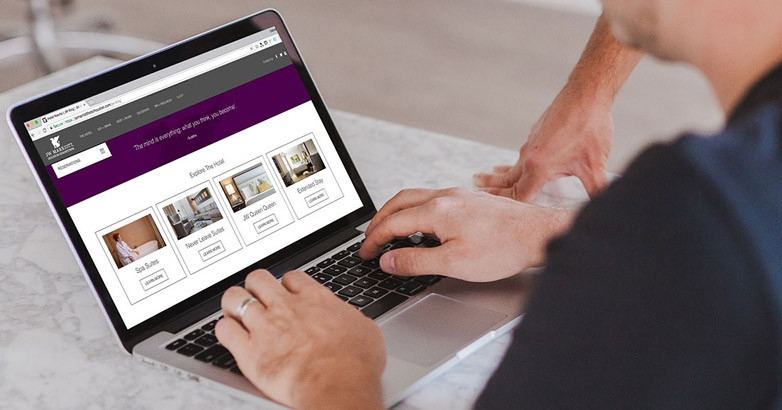
Format: Outdoor advertising.
Before JW Marriott Houston Downtown opened, Mediaboom developed large construction-site advertisements that introduced the property to people passing through the area.
The advertisements featured messages such as “Luxury Has a New Address,” “Simple Elegance,” and “Passion for Art and Culture.”
What makes this approach effective is its simplicity. Each panel communicates one part of the hotel’s identity, with large typography and imagery that can be recognized at a distance.
Rather than advertising room features before the property opened, the campaign established an identity and invited people to anticipate its arrival.
What marketers can learn: For a hotel opening or renovation, introduce a clear brand promise before focusing on rooms and amenities. Keep outdoor advertisements readable within seconds.
See Mediaboom’s JW Marriott campaign for the original construction-board advertisements.
WHAT OUR CLIENTS SAY
2. Silversea: Make the Vacation Offer Easy to Understand

Format: Promotional display creative from SixStarCruises.
A historical Silversea promotion used a January sale to attract potential cruise customers, combining destination photography with three prominent incentives:
- Savings of up to £3,000 per couple.
- A 15% deposit.
- Additional onboard spending credit.
The offer uses contrasting red elements to draw attention to the time-sensitive promotion and deposit requirement.
However, its multiple incentives also create competition for the reader’s attention.
What marketers can learn: Vacation ads should have a clear information hierarchy. Lead with the strongest benefit, support it with a compelling image, and make secondary inclusions easy to understand.
Premium travel doesn’t always require a discount, but when one is offered, its value and conditions should be unmistakable.
3. Emirates Vacations: Make Display Advertising Interactive
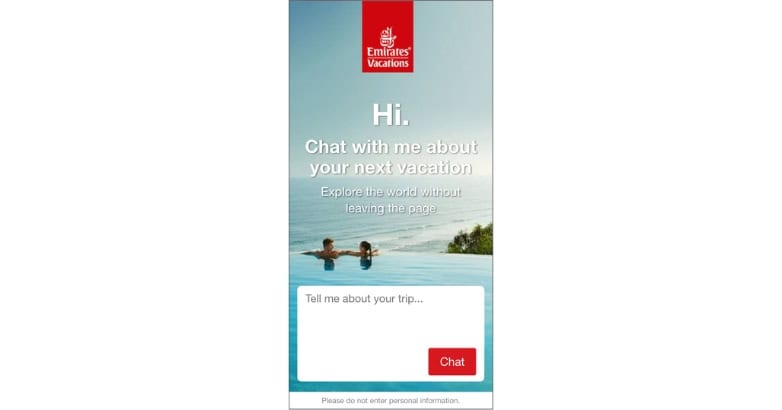
Format: Interactive display advertising, 2018.
Emirates Vacations introduced display advertisements that allowed potential travelers to ask questions and receive personalized trip recommendations without leaving the webpage.
The ad opened with a simple invitation: “Chat with me about your next vacation.”
Below that, a text field invited users to describe their trip, while a prominent red button encouraged interaction.
This makes the advertisement more than a destination photograph. It addresses a common problem: travelers may be interested in taking a trip without knowing exactly where to go.
According to reporting from Digiday, Emirates Vacations recorded an 87% increase in engagement compared with traditional display advertisements during its initial test. That figure measures engagement, not bookings.
What marketers can learn: Interactive travel ads can give potential customers useful assistance before requesting a website visit. The important principle is answering a relevant question, even when a full chatbot isn’t necessary.
4. Rosewood: Connect Luxury With Local Culture
Format: Global video, print, and digital campaign, 2019.
Rosewood’s Rosewood Regulars campaign for the opening of Rosewood Hong Kong used four connected stories rooted in the city’s culture.
One story followed a master chef passing culinary knowledge to a younger chef. Another focused on family relationships across generations.
Instead of concentrating exclusively on guest rooms and hotel facilities, the campaign presented Hong Kong’s traditions and personal stories, with the property connecting those experiences.
This approach differentiates Rosewood from hotels that rely primarily on polished architecture and panoramic views.
What marketers can learn: Identify what makes the property’s location culturally distinctive. Build the advertisement around an authentic local story and show how the property connects guests to that experience.
The Rosewood Hong Kong campaign announcement documents the films, photography, and advertising placements.
5. Seabourn: Sell the Feeling, Not Just the Cruise

Format: Print, digital, and television advertising, 2022.
Seabourn’s This Is Your Moment campaign focused on the personal emotions surrounding luxury travel.
One print advertisement shows a woman partially submerged in blue water, looking directly toward the viewer. Its headline reads: “That moment when you finally come up for air.”
The headline gives the scene emotional meaning. It suggests the relief of disconnecting from everyday demands rather than merely advertising another tropical destination.
The wider campaign also featured meaningful relationships and active travel experiences, connecting its message with the affluent women it sought to reach.
What marketers can learn: Instead of listing what an experience includes, identify how the traveler wants to feel afterward. Relief, reconnection, celebration, and discovery provide different angles for luxury travel advertising.
See the original Seabourn print advertising campaign.
Elevate Your Hospitality Brand Today
Schedule Your Free Consultation
Seeking to elevate your business? Let Mediaboom guide you. Secure your exclusive, free consultation with our digital marketing experts today.
6. Mandarin Oriental: Make Celebrity Partnerships Meaningful
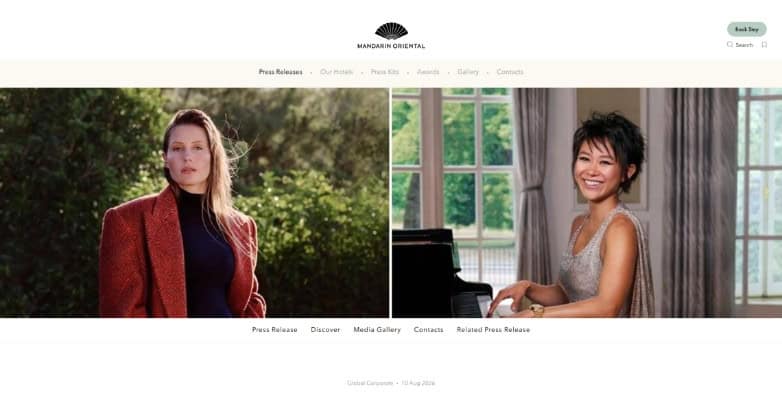
Format: Global digital and social advertising campaign, updated in 2026.
Mandarin Oriental’s long-running Fan Campaign features prominent personalities who have a genuine relationship with the hotel brand.
In August 2026, the campaign introduced pianist Yuja Wang and DJ Charlotte de Witte.
Rather than simply placing recognizable faces beside a hotel logo, the advertising connected each performer’s demanding routines with personalized hospitality.
The brand also translated their stories into guest experiences, including a wellness treatment inspired by Yuja Wang and a late-night dining concept developed with Charlotte de Witte.
What marketers can learn: Choose ambassadors whose lifestyles and experiences relate naturally to your brand. The strongest partnerships connect a recognizable person to something guests can actually experience.
See Mandarin Oriental’s 2026 Fan Campaign.
7. Four Seasons: Demonstrate Personal Service Through Storytelling
Format: Digital video, social media, and digital outdoor advertising, 2022.
Four Seasons’ Luxury Is Our Love Language campaign used dramatized stories inspired by actual guest experiences.
In one advertisement, First Snow, hotel employees arrange a snow-filled surprise for a guest. Another story features personalized details incorporating a guest’s own monogram.
These unusual moments give meaning to the brand’s promise of attentive service.
Rather than telling viewers that the hotel cares about individual preferences, the advertisements show a specific situation and the staff’s response.
What marketers can learn: Find a memorable example of your team’s hospitality and make it the center of the story. Specific actions communicate personal attention more convincingly than generic claims about service quality.
Read about the Four Seasons campaign and its guest-inspired stories.
8. Princess Hotels: Reach Travelers When They’re Searching
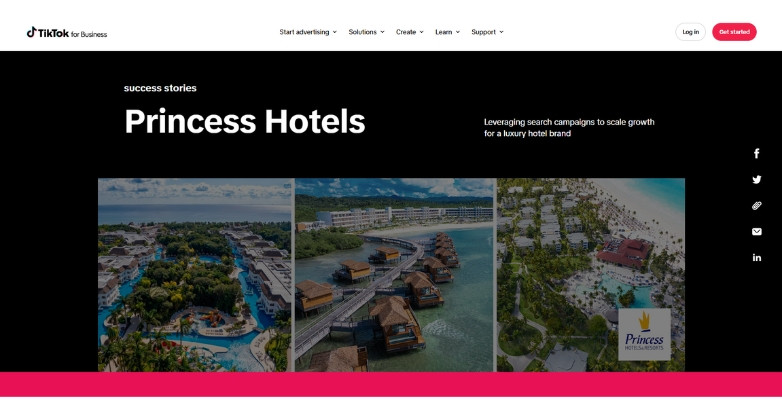
Format: TikTok Search Ads, launched in 2025.
Princess Hotels & Resorts used paid search campaigns on TikTok to reach travelers researching hotels in destinations such as Punta Cana and Riviera Maya.
The brand ran separate campaigns for general destination searches and searches mentioning Princess Hotels or its individual properties.
Its video creative focused on resort scenery, accommodation, premium facilities, and direct calls to action.
The distinction matters: someone searching for hotels in Punta Cana needs a different introduction from someone already searching for a particular Princess resort.
In its TikTok case study, the company reported a 3% click-through rate for search campaigns, compared with 0.24% for its regular campaigns. These are advertiser-reported campaign results.
What marketers can learn: Match the advertisement to search intent. Introduce the property’s distinctive benefits to new audiences, while giving brand-aware travelers a more direct path to booking.
9. Address Hotels + Resorts: Personalize the Property and Offer
Format: TikTok Catalog Ads for Travel.
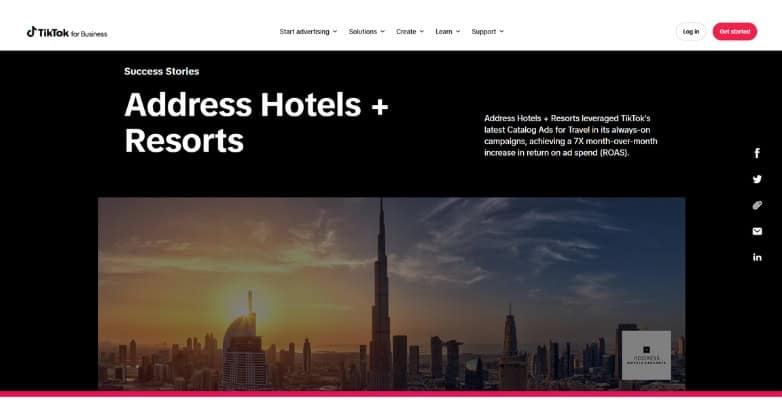
Address Hotels + Resorts used TikTok’s travel catalog advertising format to promote individual properties and seasonal packages.
The campaign combined video and carousel creative with hotel catalog information, allowing the advertising to present relevant properties and their distinguishing features.
Its winter promotions included exclusive discounts and packages where children could stay without an additional charge.
The key difference from a standard brand video is relevance. Rather than sending every user the same general message, catalog advertising can connect the creative to particular properties and travel interests.
TikTok’s Address Hotels + Resorts case study reports 1.5 times more bookings and seven times higher return on ad spend when comparing the stated campaign periods. These figures do not independently establish how much of the change the ads caused.
What marketers can learn: Connect each property to its strongest relevant selling point. For multi-property brands, a specific resort and offer may be more useful than a generic portfolio advertisement.
10. Tourism Australia: Adapt a Campaign to Different Audiences
Format: Television, digital, social, and outdoor advertising.
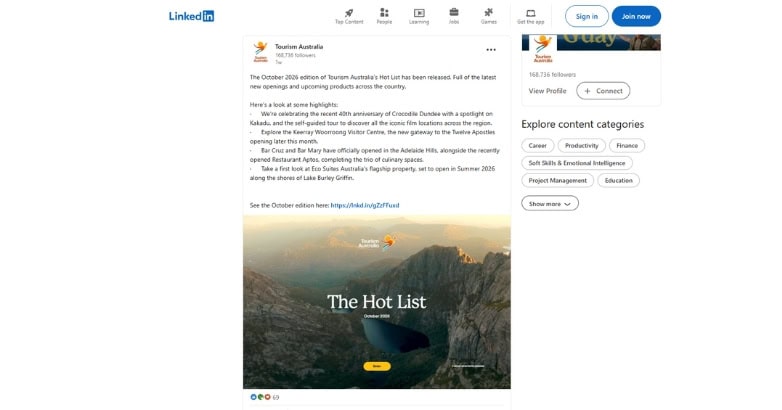
Tourism Australia’s Come and Say G’day campaign began in 2022 and introduced a new chapter in 2025.
The campaign uses Ruby the Roo as a recognizable character, paired with well-known personalities in different international markets.
For example, the 2025 US advertising featured Robert Irwin, while the UK execution featured Nigella Lawson.
Although this is a broader tourism advertising campaign rather than an exclusively luxury promotion, it offers an important lesson for international travel brands.
The campaign retains a consistent identity while changing its personalities and storytelling to suit different audiences.
What marketers can learn: Maintain a recognizable central message, but adapt the creative to travelers in different markets. A luxury resort targeting US families and UK couples may benefit from different imagery, experiences, and messaging.
Watch Tourism Australia’s campaign video to see the advertising in action.
Download Our FREE Guide
Attract More Travelers & Boost Bookings With Our Hospitality Digital Marketing Guide
Uncover how travel brands are using content, SEO, and paid media to reach ideal audiences, build loyalty, and increase direct engagement across the booking journey.
What Makes Luxury Travel Ads Different From Other Travel Advertising?
Luxury travel ads place greater emphasis on distinctive experiences, personalized service, privacy, and emotional value. Broader travel advertising may focus more directly on destination awareness, affordability, convenience, or seasonal demand.
The difference becomes clearer when comparing three advertising goals:
| Type | Main focus | Example |
| Luxury travel ad | Distinctive experiences and premium service | Private dining at an exclusive resort |
| Vacation advertisement | A specific trip or booking offer | Seven-night resort package |
| Tourism advertisement | Promoting a destination | A national campaign encouraging international visits |
These categories can overlap. A luxury resort may run vacation ads featuring limited-time packages, while a tourism board may promote exclusive experiences to affluent international travelers.
The best approach depends on the intended audience and the action the advertisement should inspire.
How Do You Write an Effective Luxury Travel Ad?
Write a luxury travel ad around one specific audience, one distinctive experience, one credible benefit, and one clear next step.
1. Identify the Traveler’s Motivation
Start with why someone wants the experience.
A couple planning an anniversary may respond to privacy and romance. A family booking a luxury resort may place greater value on spacious accommodations and activities for different ages.
Build the message around the intended guest rather than assuming all affluent travelers have the same preferences.
2. Show a Specific Experience
Replace broad descriptions with benefits travelers can picture.
Instead of “Experience Unmatched Luxury,” consider a message about private dining overlooking the ocean or a personalized itinerary through a destination.
Only advertise experiences the brand can actually provide.
3. Make the Call to Action Relevant
A clear next step helps connect interest with action.
Examples include “Check Suite Availability,” “View Private Itineraries,” or “Discover Available Packages.”
The landing page should match what the advertisement promises, including the featured experience, availability, and offer conditions.
4. Test Different Creative Approaches
Test one meaningful change at a time, such as a different headline, visual, or offer.
For example, compare an advertisement showing a panoramic resort view with one focused on a private dining experience.
Evaluate performance against the campaign’s objective rather than assuming the most visually attractive version will generate more bookings.
Example of Luxury Travel Ad Copy
Here is an illustrative vacation advertisement for a fictional coastal hotel:
Headline: Your Anniversary, Your Own Ocean-View Terrace
Body: Three nights in an ocean-view suite, breakfast on your private terrace, and dinner for two beside the water.
Call to Action: View Anniversary Stays
This example focuses on a specific occasion, describes tangible benefits, and gives the prospective guest a clear next step.
For more information about channels, targeting, and campaign measurement, read Mediaboom’s travel advertising guide.
Frequently Asked Questions About Luxury Travel Ads
I. Where Can You Find Examples of Travel Ads?
Start with official brand campaign pages, agency portfolios, and advertising platform case studies. Searches for phrases such as “travel ads examples” and “travel advertisement examples” may return both paid advertisements and ordinary promotional content, so verify the campaign format before using an example.
Look for the original creative, advertiser, publication date, and supporting campaign information.
II. Do Luxury Travel Ads Need Discounts?
No. Luxury advertisements can focus on exclusive access, personalized service, distinctive settings, and meaningful experiences.
Discounts can support a specific offer, but they should not replace the brand’s wider value proposition.
III. What Are the Best Platforms for Luxury Travel Ads?
The best platform depends on the campaign objective. Paid search can reach travelers researching particular accommodations, while video and social advertising can introduce experiences to new audiences.
Display advertising, outdoor placements, and relevant luxury publications may also support awareness.
IV. How Do You Measure Luxury Travel Advertising Success?
Measure results against the campaign objective.
For booking-focused campaigns, monitor qualified inquiries, booking conversions, cost per booking, and return on ad spend. For awareness campaigns, consider reach, video engagement, and brand-lift measurements where available.
Evaluate whether the campaign attracts the right travelers, not merely the highest number of clicks.
Elevate Your Hospitality Brand Today
Schedule Your Free Consultation
Seeking to elevate your business? Let Mediaboom guide you. Secure your exclusive, free consultation with our digital marketing experts today.
Make Your Next Luxury Travel Campaign Stand Out
Effective luxury travel ads turn a property’s strongest qualities into a reason to visit. Whether through a memorable service story, an emotional video, or a well-timed search advertisement, the message should connect a distinctive experience with the needs of the intended traveler.
Mediaboom helps hospitality and luxury brands develop advertising campaigns and digital experiences that support their business goals.
Contact Mediaboom to discuss your next luxury travel advertising campaign.
By: Frank DePino
Frank DePino is the Principal and Founder of Mediaboom, a top hotel marketing agency partnering with leading hotel and hospitality brands. With 30+ years of experience, he has led strategic digital initiatives for names including Four Seasons, Ritz-Carlton, JW Marriott, Millennium Partners, and Guardian Jet. Frank helps hospitality businesses strengthen brand presence, drive qualified leads, and elevate guest experiences through website design, SEO, content marketing, and paid media. Under his leadership, Mediaboom is a trusted partner for brands pursuing measurable digital growth in a competitive hospitality landscape.


