Travel Advertising – Best Channels and Campaign Tips

By: Frank DePino | July 29, 2026


Loading the Elevenlabs Text to Speech AudioNative Player...
Travelers no longer discover trips in one place. They move between search engines, social feeds, videos, review platforms, OTAs, metasearch, and AI planning tools before booking.
Travel advertising is the strategic promotion of destinations, hotels, tours, airlines, cruises, and travel experiences through paid media, creative campaigns, and audience targeting.
It helps brands reach travelers at key moments in the booking journey, inspire demand, increase direct bookings, and improve revenue through search, social, video, display, metasearch, and retargeting.
Key takeaways:
- Strong measurement should connect ad spend to bookings, revenue, ROAS, direct booking growth, and lifetime guest value.
- Travel advertising works best when campaigns match the traveler’s stage: inspiration, research, comparison, booking, or repeat travel.
- Search, Google Hotel Ads, and metasearch are strongest for high-intent travelers already comparing options.
- Social media, video, creator content, and display ads support awareness because travel is visual and emotional.
- AI and personalization should shape targeting and creative testing.
Is Your Hotel Showing Up in ChatGPT?
Travelers are increasingly using AI tools to research destinations before they ever reach a booking site. See how your hotel appears in these AI-generated answers, where competitors or OTAs may be gaining visibility, and whether there are opportunities to strengthen your presence.
What Is Travel Advertising?
Travel advertising is the use of paid media and promotional campaigns to market travel-related brands, destinations, and experiences.
It is used by hotels, resorts, tourism boards, airlines, cruises, tour operators, travel agencies, vacation rentals, attractions, restaurants, and event venues.
The goal is not only to gain attention. A strong travel ad campaign moves people toward a clear action, such as booking a room, requesting a quote, viewing a package, buying a ticket, or returning for another stay.
Travel advertising usually refers to paid promotion, such as search ads, social ads, video ads, display ads, metasearch, and retargeting.
Travel marketing is broader. It includes SEO, content, email, branding, website strategy, partnerships, loyalty, PR, and paid media.
The best campaigns also match the guest journey. A traveler may first see a destination video, then research hotels, compare prices, read reviews, visit a booking page, and return later through a retargeting ad.
When advertising supports each step, the message feels more useful and less generic.

Why Is Travel Advertising Important for Tourism Businesses?
Travel advertising matters because the travel purchase journey is crowded. A hotel may compete with nearby properties, OTAs, short-term rentals, social media content, AI trip planners, review sites, destination blogs, and metasearch results at the same time.
Ads help travel brands stay visible during decision-making moments. They can promote seasonal packages, launch new offers, fill low-demand dates, support events, and attract travelers by interest, location, budget, or intent.
Direct bookings are another major reason to invest in travel ads. When guests book directly, hotels and resorts keep more control over guest data, upsells, loyalty, and brand experience.
OTAs can support reach, but an ad strategy that sends qualified traffic to owned landing pages can reduce overdependence on third-party platforms.
Digital travel campaigns also give teams faster feedback. With proper tracking, advertisers can see which audiences, offers, creative assets, and channels are producing bookings, not just clicks.
What Are the Best Travel Advertising Channels?
No single travel advertising channel is best for every business. The right mix depends on the goal: awareness, inquiries, direct bookings, retargeting, repeat guests, or seasonal demand.
Search Advertising and Google Hotel Ads
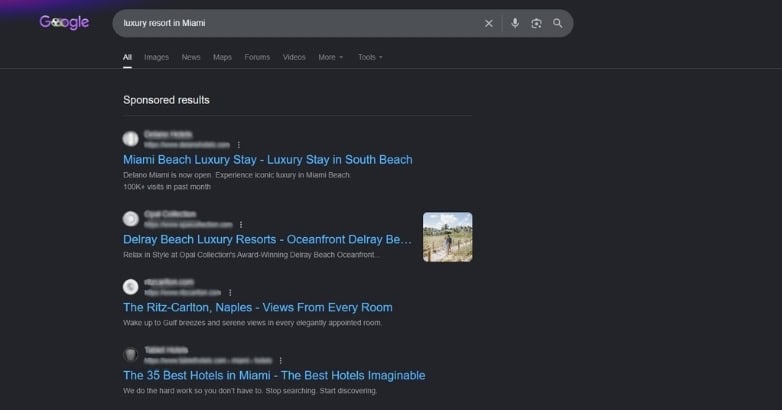
Search ads are best for high-intent travelers. These users are already looking for terms like “luxury resort in Miami,” “private tours in Rome,” or “family-friendly hotels in Connecticut.” Search works well when the ad and landing page match the query closely.
Google Hotel Ads and metasearch platforms appear when travelers compare rates and availability.
They collect prices from several sources, letting travelers compare direct rates against OTAs near the point of booking.
Performance Max for travel goals also helps hotel advertisers reach travelers across Google properties and drive direct bookings with hotel-specific campaigns.
Social Media and Video Advertising
Social media and video ads are best for inspiration, awareness, and retargeting. Instagram, Facebook, TikTok, Pinterest, YouTube, and connected TV can help travel brands show the feeling of a trip, not just the offer.
A short video can show a room view, spa weekend, local attraction, wedding venue, food experience, or quiet off-season escape in seconds.
Programmatic Display and Retargeting
Programmatic display helps travel brands reach audiences across websites and apps. It is useful for seasonal messaging, destination awareness, and retargeting because travel decisions often take time.
If someone views a room, package, itinerary, or booking page but leaves, a retargeting ad can bring them back with a more specific message.
Travel Advertising Channel Comparison
| Channel | Best For | Pros | Avoid If |
| Search Ads | High-intent bookings | Captures active search demand | Landing pages or tracking are weak |
| Google Hotel Ads / Metasearch | Hotel rate comparison | Shows direct rates near booking | Rate feeds are unreliable |
| Paid Social | Awareness and retargeting | Strong visuals and audience targeting | Creative assets are weak |
| Video / YouTube / CTV | Destination storytelling | Builds emotion and recall | No strong visuals are available |
| Programmatic Display | Retargeting and reach | Good for sequential messaging | Assisted value cannot be measured |
| OTA Sponsored Listings | Booking-platform visibility | Helps in competitive markets | Direct bookings are the only goal |
| Email / CRM Ads | Repeat guests | Uses first-party data | Lists are small or unsegmented |
Elevate Your Hospitality Brand Today
Schedule Your Free Consultation
Seeking to elevate your business? Let Mediaboom guide you. Secure your exclusive, free consultation with our digital marketing experts today.
How Do You Create an Effective Travel Advertising Campaign?
Start with one business goal. A campaign built to fill low-occupancy dates should not use the same strategy as a campaign built to build destination awareness or sell luxury packages.
Next, segment the audience. Useful groups include families, couples, luxury travelers, business travelers, wellness travelers, group travelers, local drive-market guests, and past guests.
Add signals such as origin market, booking window, trip motivation, budget, and previous behavior.
Then map the channel to traveler intent. Use social, video, display, and creator content for inspiration. Use search, destination content, and YouTube for planning.
Use metasearch, reviews, and retargeting for comparison. Use landing pages, direct booking perks, and strong calls to action for booking, then email and CRM for repeat guests.
Travel ad creative should be specific and experience-led. “Book your stay” is generic. “Plan a quiet fall weekend by the water with direct booking perks” gives the traveler a clearer reason to act.
Landing pages should match the ad promise. A spa weekend ad should send users to a spa package page with photos, inclusions, rates, trust signals, and a clear booking path.
Set up tracking before launch so the campaign can be judged by bookings, revenue, calls, forms, and ROAS.

What Travel Advertising Trends Matter in 2026?
AI is changing trip planning and paid media. Skyscanner’s Horizons 2026 report says 54% of travelers feel confident using AI to help plan and book travel, based on a global survey of 22,000 travelers.
For advertisers, this means content, offers, and landing pages need to be clear enough for both people and AI-driven discovery tools.
Experience-led travel is also rising. Travel ads should sell what the trip feels like, not only the room, rate, or destination.
Shoulder-season demand is another key trend. 34% of travelers actively seek quieter destinations and 31% plan to visit popular places during shoulder seasons. Advertisers can respond with alternative dates, quieter itineraries, secondary destinations, and less crowded experiences.

How Do You Measure Travel Advertising ROI?
Travel advertising ROI should be measured by business outcomes, not clicks alone. Clicks can show interest, but bookings and revenue show whether the campaign is working.
Important KPIs include ROAS, cost per acquisition, cost per booking, direct booking revenue, booking engine conversion rate, revenue per booking, assisted conversions, repeat guest rate, and customer lifetime value.
Use different metrics by funnel stage. Awareness campaigns should track reach, impressions, video views, and brand lift. Consideration campaigns should track CTR, site visits, package page views, and itinerary engagement. Conversion campaigns should track bookings, CPA, ROAS, and direct revenue. Loyalty campaigns should track repeat bookings and CRM-driven revenue.
Review active campaigns weekly, then run deeper monthly or seasonal reviews to shift budget, refresh creative, test landing pages, and improve audience targeting.
Download Our FREE Guide
Attract More Travelers & Boost Bookings With Our Hospitality Digital Marketing Guide
Uncover how travel brands are using content, SEO, and paid media to reach ideal audiences, build loyalty, and increase direct engagement across the booking journey.
What Are Examples of Successful Travel Advertising Campaigns?
A strong hotel campaign might combine search ads for high-intent destination terms, Google Hotel Ads for rate comparison, and retargeting for visitors who viewed rooms but did not book. The landing page would show room options, direct booking perks, reviews, and a simple booking path.
A destination marketing campaign might use video and paid social media to promote shoulder-season experiences, local events, food, culture, and outdoor activities. The goal may start with awareness, then move to itinerary views, partner referrals, and bookings.
A Google case study reported that Travelstart shifted from volume-based bidding to value-based bidding and saw a 27% year-over-year revenue increase, 50% higher revenue per booking, and a 12% ROI increase.
The lesson for travel brands is simple: campaigns should focus on value, not just traffic.
What Are the Next Steps for Building a Travel Advertising Plan?
Begin with an audit of booking sources, ad accounts, website traffic, landing pages, tracking, creative assets, and reporting.
Then define the main goal: awareness, direct bookings, off-season demand, inquiries, package sales, or repeat guests.
Segment travelers by intent, origin market, season, budget, and motivation. Choose channels by funnel stage: social and video for inspiration, search and metasearch for high-intent demand, retargeting for conversion, and email or CRM ads for loyalty.
Build dedicated landing pages for major campaign themes, create several creative variations per audience, launch with clean tracking, and review results weekly. Reallocate budget toward the channels, offers, and audiences that produce the strongest booking value.
WHAT OUR CLIENTS SAY
FAQs About Travel Advertising
I. What is an example of travel advertising?
A hotel running Google Search Ads for “luxury resort in Miami” is one example. Another is a tourism board using video ads to promote shoulder-season trips or a tour operator retargeting visitors who viewed a specific itinerary.
II. What is the best platform for travel advertising?
There is no single best platform. Google Ads and metasearch are often strongest for high-intent bookings, while social media and video platforms are better for inspiration, awareness, and retargeting.
III. How much does travel advertising cost?
Costs depend on the market, competition, season, channel, audience, and goal. Small campaigns may start with a focused test budget, while hotels, resorts, and destinations often need larger multi-channel budgets.
IV. How do travel ads increase direct bookings?
Travel ads increase direct bookings by reaching travelers during research and comparison, then sending them to a brand-owned landing page or booking engine. They work best with direct booking perks, strong visuals, clear rates, and tracking.
V. What is the difference between travel advertising and tourism marketing?
Travel advertising usually refers to paid promotional campaigns. Tourism marketing is broader and includes branding, SEO, content, email, website strategy, partnerships, PR, social media, loyalty, and advertising.
VI. Are Google Ads worth it for travel brands?
Google Ads can be worth it because many travelers use search when comparing destinations, hotels, tours, and prices. Results are strongest when campaigns are structured by intent and measured against bookings or revenue.
Elevate Your Hospitality Brand Today
Schedule Your Free Consultation
Seeking to elevate your business? Let Mediaboom guide you. Secure your exclusive, free consultation with our digital marketing experts today.
Conclusion
Travel advertising helps tourism and hospitality brands reach travelers when they are dreaming, researching, comparing, and booking.
The strongest campaigns combine clear targeting, emotional creative, search visibility, social and video inspiration, metasearch, retargeting, and measurable ROI.
Instead of relying on one channel, travel brands need a full-funnel strategy that creates demand, captures intent, turns interest into bookings, and supports repeat visits.
Ready to improve your travel advertising strategy?
Contact Mediaboom to build targeted campaigns that increase visibility, attract the right travelers, and drive measurable booking growth.
By: Frank DePino
Frank DePino is the Principal and Founder of Mediaboom, a top hotel marketing agency partnering with leading hotel and hospitality brands. With 30+ years of experience, he has led strategic digital initiatives for names including Four Seasons, Ritz-Carlton, JW Marriott, Millennium Partners, and Guardian Jet. Frank helps hospitality businesses strengthen brand presence, drive qualified leads, and elevate guest experiences through website design, SEO, content marketing, and paid media. Under his leadership, Mediaboom is a trusted partner for brands pursuing measurable digital growth in a competitive hospitality landscape.