Hotel Mobile Marketing – 12 Fool-Proof Strategies

By: Frank DePino | June 30, 2025


Loading the Elevenlabs Text to Speech AudioNative Player...
Your guests aren’t just booking from their phones—they’re living on them. If your hotel isn’t reaching travelers through mobile, you’re missing critical opportunities to connect and convert.
With the travel industry reshaped by digital habits, hotel mobile marketing has emerged as a must-have, and partnering with a hotel marketing agency can help you implement it effectively.
Hotel mobile marketing is the strategy of promoting a hotel’s services, offers, and brand directly through mobile devices, a process that a skilled hotel marketing agency can help optimize. It includes tactics like mobile-friendly websites, SMS campaigns, mobile apps, geo-targeted ads, and push notifications to engage potential guests, increase direct bookings, and enhance the guest experience.
In this article, you’ll discover why mobile marketing is so powerful for hospitality and learn 12 smart strategies to boost bookings, improve guest satisfaction, and increase revenue—all from the palm of your hand.
Here’s a summary of the 12 strategies we’ll cover:
- Responsive website design
- Launch a branded mobile app
- Place QR codes strategically
- Send targeted text/SMS messages
- Connect with guests through messenger apps
- Craft mobile-friendly email campaigns
- Strengthen mobile SEO
- Run mobile SEM and ads
- Publish mobile-focused content marketing
- Deploy chatbots for instant assistance
- Engage followers on mobile social media
- Integrate AR experiences in your app
Is Your Hotel Showing Up in ChatGPT?
Travelers are increasingly using AI tools to research destinations before they ever reach a booking site. See how your hotel appears in these AI-generated answers, where competitors or OTAs may be gaining visibility, and whether there are opportunities to strengthen your presence.
Should My Hotel Use Mobile Marketing?
Hoteliers would be remiss not to integrate an aggressive mobile marketing strategy. Consumers are now using mobile devices for everything related to travel, from investigating travel destinations to booking hotels. You can avoid conversion friction if the device being used to research is the same device being used to book. Trends would indicate that this is what the modern traveler has come to expect.
Hoteliers are finding the effectiveness of mobile to reach their customers is rapidly overtaking other avenues of digital marketing, especially when supported by a hotel marketing agency with mobile expertise. When paired with a strong digital marketing plan that is well thought out and executed, hotels have reported a 40% higher guest loyalty rate and increased ROI by 564%.
Adapt to the Needs of Your Guests
Cultivating a positive guest experience is what shapes a brand’s reputation, turning first-time visits into loyal repeat customers. Avid travelers want consistency and great service. It is vital to understand the reliance on smartphones for just about everything. Whether traveling for business or leisure, mobile marketing and communication can greatly improve bookings, reduce the stress of guests, and enhance guest experience. Implementing a smart mobile strategy, offers your guests another way to access hotel information, communicate with the hotel, and control their own experience through:
- Mobile check-in and check out
- Mobile room service and dining reservations
- Messenger communication for during-stay communication
- Welcome emails and SMS messages
- SMS and email discount codes for future stays
Mobile also allows hotels to better drive and track staff performance. Issues can be addressed in real-time, rather than waiting for a scathing review after the fact. The use of mobile marketing tactics help your brand to better understand the needs and frustrations of your guests so you can get it right on the first try.
Hotel Mobile Marketing Strategies
1. Responsive Website Design
When developing your hotel mobile marketing strategy, the first thing to consider is booking. Is your website equipped with an online booking process quick and easy on both desktop and mobile so that you can properly compete with Online Travel Agencies (OTAs)? If not, that is step one. Hoteliers need to make online bookings from any device accessible, safe, and seamless. Tips for making sure your website is optimized for mobile include:
- Be mindful of your site’s navigation, is it user-friendly?
- Responsive website design and functionality
- Secure payment options
- Frictionless booking and reservations
- Updated information and accurate pricing
2. Mobile Apps
“There’s an app for that!” Today’s ‘digital first’ travelers are accustomed to this thanks to OTAs, ride-shares, and airlines. Developing your custom mobile app for your hotel is essential to staying competitive. Mobile apps achieve a level of personalization and enable hotels to give the best service in a convenient way that puts the guest in control. Mobile apps can be used to:
- Promote your appealing features/extras
- Provide a place to book and manage your stay
- Automate check-in and check-out
- Request room service or housekeeping
- Make dining reservations
- Plan excursions
- Pay your bill
3. QR Codes
QR codes enhance accessibility and convenience for hotel guests and reduce friction for hotel staff. Using QR codes for hospitality is a practical way to provide detailed information instantly, and economically. Placing QR codes in lobbies, QR key cards, receipts, and room service menus gives the user instant and portable access to important information.
QR codes can be used to check in, order from the menu, book an experience or reservation, request room service or housekeeping, and more.
4. Text/SMS Message Marketing
SMS messages are the most opened form of communication with a 98 percent open rate. They also have higher response rates clocking in at 45 percent. No other form of communication can compare. SMS marketing is an effective way to start a conversation and stay connected with guests. Personalize offers in real-time such as promoting your spa, shopping, dining, or selling room upgrades. More often than not, guests will be more receptive to this kind of marketing the day before travel, upon their arrival, and throughout their stay. To effectively use SMS to your advantage:
- Keep messages succinct and streamlined
- Personalize your offers to your guests based on their preferences
- Use clear calls to action
- Provide a clear path to take action via your mobile app or mobile-optimized website
Elevate Your Hospitality Brand Today
Schedule Your Free Consultation
Seeking to elevate your business? Let Mediaboom guide you. Secure your exclusive, free consultation with our digital marketing experts today.
5. Messenger Apps
Messenger apps allow direct connection with hotel staff and guests in real-time. Every country is accustomed to using multiple messaging solutions: SMS, Facebook, WhatsApp, email, etc. Your messaging solution should be universal to accommodate your diverse guests.
Integrate messenger apps into the property management system (PMS) so the hotel can access guests’ information when discussing their needs and requests. This adds another layer of personalization and convenience that enhances your guest service. The PMS data allows conversations to be based on highly personalized scenarios, such as room types, previous requests, and more.
6. Mobile Optimized Email Marketing
Not long ago mobile optimization was an afterthought for most marketers, fast forward to the modern day and it is a priority–with good reason. Over 50 percent of emails are opened using a mobile device, making mobile-friendly email campaigns imperative for hotels. The key to mobile-friendly emails is brevity–keep it short and sweet. Here are some best practices for an effective mobile email strategy:
- Subject lines– Keep these to about 41-70 characters of engaging text that entices your recipient to want more.
- Preview text– This is what readers first land on, providing the most important information.
- Text– Use a font that is easy to read and no smaller in size than 13pt. Use headers and bold text to make your email easily scannable.
- Images– Find the right balance of images and text ratio. You don’t want too many, and none at all makes for a very unappealing email. Typically, shoot for about 60% text and 40% images. Be mindful of image size as well, images that are too large will take too long to load.
- Calls-to-Action (CTAs)– Without this your recipient won’t know what to do with the email information they have just opened. For mobile email campaigns, make sure to avoid links, they can be hard to click on mobile devices, instead use bold CTA buttons of an optimal size, 57 x 57 pixels is recommended.
7. Mobile SEO
We can’t forget the lifeblood of all digital marketing strategies–SEO. Search Engine Optimization is the process used to optimize and improve the ranking of a hotel website on search engines like Google and Yahoo. An effective mobile-first hotel SEO strategy is vital to ensuring hotel seekers see your hotel first when planning their next getaway. For successful mobile SEO you’ll want to:
- Know your target customer– Who are they, what do they like, what are their needs? Identify booking patterns, income status, and travel habits.
- Start with keyword research– Figure out what keywords are the best match and will be the most possible to rank for using tools such as Google Keyword Planner.
- Get to know your competition– You’d be remiss not to check out the competition. Form your strategy and fill in the gaps of where your opportunities are to be seen by your target audience.
- Optimize your web content– Enhance your page title, metadata, and URL with relevant keywords, as these are the three essential elements displayed on a search engine results page (SERP). Use targeted keywords in the H1 and throughout your homepage, and develop an SEO-focused content strategy.
- Optimize your website’s loading speed– Your audience, especially mobile users, is IMPATIENT. Ask your site developer to analyze your website loading speed and optimize it to improve the score.
8. Mobile SEM and Ads
Search Engine Marketing (SEM) is the practice of using paid ads to boost search rankings, and a hotel marketing agency can help craft ads that target the right audience and improve return on ad spend. Developing an ads strategy is paramount for hotels to stay competitive. SEM campaigns when done in conjunction with a solid SEO campaign can help get more instant ranking results. Tips for running a successful SEM campaign include:
- Ad copy– Write compelling, unique copy that will engage and entice your customers.
- Keywords– Conduct thorough research, frequently to target high-quality terms
- Landing pages– Link only relevant, up-to-date, optimized for mobile landing pages.
- Budget– Make sure you set a competitive and sufficient budget for your ad campaign
- Optimize– Make sure to frequently monitor for performance and keyword adjustment. Implement A/B testing to see what works with your audience and what doesn’t.
- Experts– Hire a team of ad strategists and experts to get optimal results and high return on ad spend.
Is Your Hotel Showing Up in ChatGPT?
Travelers are increasingly using AI tools to research destinations before they ever reach a booking site. See how your hotel appears in these AI-generated answers, where competitors or OTAs may be gaining visibility, and whether there are opportunities to strengthen your presence.
9. Content Marketing Designed for Mobile
Capture prospective guests’ attention with engaging content that highlights your hotel. Write on-page and blog content that helps people plan their vacations or book their business trips. Your content should resonate with readers to help them see themselves staying in your hotel and leave them feeling excited and inspired. When writing with mobile in mind:
- Make sure your content is highly focused
- Write in shorter paragraphs to accommodate smaller screens
- Avoid complex language or in-depth topics
- Get to the point, fast
- Write captivating and alluring headlines
- Use images (mobile prefers images over text)
10. Chatbots
Designed to simulate human conversation, hotel chatbots are useful throughout hotel operations. These mobile user-friendly personal assistants with analytical and predictive capabilities can help simplify the online booking process.
Chatbot technology is beneficial not only to guests who want answers quickly, but to hoteliers in automating processes that usually take a lot of time and labor, including:
- Guest services
- Automated payments
- Booking or modifying reservations
- User history and preferences
- 24/7 Customer support
11. Mobile Social Media
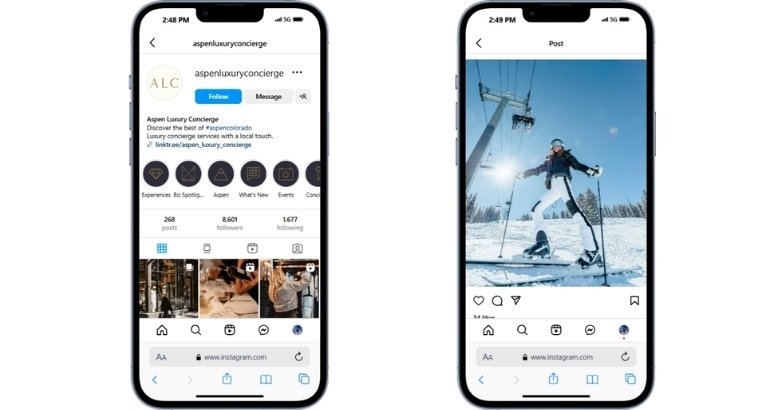
Coined as the new “word of mouth” advertising, everything is shared on social media–which, can be used to your advantage. Your social channels have the power to drive direct bookings and brand awareness, and most importantly your reputation. And it doesn’t have to be complicated. Ninety-seven percent of travelers share photos of their trips on social media creating loads of user generated content (UGC) you can leverage in addition to your social media marketing plan. Here’s how:
- Respond to, and share UGC
- Encourage positive reviews
- Engage with your followers
12. Use of AR (Augmented Reality) in Your Mobile App
Augmented Reality can turn your hotel app into a powerful engagement tool that creates unforgettable guest experiences.
By overlaying digital content on the real world, AR helps guests explore your property in an interactive way—from virtual tours of rooms and amenities to wayfinding inside the hotel.
You can even enhance local recommendations with immersive content, like restaurant previews or sightseeing guides right through the camera.
AR not only boosts excitement and engagement but also sets your brand apart with an innovative edge that today’s tech-savvy travelers crave.
AR technology is growing quickly, with the market expected to increase by 40.9% by 2030.
Hotel Mobile Marketing Tips
You already have twelve rock-solid hotel mobile marketing strategies. Push them even further with a few practical tweaks.
First, speed rules. Compress images and watch your pages fly—slow sites chase guests away. Keep a sticky Book Now button anchored near the thumb zone so visitors can convert the moment inspiration strikes.
Reward action. Drop exclusive mobile promo codes during research and you’ll turn browsers into bookers on the spot. Buttons must invite taps, not pinches, so stick to a minimum size of 44 × 44 pixels and bold colors that pop outdoors.
Quality control never sleeps. Run every booking flow on different phones and tablets before release. While you’re testing, set up segmented push notifications that speak to each guest’s interests—spa lovers get spa deals, foodies see chef specials.
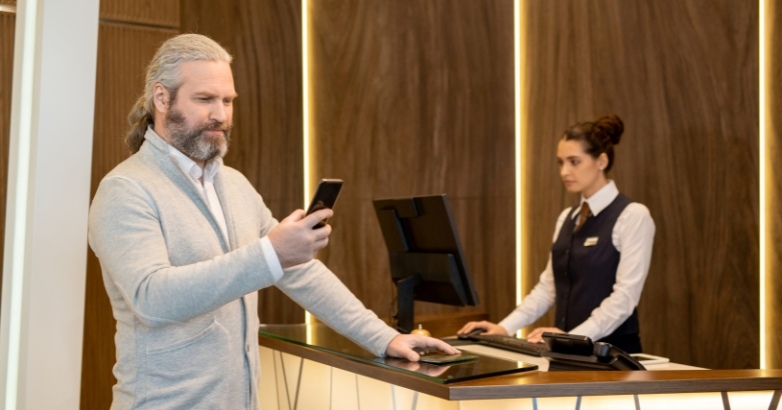
Copy counts. Short headlines, high-contrast text, and tight paragraphs respect the small screen. Prompt guests to store a digital room key in Apple Wallet or Google Wallet; this little convenience raises satisfaction and reduces front-desk lines.
Finally, measure everything. Track clicks on that sticky button, views of your AR tour, or uses of each promo code. Micro-conversion data shows where visitors stall, letting you patch leaks and watch revenue climb.
Put these quick hits in motion and your mobile presence turns from competent to unforgettable.
Ready to implement? Reach out to Mediaboom, and let’s elevate your results together.
WHAT OUR CLIENTS SAY
Case Studies
Marina Inn at Grande Dunes
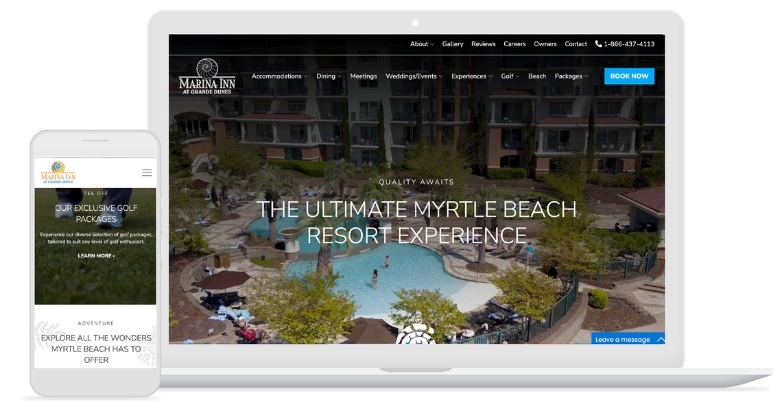
Overlooking the pristine sands of Myrtle Beach, Marina Inn offers luxury with every stay. But they faced a challenge: their digital presence wasn’t translating into enough mobile-driven bookings.
Mediaboom transformed Marina Inn’s strategy by designing a mobile-first website focused on seamless booking experiences, quick page loads, and luxury-driven visuals that look stunning on every device. We integrated enhanced SEO, a custom WordPress CMS, and streamlined navigation tailored for mobile users.
The result: a surge in organic traffic, increased mobile conversions, and a strengthened brand reputation that keeps guests coming back.
Musha Cay
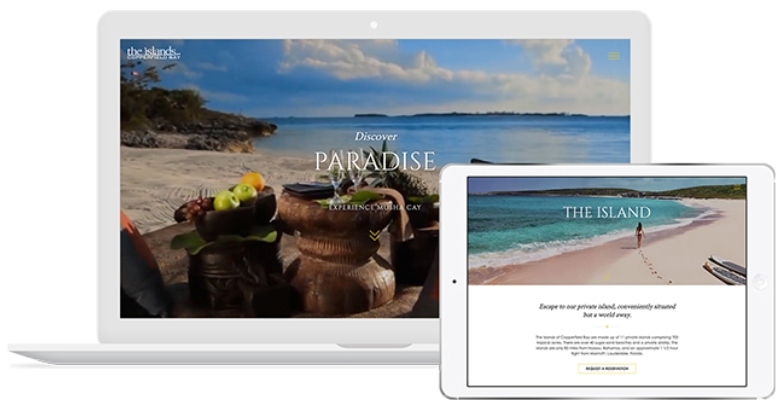
Musha Cay isn’t just a destination—it’s an exclusive, private island experience. Yet their online journey wasn’t reflecting the magic guests felt upon arrival.
Mediaboom collaborated with Musha Cay to build a mobile-optimized website, weaving custom animations, lightning-fast load times, and intuitive user paths ideal for smaller screens. Strategic SEO and advanced lead-generation tools brought their unique brand story to life, encouraging guests to connect and book directly.
The outcome: Musha Cay now enjoys higher guest engagement, more organic mobile traffic, and a steady rise in bookings—all supported by a seamless, elegant digital experience.
Elevate Your Hospitality Brand Today
Schedule Your Free Consultation
Seeking to elevate your business? Let Mediaboom guide you. Secure your exclusive, free consultation with our digital marketing experts today.
Take Away
Mobile marketing is no longer just a trend—it’s the foundation of how modern travelers choose, engage with, and return to your hotel.
By integrating these 12 mobile strategies into your hotel’s marketing plan, you’re not only meeting guest expectations—you’re exceeding them.To get the most out of mobile engagement, contact Mediaboom and let our experts handle this task for you.
By: Frank DePino
Frank DePino is the Principal and Founder of Mediaboom, a top hotel marketing agency partnering with leading hotel and hospitality brands. With 30+ years of experience, he has led strategic digital initiatives for names including Four Seasons, Ritz-Carlton, JW Marriott, Millennium Partners, and Guardian Jet. Frank helps hospitality businesses strengthen brand presence, drive qualified leads, and elevate guest experiences through website design, SEO, content marketing, and paid media. Under his leadership, Mediaboom is a trusted partner for brands pursuing measurable digital growth in a competitive hospitality landscape.