Hotel Ad Campaigns – How to Increase Direct Bookings & Maximize ROI in 2026

By: Frank DePino | February 11, 2026


In 2026, OTAs have moved beyond simple listings to aggressive brand bidding. If you search for your hotel by name, chances are an OTA ad appears at the top. This “brand poaching” diverts direct traffic into high-commission channels. According to Phocuswright 2026 data, OTA dominance in the lodging segment remains a primary challenge, as third-party platforms often control over 50% of the online booking market share (Phocuswright).
This landscape forces hotels to invest in hotel search engine marketing just to defend their own name. Research from Search Engine Journal confirms that bidding on your own brand terms can lead to a 30% increase in total clicks, ensuring you don’t lose potential guests to high-commission intermediaries. This is one of the most immediate benefits of digital marketing for hotels: brand protection.
In this guide, we will explore how a specialized hospitality advertising agency structures hotel ad campaigns that outperform OTAs, the platforms dominating 2026, and the exact KPIs you need to track to ensure every dollar spent returns maximum guest value.
Table of Contents
- Types of Hotel Ad Campaigns That Drive Direct Bookings
- How to Structure a High-Performing Campaign
- Budgeting for Hotel Ad Campaigns in 2026
- Measuring the ROI of Hotel Ad Campaigns
- Common Hotel Advertising Mistakes to Avoid
- Integrated Strategy: Ads + SEO + Website Optimization
- Success Stories In Hotel Ad Campaigns
- Frequently Asked Questions
- Ready to Launch High-ROI Hotel Ad Campaigns?
Paid Media Drives Immediate Demand
While organic growth is essential, it is slow. Paid media provides the “gas pedal” for your revenue management.
- Property Launches: Generate instant awareness for new openings.
- Seasonality: Deploy specific strategies on how to increase hotel occupancy in low season by targeting “shoulder-date” travelers.
- Precision: Move guests through the hotel marketing funnel from discovery to booking in a matter of clicks.
Download Our FREE Guide
Outrank OTAs & Drive Direct Bookings With Our Hospitality Digital Marketing Guide
Learn how leading hotels increase website traffic, reduce OTA commissions, and convert more guests with targeted digital marketing strategies.
Types of Hotel Ad Campaigns That Drive Direct Bookings
1. Google Ads for Hotels (Search + Performance Max)
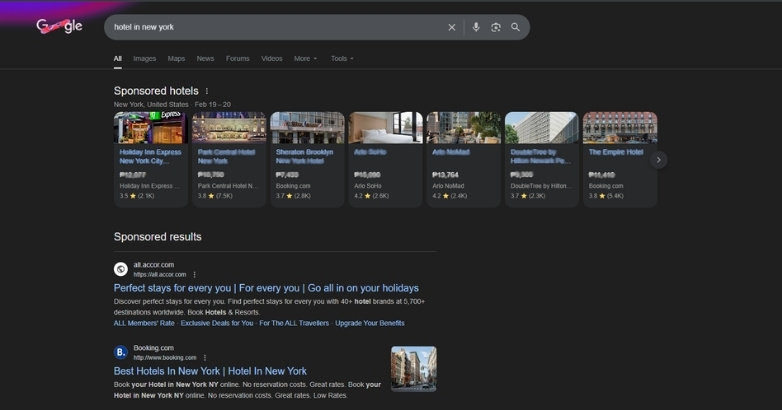
Google remains the “high-intent” king. In 2026, this involves more than just search terms; it’s about Hotel Ads integration (metasearch) and Performance Max for Travel Goals.
- Brand Protection: Bid on your own name to ensure you own the #1 spot.
- Competitor Targeting: Bid on rival properties to capture guests looking for similar experiences.
- Metasearch Optimization: Direct integration of your real-time rates into Google Maps and Search. Learn more about managing Google Ads for hotels and how it integrates with an SEO agency for hotels.
2. Paid Social Media Campaigns
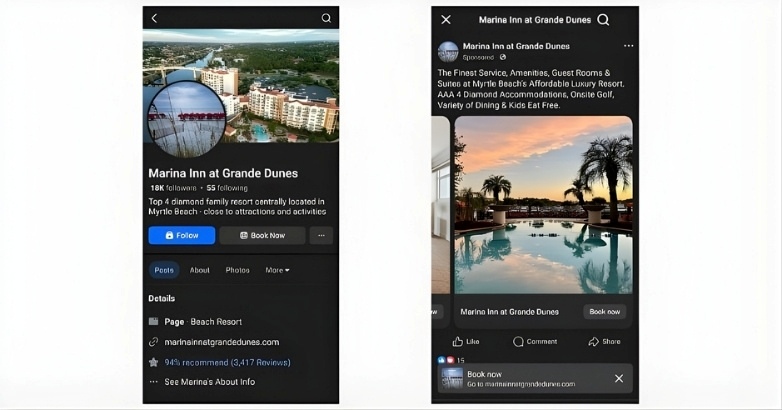
In 2026, social media for hotels is about short-form video and Dynamic Travel Ads. Platforms like Instagram and TikTok allow you to use “Lookalike Audiences” to find travelers with similar profiles to your best guests. Facebook advertising for hotels remains a powerhouse for retargeting travelers who visited your site but didn’t book.
3. Luxury Hotel Advertising Campaigns
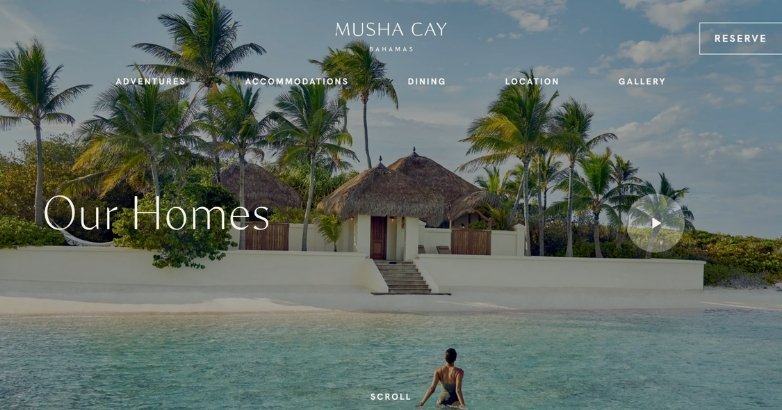
Luxury is sold through emotion, not price. Luxury hotel advertising in 2026 focuses on “Sense of Place” and exclusivity. This requires high-end audience targeting and luxury travel ads that emphasize bespoke experiences over room rates. Effective luxury hotel marketing ensures your brand feels like an invitation, not a transaction.
4. Retargeting & Display Advertising
Did a guest view a “Suite” page but leave? Retargeting allows you to show them a dynamic ad featuring that specific suite with a “Direct Booking” incentive. This is a core part of modern hotel marketing strategies.
Elevate Your Hospitality Brand Today
Schedule Your Free Consultation
Seeking to elevate your business? Let Mediaboom guide you. Secure your exclusive, free consultation with our digital marketing experts today.
How to Structure a High-Performing Hotel Ad Campaign
1. Define Clear KPIs
You cannot measure success by “clicks” alone. You must track:
- Return on Ad Spend (ROAS): Aim for a minimum of 5:1 for brand campaigns.
- Cost Per Acquisition (CPA): Keep this below what you would pay an OTA (typically < 10-12%).
- Direct Booking Rate: The percentage of ad traffic that completes a reservation. Reference our hotel marketing KPIs guide and use a Google Ads cost calculator to set benchmarks.
2. Audience Targeting Strategy
Success in 2026 is about segmentation. You must distinguish between:
- Geo-targeting: Reaching guests in high-value feeder cities.
- Psychographics: Marketing to high-end consumers who value privacy vs. budget travelers.
- Intent: Corporate travelers needing midweek stays vs. leisure travelers. Understanding your target audience for luxury brands is key to non-wasted spend.
3. High-Converting Landing Pages
An ad is only as good as the page it lands on. Using a hotel web design agency to build custom, fast-loading landing pages is essential. Generic homepages kill conversions; custom hotel website design and specialized website design services ensure your ad traffic finds exactly what they were promised.
Budgeting for Hotel Ad Campaigns in 2026
Most established hotels should allocate between 4% and 8% of total revenue to marketing. For growth-focused properties in 2026, 25–35% of that budget should go toward paid acquisition.
- Peak Season: Increase budget by 20% to capture high demand.
- Low Season: Shift budget toward retargeting and “early bird” offers for future dates. Working with a travel PPC agency can help you manage these digital marketing services for hotels with precision.

Measuring the ROI of Hotel Ad Campaigns
Track What Matters
In 2026, attribution models are more complex. A guest might see a TikTok ad, search on Google, and finally book after an email.
- Assisted Conversions: Recognize the ads that “introduced” the guest to your brand.
- Lifetime Guest Value (LGV): A $200 ad spend that acquires a $1,000 guest who returns twice a year is a massive win. This holistic view is part of the hotel digital marketing cycle and builds customer loyalty in hospitality.
Common Hotel Advertising Mistakes to Avoid
- Sending Traffic to Homepages: Use specific landing pages for specific offers.
- Ignoring Mobile: 75% of travel ad clicks happen on mobile; if your booking flow isn’t perfect, you’re burning cash.
- Underfunding Retargeting: The second or third “touch” is often where the booking happens.
- Hiring Generalists: Choosing a hotel marketing agency with hospitality-specific data is non-negotiable. Check our list of best hotel marketing agencies.

Integrated Strategy: Ads + SEO + Website Optimization
Ads do not live in a vacuum. A high-performing campaign is supported by:
- Strong SEO: SEO for hotels lowers your overall blended cost per booking.
- Content: A hospitality content marketing agency provides the stories that make your ads resonate.
- Email: Hotel email marketing ensures that once an ad brings a guest in, they stay in your ecosystem forever.
Download Our FREE Guide
Outrank OTAs & Drive Direct Bookings With Our Hospitality Digital Marketing Guide
Learn how leading hotels increase website traffic, reduce OTA commissions, and convert more guests with targeted digital marketing strategies.
Success Stories In Hotel Ad Campaigns
Marina Inn at Grande Dunes
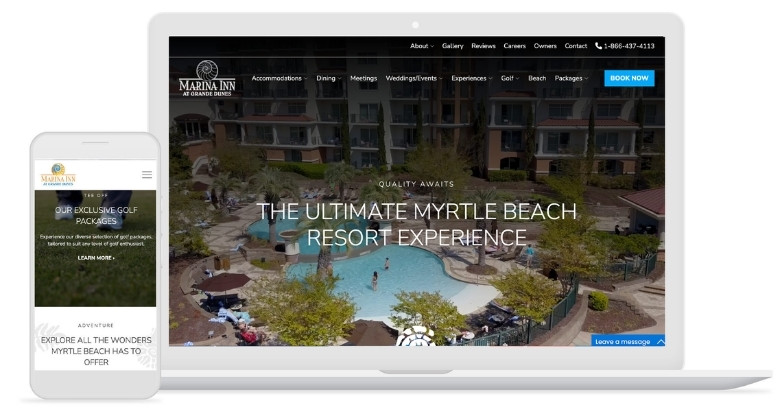
Mediaboom partnered with Marina Inn at Grande Dunes to improve performance from hotel ad campaigns and win more direct bookings from high-intent travelers. The main challenge was OTA pressure that pulled guests into commission-heavy channels right as they were ready to reserve.
To solve this, we built a Google Hotel Ads campaign designed to keep the hotel’s official listing visible when travelers compared rates on Google Search and Maps. By pushing real-time pricing and availability into the ad placement, the property stayed in front of ready-to-book guests and captured more reservations through the direct booking engine.
We supported the campaign with a stronger conversion path by upgrading visuals and refining the booking experience, so paid traffic had fewer reasons to drop off. The combined approach increased direct booking momentum and helped reduce dependence on OTAs.
Want your hotel ad campaigns to drive more direct bookings and lower OTA costs? Reach out to Mediaboom today.
JW Marriott
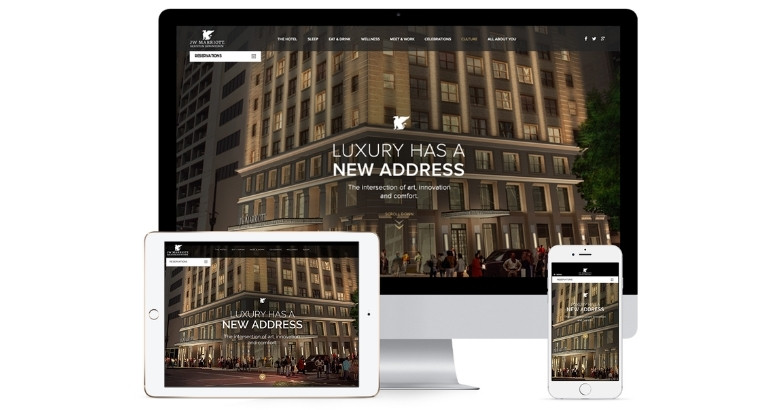
JW Marriott worked with Mediaboom to increase direct bookings using hotel ad campaigns built for travelers searching for premium accommodations. The goal was clear: shift revenue away from OTAs and back to the brand’s official booking channel.
We launched targeted Google Hotel Ads to capture high-intent searchers at the moment they were comparing options. This kept JW Marriott’s official rates and availability front and center, guiding travelers straight into the direct reservation flow instead of third-party platforms.
To raise conversion rates, we paired the campaigns with dedicated landing pages aligned to each offer. These pages matched ad intent, highlighted value, and made it easier for guests to complete reservations on mobile and desktop.
The result was a meaningful improvement in direct revenue and a drop in OTA reliance driven by smarter paid media.
Ready to reduce OTA commissions with hotel ad campaigns that convert? Connect with Mediaboom to launch a Google Hotel Ads strategy built for direct revenue.
Frequently Asked Questions
A healthy Return on Ad Spend (ROAS) typically ranges between 5:1 and 10:1 for branded search campaigns. For non-branded or luxury experiential campaigns, a 3:1 to 4:1 ratio is considered successful as these focus on top-of-funnel awareness.
OTAs frequently bid on your brand name to steal high-intent traffic. By running a brand protection campaign, you ensure your “Direct Booking” link appears at the very top, preventing guests from being diverted to a commission-heavy third-party site.
Budget varies by room count and market, but a common 2026 benchmark is allocating 3% to 5% of your monthly room revenue to Google Ads. For new launches or highly competitive urban markets, this may increase to 10% during peak periods.
DTAs are automated ads on social media that show specific rooms or offers to travelers based on their past browsing behavior on your site. For example, if a user looked at your “Penthouse Suite,” DTAs will follow them on Instagram with an ad for that specific suite.
Yes. In 2026, metasearch is a core pillar of paid media. Unlike traditional search ads, metasearch displays your real-time rates and availability directly in Google Maps and the search sidebar, allowing guests to enter the booking engine with one click.
Elevate Your Hospitality Brand Today
Schedule Your Free Consultation
Seeking to elevate your business? Let Mediaboom guide you. Secure your exclusive, free consultation with our digital marketing experts today.
Ready to Launch High-ROI Hotel Ad Campaigns?
Attention: Your competitors and OTAs are already bidding on your brand name right now. Interest: A data-driven hotel ad campaign doesn’t just “buy clicks”; it protects your brand and grows your direct revenue. Desire: Imagine reducing your OTA commission payouts by 20% this year while increasing your occupancy with high-value guests. Action: Contact Mediaboom today to launch your strategic hotel ad campaigns.
By: Frank DePino
Frank DePino is the Principal and Founder of Mediaboom, a top hotel marketing agency partnering with leading hotel and hospitality brands. With 30+ years of experience, he has led strategic digital initiatives for names including Four Seasons, Ritz-Carlton, JW Marriott, Millennium Partners, and Guardian Jet. Frank helps hospitality businesses strengthen brand presence, drive qualified leads, and elevate guest experiences through website design, SEO, content marketing, and paid media. Under his leadership, Mediaboom is a trusted partner for brands pursuing measurable digital growth in a competitive hospitality landscape.

READY TO IGNITE YOUR MARKETING STRATEGY?


