Facebook Advertising for Hotels – Complete Guide

By: Frank DePino | May 6, 2026


Loading the Elevenlabs Text to Speech AudioNative Player...
Facebook advertising for hotels works best when you need to create demand, retarget past visitors, and sell packages, experiences, or reasons to book directly, following proven Facebook ads for hotels best practices.
It is usually strongest for boutique hotels, resorts, wedding venues, spa offers, staycations, and shoulder-season pushes as part of a broader hotel marketing strategy.
If your main goal is catching travelers who are already comparing prices and dates, Google Hotel Ads is often the better first spend because it shows inside Google’s hotel booking modules on Search and Maps with live prices and booking links.
Key takeaways:
- Facebook ads usually work best for demand creation, package promotion, and retargeting, especially when hotels match the offer to the right audience and booking window.
- Google Hotel Ads is often the better first channel for high-intent travelers already comparing hotels, dates, and rates.
- Hotels should set up Meta Pixel, Conversions API, and event deduplication before judging ad performance.
- The core Meta hotel events are Search, ViewContent, InitiateCheckout, and Purchase.
- Audience structure matters more than generic travel targeting. Site visitors, abandoned searchers, abandoned checkout users, past guests, and lookalikes should not all see the same ads.
Is Your Hotel Showing Up in ChatGPT?
Travelers are increasingly using AI tools to research destinations before they ever reach a booking site. See how your hotel appears in these AI-generated answers, where competitors or OTAs may be gaining visibility, and whether there are opportunities to strengthen your presence.
Do Facebook Ads Work for Hotels?
Yes, Facebook ads can work well for hotels, but they are not the best first move for every property within facebook advertising for hotels campaigns.
They work best when the hotel has a clear offer, strong visuals, a decent booking path, and a reason for someone to act now, supported by a strong facebook page and consistent social media presence.
They work less well when the hotel is relying on generic room-night demand with no package, no retargeting setup, and no tracking.
The main strength of Facebook advertising for hotels is that it can create and recapture demand.
A traveler may not be searching for your hotel name yet, but they may respond to a spa package, a two-night weekend escape, or a direct-booking perk if the offer matches their trip style and timing.
Meta’s hotel ad documentation is built around inventory, travel signals, and retargeting or prospecting flows, which fits this use case.
Google Hotel Ads is stronger when the hotel wants to capture existing demand from travelers already searching on Google Search or Google Maps.
In practice, this usually means Facebook ads are a better fit for:
- boutique hotels with a distinct point of view
- resorts selling packages, spa, dining, or seasonal experiences
- wedding and event venues using lead-focused landing pages
- staycation and drive-market offers
- shoulder-season occupancy pushes
Google Hotel Ads is usually the better fit for:
- hotels with strong direct rates and booking perks
- properties already getting hotel search demand
- hotels that need booking capture more than awareness
- teams with a clean booking engine and current rate feeds
Facebook Ads vs Meta Hotel Ads vs Google Hotel Ads
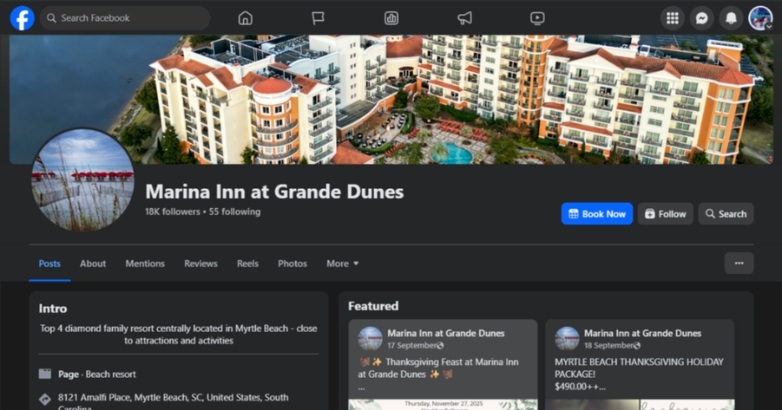
Google Hotel Ads is usually the better first spend if your hotel already has strong direct rates and wants to catch travelers who are comparing options right now.
Standard Facebook ads are usually the better first Meta option when you want to push an offer, tell a stronger story, or retarget people who visited but did not book.
Meta hotel ads sit between those two because they use hotel inventory and travel events, but they need more setup than a normal Facebook campaign.
What are standard Facebook ads for hotels?
Standard Facebook ads are the usual image, video, carousel, Reels, lead, or Messenger campaigns run through facebook ads manager.
They are best for package promotion, wedding inquiries, weekend escapes, spa offers, retargeting, and local or regional demand generation.
What are Meta hotel ads?
Meta hotel ads are catalog-based travel ads built around hotel inventory and travel intent signals.
Meta’s hotel catalog documentation says you need to share hotel information through a hotel catalog and feed, and Meta’s hotel event documentation ties the setup to Search, ViewContent, InitiateCheckout, and Purchase events.
When is Google Hotel Ads the better first spend?
Google Hotel Ads is the better first spend when the hotel has direct-booking fundamentals in place and wants more bookings from travelers already shopping on Search or Maps.
Simple decision helper:
- Start with Google Hotel Ads if your main problem is booking capture.
- Start with standard Facebook ads if your main problem is demand creation, package promotion, or retargeting.
- Move into Meta hotel ads when your hotel inventory, event setup, and technical support are ready for a more advanced travel-ad setup.
Channel fit by hotel type
| Hotel type | Better first move | Why |
| Boutique hotel | Standard Facebook ads + branded search support | Stronger story, packages, local demand, retargeting |
| Resort | Facebook ads + Google Hotel Ads | Meta sells the experience, Google catches rate shoppers |
| Wedding or event hotel | Standard Facebook ads | Better for lead generation and visual selling |
| Limited-service local hotel | Google Hotel Ads first | Closer to the booking decision |
How Should Hotels Set up Tracking for Facebook Advertising?
Hotels should not judge Facebook ad performance until facebook pixel, Conversions API, UTM tagging, and booking-engine event passing are in place.
Without that setup, booking data can be incomplete or misleading.
What should be live before spend starts?
- Meta Pixel on the website
- Conversions API for server-side event sending
- booking-engine event passing
- consistent UTM tagging into analytics, CRM, and alignment with your booking engine
- one naming system for campaigns, audiences, and offers
Why use both Meta Pixel and Conversions API?
Meta Pixel tracks browser-side activity. Conversions API sends server-side events directly to Meta. Using both gives Meta more chances to record the action correctly when browser-only tracking is limited by consent, browser rules, or page-flow issues.
How does deduplication work?
Deduplication is the method Meta uses to avoid counting the same event twice when it is sent from both browser and server. Meta’s docs say the eventID from the browser event must match the event_id in the corresponding server event for deduplication to work correctly.
Which booking events matter most for hotels?
Meta’s hotel ads event docs list four main events:
- Search on the hotel search-results page
- ViewContent on the hotel detail page
- InitiateCheckout when the user enters the payment screen
- Purchase when the booking is completed
For most hotels, the true conversion should be a completed booking. For wedding or event campaigns, a qualified lead can count as the main conversion if the landing page and sales process are built for inquiries rather than instant booking.
Calls and Messenger leads should only count if the hotel can track which ones turned into real revenue.
Is Your Hotel Showing Up in ChatGPT?
Travelers are increasingly using AI tools to research destinations before they ever reach a booking site. See how your hotel appears in these AI-generated answers, where competitors or OTAs may be gaining visibility, and whether there are opportunities to strengthen your presence.
Which Audiences Should Hotels Target on Facebook?
Hotels should split audiences by intent level, not dump everyone into one retargeting pool when running ad campaigns. Meta supports Website Custom Audiences and other custom-audience types, so the setup can be based on both site behavior and customer data.
Cold audiences
Cold audiences are people who have not visited your site or started a booking flow. For hotels, the best cold-audience angles are usually feeder markets, drive markets, city pairs, trip-type interests, event-related angles, or local escape themes, not broad travel targeting alone.
This is where standard Facebook ads usually beat Meta hotel ads on speed and flexibility, especially when using advanced targeting options.
Site visitors
Site visitors should be split into at least:
- all site visitors
- room-page viewers
- package-page viewers
- booking-engine visitors
A room-page visitor and a spa-package visitor are not the same lead. The ad they see next should match the page they already showed interest in.
Abandoned searchers vs abandoned checkout users
These should always be separate audiences. Abandoned searchers usually need stronger reasons to continue, such as flexible cancellation, breakfast, parking, or a package tie-in.
Abandoned checkout users are lower in the funnel and often need urgency, friction removal, or a reminder of the exact value they were close to buying.
Past guests and CRM audiences
Past guests are useful for repeat-stay pushes, seasonal return offers, anniversary packages, and upsells.
Meta’s audience tools allow advertiser data and website data to be used for custom and lookalike audiences, which makes CRM-based follow-up valuable when the hotel has clean guest records.
Lookalike audiences
Lookalike audiences make the most sense after the hotel has enough real booking or qualified-lead data to build effective lookalike audiences.
A lookalike built from purchasers or high-value guests is usually far better than one built from generic page traffic or page followers.
Is Your Hotel Showing Up in ChatGPT?
Travelers are increasingly using AI tools to research destinations before they ever reach a booking site. See how your hotel appears in these AI-generated answers, where competitors or OTAs may be gaining visibility, and whether there are opportunities to strengthen your presence.
How Should Hotels Retarget by Booking Window?
Hotels should change the message by booking window because the same ad does not fit every stage of the facebook marketing funnel. The logic is simple: shorter windows need direct response, mid windows need proof and value, and long windows need planning and inspiration.
Meta’s hotel and travel ad setup is built around travel events that make this kind of audience grouping possible.
0 to 3 days
This is the highest-intent group. Use room-focused ads, direct-booking perks, limited-time reminders, and short copy that points back to the booking flow.
Example angle: Book direct today for breakfast, parking, and flexible cancellation. Finish your stay in two clicks.
4 to 14 days
This is a comparison-stage group. Use social proof, amenity detail, package fit, and clear reasons to choose your property over similar options.
Example angle: Still comparing weekend stays? See why guests choose our spa hotel for late checkout, couples packages, and easy downtown access.
15 to 60 days
This group often needs more trip framing. Use destination hooks, itinerary-style creative, and package-led messaging.
Example angle: Plan your summer weekend now with a two-night stay, spa credit, and rooftop dinner package.
60+ days
This is long-window planning. Use seasonal events, early-booking offers, weddings, family break periods, and major local happenings.
Example angle: Reserve your fall foliage escape early and get the best room choice plus a direct-booking perk.
What Facebook Ad Campaigns Work Best for Different Hotel Goals?
Hotels should build campaigns around the reason someone would book, not around the ad format alone, ensuring alignment across facebook ads for your hotel and landing pages. The audience, the offer, the creative angle, and the landing page all need to match.
Direct bookings
- Audience: booking-engine visitors, room-page visitors, brand-aware traffic
- Offer: breakfast, parking, late checkout, flexible cancellation
- Creative: room plus value-add plus clear booking CTA
- Landing page: direct-booking offer page, not the homepage
Weekend escapes
- Audience: couples in drive markets, recent site visitors, warm local audiences
- Offer: two-night package, dining credit, spa add-on
- Creative: itinerary feel, not just room photos
- Landing page: package page with dates, inclusions, and booking button
Weddings and events
- Audience: engaged couples, venue researchers, local and regional warm traffic
- Offer: venue tour, brochure, pricing request
- Creative: ceremony, reception, guest experience, planner pain points
- Landing page: wedding page with inquiry form and proof points
Spa packages
- Audience: wellness-focused warm traffic, couples, past guests
- Offer: room plus treatment plus dining or late checkout
- Creative: full stay experience, not spa-only imagery
- Landing page: spa package page with inclusions and booking path
Shoulder season and staycations
- Audience: nearby cities, drive markets, past guests, local followers
- Offer: midweek rate, local escape, value bundle
- Creative: convenience and quick reset
- Landing page: seasonal package page with a clear deadline
How Much Should Hotels Spend and What KPIs Matter?
Hotels should judge Facebook ads by stage, not by one top-line number, especially when measuring brand awareness and booking intent. Awareness campaigns, retargeting campaigns, and booking campaigns do different jobs, so the KPI set should change with the campaign objective.
Start budget logic
Do not set a budget so low that you cannot test properly. A hotel should budget enough to test:
- 2 to 3 audiences
- 2 to 3 creative angles
- at least 1 strong offer
- enough time to gather event data before cutting the campaign
This is more useful than chasing one universal budget number for every hotel, location, and season.
KPIs by stage
| Stage | Best KPIs |
| Awareness | reach, impressions, click-through rate, landing-page engagement |
| Consideration | landing-page views, package-page visits, booking starts, cost per engaged visit |
| Booking | InitiateCheckout, purchase, cost per booking, direct booking revenue, ROAS |
The wrong KPI causes bad decisions. Likes and low-cost clicks can look good while bookings stay flat.
For most hotels, the signal that matters is progress from Search to ViewContent to InitiateCheckout to Purchase, with revenue tied back to that path.
Is Your Hotel Showing Up in ChatGPT?
Travelers are increasingly using AI tools to research destinations before they ever reach a booking site. See how your hotel appears in these AI-generated answers, where competitors or OTAs may be gaining visibility, and whether there are opportunities to strengthen your presence.
What Mistakes Hurt Facebook Advertising for Hotels?
Most hotel Facebook campaigns fail for boring reasons, not because facebook advertising “doesn’t work.”
The common issues are poor offer matching, weak landing paths, and broken tracking.
- Sending traffic to the homepage instead of the matching offer or booking page.
- Running ads before Meta Pixel and Conversions API are live.
- Skipping deduplication and double-counting events.
- Treating all site visitors as one retargeting audience.
- Using the same ad for weddings, leisure stays, spa packages, and staycations.
- Using generic room photos with no reason to book now.
- Judging success by clicks instead of bookings or qualified leads.
- Leaving the same creative live for too long.
- Ignoring booking-window timing.
- Using vague CTAs when “Book Direct,” “View Package,” or “Request Pricing” would be clearer.
FAQs about Facebook advertising for hotels
Do Facebook ads work better for hotels than Google Hotel Ads?
No, not as a blanket rule. Google Hotel Ads is usually stronger for bottom-funnel booking capture, while Facebook ads are usually stronger for demand creation, retargeting, and package-led offers.
What is a good starting budget for Facebook advertising for hotels?
A good starting budget is one that lets you test a few audiences, a few creatives, and one real offer without cutting too early. There is no single budget that fits every hotel, so judge the plan by testing depth and usable event volume, not by one fixed number.
Should hotels use standard Facebook ads or Meta hotel ads?
Most hotels should start with standard Facebook ads because they are easier to launch and give more room for offer-led creative. Meta hotel ads make more sense once your hotel catalog, events, and technical setup are ready.
What conversions should a hotel track on Facebook?
Hotels should track Search, ViewContent, InitiateCheckout, and Purchase as the core booking path. Wedding and event campaigns can also track qualified leads if the landing page is built for inquiries instead of instant booking.
Do hotels need both Meta Pixel and Conversions API?
Yes, in most cases they do. Meta’s own docs support using Conversions API alongside browser events, and proper deduplication keeps the same event from being counted twice.
Should hotel Facebook ads send people to the homepage?
Usually no. The landing page should match the promise in the ad, so package ads should go to package pages, wedding ads should go to wedding pages, and direct-booking ads should go to the booking path or direct-offer page.
Can small boutique hotels compete with larger brands on Facebook?
Yes, they can. Small hotels often have an advantage when they have a sharper point of view, better package framing, and stronger local or regional targeting than a generic chain campaign.
WHAT OUR CLIENTS SAY
What Should Hotels Do Next?
Facebook advertising for hotels works best when the strategy matches the property, the offer, and the booking stage.
For most hotels, that means choosing the right channel first, setting up tracking correctly, and running campaigns built around real booking goals instead of broad awareness alone.
If your hotel wants more direct bookings from paid media, Mediaboom can help you build a smarter Facebook and Google ads strategy, tighten tracking, and turn more traffic into revenue.
Contact Mediaboom to discuss your hotel, your goals, and the best next step for your paid campaign mix.
By: Frank DePino
Frank DePino is the Principal and Founder of Mediaboom, a top hotel marketing agency partnering with leading hotel and hospitality brands. With 30+ years of experience, he has led strategic digital initiatives for names including Four Seasons, Ritz-Carlton, JW Marriott, Millennium Partners, and Guardian Jet. Frank helps hospitality businesses strengthen brand presence, drive qualified leads, and elevate guest experiences through website design, SEO, content marketing, and paid media. Under his leadership, Mediaboom is a trusted partner for brands pursuing measurable digital growth in a competitive hospitality landscape.