Digital Marketing for the Travel Industry – 8 Strategies for 2026

By: Frank DePino | July 27, 2026


Loading the Elevenlabs Text to Speech AudioNative Player...
Digital marketing for the travel industry combines websites, search, AI-powered discovery, content, social media, advertising, travel platforms, email, and analytics to turn travel interest into bookings.
The strongest strategies follow travelers from inspiration to purchase, remove friction from the booking process, and measure revenue rather than traffic alone.
Social media now plays a major role in discovery. More than 60% of consumers in Expedia Group’s 2025 Traveler Value Index cited it as a source of travel inspiration. That makes consistent visibility across search, social media, reviews, and booking channels essential.
This guide applies to hotels and resorts, travel agencies, tour operators, attractions, and destination marketing organizations.
Is Your Hotel Showing Up in ChatGPT?
Travelers are increasingly using AI tools to research destinations before they ever reach a booking site. See how your hotel appears in these AI-generated answers, where competitors or OTAs may be gaining visibility, and whether there are opportunities to strengthen your presence.
What Is Digital Marketing for the Travel Industry?
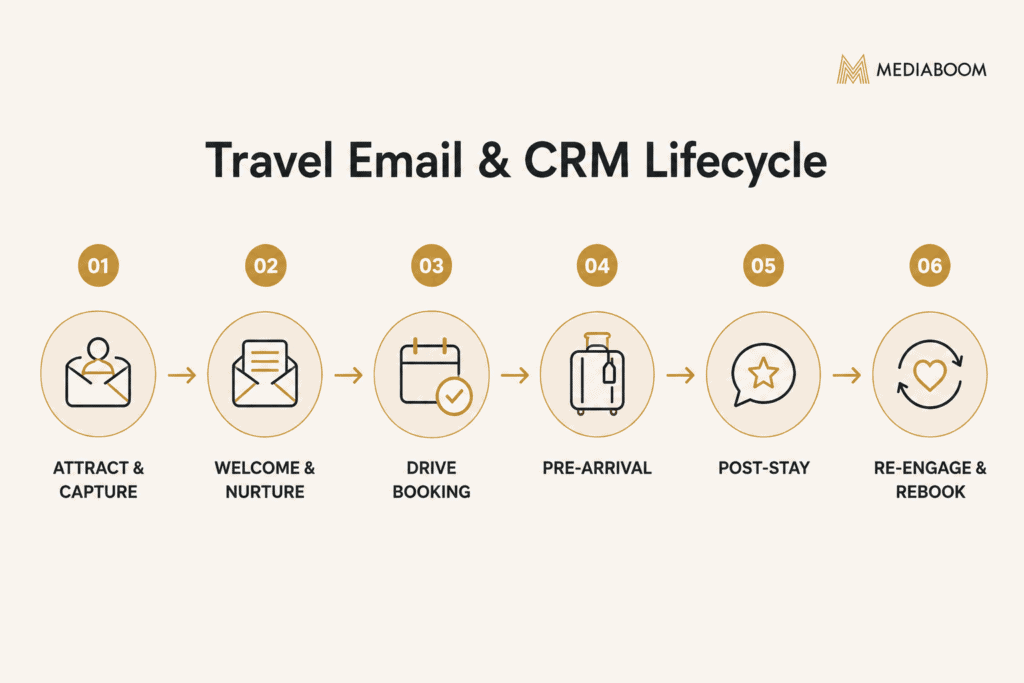
Digital marketing for travel and tourism is the use of online channels to attract, convert, and retain travelers. The right channel depends on where the traveler is in the decision journey:
| Journey stage | Useful channels | Primary KPI |
| Discover | SEO, social media, video, digital PR | Qualified reach |
| Consider | Destination content, reviews, email, retargeting | Engaged visits and leads |
| Book | Website, paid search, metasearch, travel listings | Conversion rate and direct bookings |
| Retain | CRM, email automation, loyalty campaigns | Repeat revenue |
The goal is not to use every channel. It is to create a connected system in which each touchpoint moves the traveler toward a measurable next step.
The 8 Best Digital Marketing Strategies for Travel Businesses
1. Build a Fast, Persuasive Booking Experience
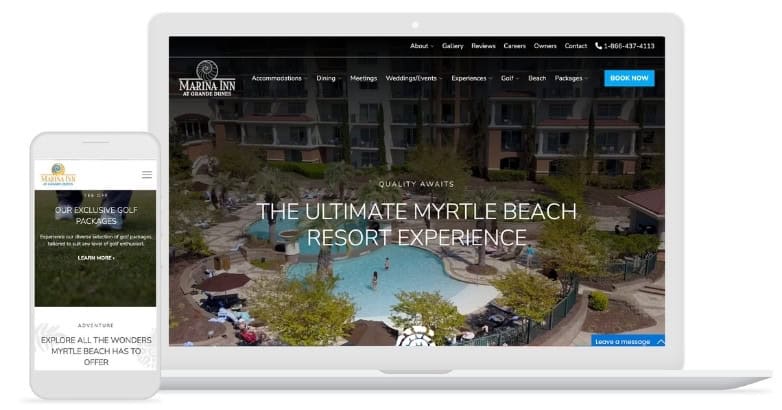
Your website should make the value of the trip clear within seconds and make the next step easy on mobile. Place availability, pricing, cancellation terms, reviews, and calls to action close to the decision point.
Create dedicated pages for important destinations, accommodations, tours, packages, amenities, and traveler types. Keep forms short, compress large images, and test the complete inquiry or booking flow on several phones.
For higher-consideration trips, provide an obvious path to speak with an advisor. For instant bookings, remove unnecessary steps between checking availability and paying.
Start here: Measure booking-engine starts, completed bookings, form completions, and abandonment by device. Fix the highest-friction step first.
2. Optimize for SEO, Local Search, and AI Discovery
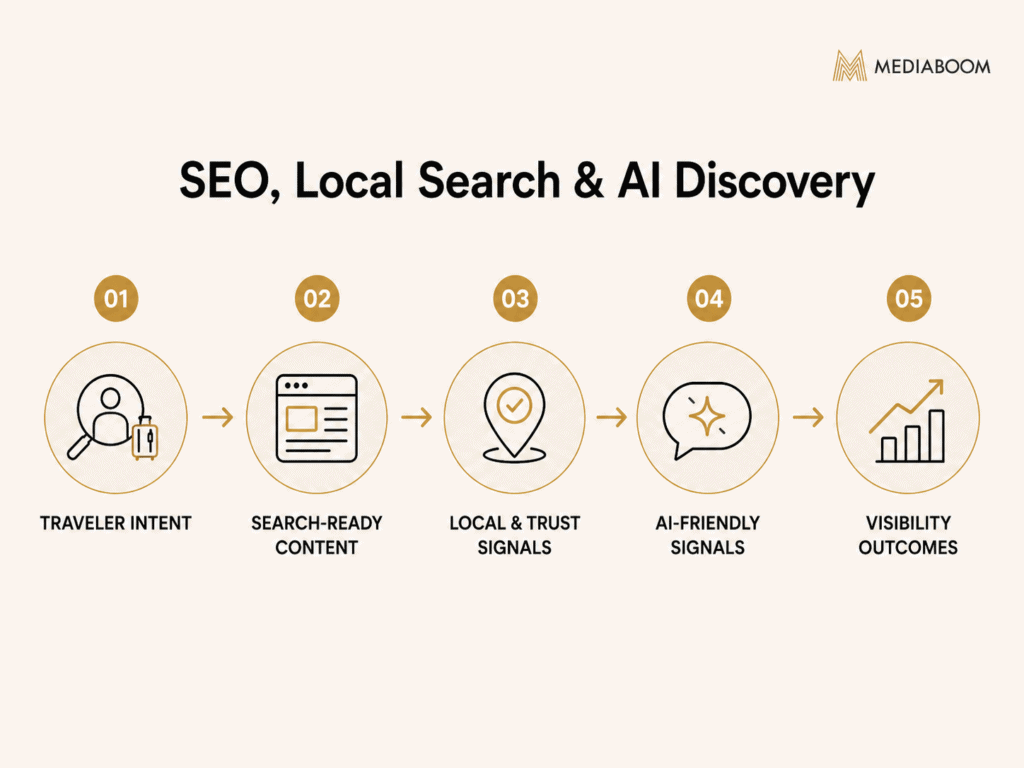
Build pages around real traveler intent, such as “private wine tours in Napa,” “family resort in Key West,” or “seven-day Japan itinerary.” Each page should answer the query directly, demonstrate first-hand expertise, and guide the reader toward a relevant service or booking page.
Optimize titles, headings, internal links, images, location details, and Google Business Profile information. Keep names, addresses, phone numbers, hours, amenities, and booking links consistent wherever the business appears online.
Earn relevant links through tourism boards, local partners, respected travel publications, media coverage, and original research rather than low-quality placements.
For generative engine optimization, publish concise answers, accurate facts, named expert authors, original observations, and primary-source citations.
Google’s current guidance says that foundational SEO still applies to AI Overviews and AI Mode; special AI markup, forced micro-chunking, and separate AI versions of pages are not required.
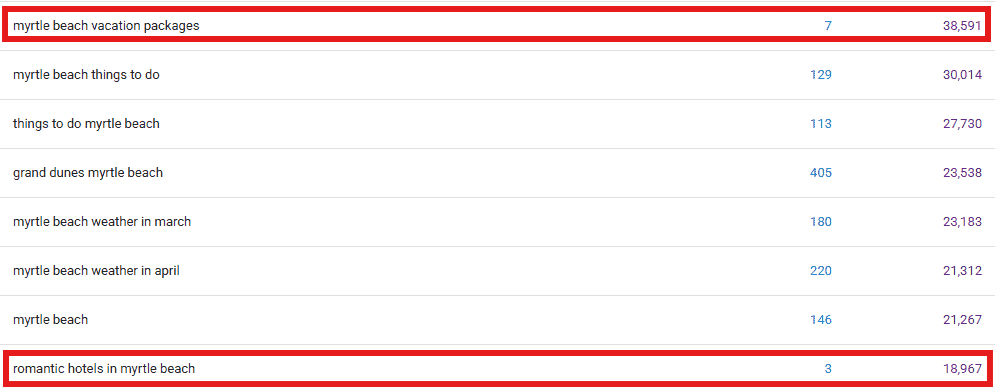
Start here: Use Google Search Console to find high-impression queries with weak click-through rates or rankings. Improve the matching page instead of creating a near-duplicate article.
Elevate Your Hospitality Brand Today
Schedule Your Free Consultation
Seeking to elevate your business? Let Mediaboom guide you. Secure your exclusive, free consultation with our digital marketing experts today.
3. Map Content to the Traveler Journey
Travel content should help people move through inspiration, planning, comparison, and booking.
Use destination stories, photography, and short video to create demand. Publish seasonal guides, itineraries, maps, packing advice, and local recommendations for planning. Use comparison pages, reviews, FAQs, and transparent policies to resolve objections.
Link each resource to the most relevant room, package, tour, or consultation page.
Avoid generic destination summaries that repeat information available elsewhere. Local interviews, expert recommendations, original images, pricing context, sample schedules, and lessons from actual guests create information competitors cannot easily reproduce.
Start here: Build one content cluster around a commercially important destination or experience, with a main service page supported by three to five useful planning resources.
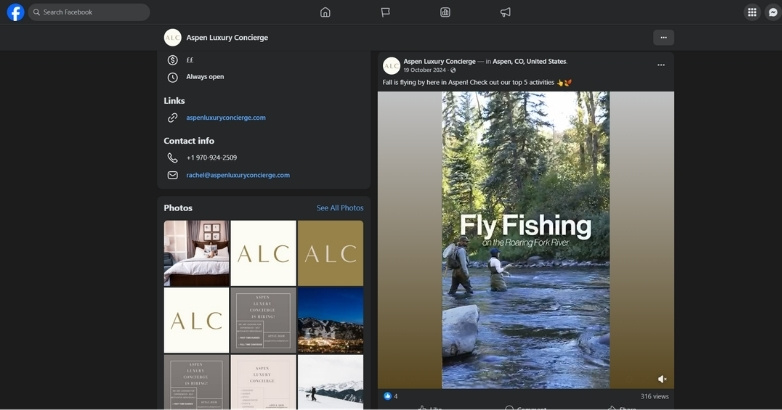
4. Turn Social Media, Video, UGC, and Influencers Into Demand
Travel is visual, but attractive imagery alone is not a strategy. Publish content that answers practical questions and shows what the experience actually feels like.
Useful formats include:
- Room or tour walkthroughs
- Sample itineraries
- Guide introductions
- Seasonal conditions
- Guest stories
- “What to expect” videos
Reuse customer content only with permission. Choose influencers based on audience fit, credibility, content quality, and attributable results—not follower count alone.
Treat reviews as conversion content. Request them after the trip, respond professionally, and place relevant verified testimonials near booking decisions.
Start here: Give every campaign one next step, such as checking availability, viewing an itinerary, joining an email list, or booking. Track those actions with tagged links and dedicated landing pages.
5. Capture High-Intent Demand With Paid Media
Use paid search when travelers are actively looking for a destination, property, tour, or service. Use paid social and video to build demand earlier, then retarget people who viewed important pages or began a booking.
Segment campaigns by:
- Origin market
- Destination
- Travel window
- Party type
- Interests
- Search intent
Account for seasonality and the time between research and departure so campaigns launch before demand peaks.
Match every advertisement to a focused landing page. A “romantic weekend in Newport” ad should not send visitors to a generic homepage. It should lead to a relevant offer with matching imagery, details, proof, and availability.
Start here: Optimize for qualified leads, completed bookings, cost per acquisition, and return on ad spend. Exclude recent customers from acquisition campaigns unless the offer supports an upsell.
Download Our FREE Guide
Attract More Travelers & Boost Bookings With Our Hospitality Digital Marketing Guide
Uncover how travel brands are using content, SEO, and paid media to reach ideal audiences, build loyalty, and increase direct engagement across the booking journey.
6. Use Travel-Specific Search and Booking Placements
General SEO and advertising are not enough for every travel business. Use the distribution products built for the category. Hotels can use Google free booking links and Hotel Ads to display rates and send travelers to direct booking pages. Google states that clicks from free booking links carry no placement fee.
Tour operators, attractions, and activity providers can surface bookable inventory through Google Things to do free listings and ads.
Online travel agencies can expand reach, especially in new markets, but their commissions affect profitability and customer ownership. Give travelers a credible direct-booking benefit, such as:
- More flexible terms
- An exclusive package
- Loyalty value
- A complimentary amenity
- Easier changes or cancellation
Start here: Keep prices, availability, images, descriptions, and landing pages accurate. Compare channels using net revenue after media costs, platform fees, and commissions—not gross booking value.
7. Use Email and First-Party Data to Increase Customer Value
Email and CRM programs help convert undecided visitors, improve the trip experience, and generate repeat business.
Segment contacts by destination interest, traveler type, booking stage, purchase history, and travel dates. Build automated sequences for:
- Welcome and lead nurturing
- Incomplete bookings or inquiries
- Pre-arrival information
- Relevant upgrades
- Post-trip reviews
- Rebooking offers
AI can help recommend relevant destinations, experiences, or upgrades, but customer consent, accurate data, and human review should govern the automation.
Personalization should change the usefulness of the message, not merely insert a first name. Collect data transparently and allow subscribers to control their preferences.
Start here: Track revenue per recipient, automated-flow revenue, lead-to-booking rate, repeat-booking rate, and unsubscribes.
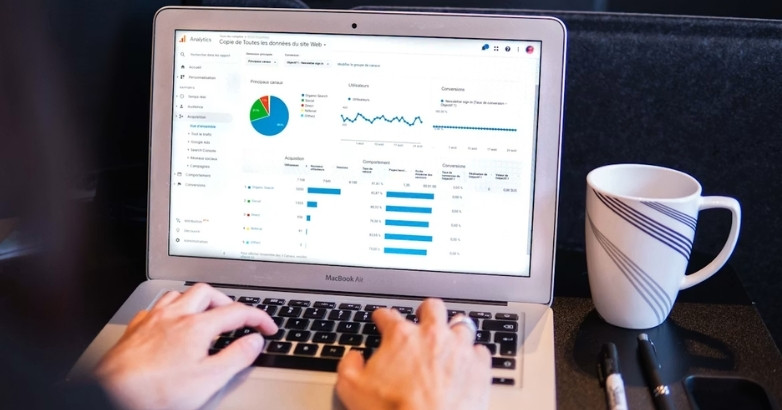
8. Connect Marketing Activity to Revenue
A useful dashboard connects discovery, engagement, bookings, and profit.
Track:
- Qualified inquiries
- Booking-engine starts
- Completed bookings
- Conversion rate
- Direct-booking share
- Customer acquisition cost
- Return on ad spend
- Repeat revenue
Break results down by destination, audience, device, campaign, and landing page.
Use Search Console for Google search performance, GA4 for website behavior, advertising platforms for media data, and the CRM or booking system as the source of truth for customers and revenue.
Bing Webmaster Tools’ AI Performance report can also show when individual pages are cited across supported Microsoft AI experiences. The feature was released in public preview in February 2026.
Start here: Review performance monthly. Move budget toward the audiences, offers, pages, and channels producing profitable bookings—not those generating the most impressions.
Which Strategies Should Each Travel Business Prioritize?
| Business type | Highest-priority starting points |
| Hotel or resort | Booking experience, local SEO, reviews, free booking links, Hotel Ads, email |
| Travel agency | Niche service pages, itinerary content, paid search, lead nurturing, CRM |
| Tour operator or attraction | Things to do listings, local SEO, video, reviews, retargeting |
| Destination organization | Destination content, creator partnerships, organic search, partner referrals |
Priorities should reflect margins, seasonality, booking value, sales cycle, and whether the main conversion is an instant reservation or a qualified inquiry.

A Practical 90-Day Travel Marketing Plan
Days 1–30: Establish the Foundation
Confirm analytics and conversion tracking, audit the mobile booking journey, review technical SEO, update business profiles, and identify the highest-value audiences and destinations.
Days 31–60: Improve Visibility and Conversion
Strengthen core service and destination pages, publish one supporting content cluster, add relevant reviews and proof, and connect applicable Google travel listings or feeds.
Days 61–90: Launch and Optimize
Launch one high-intent paid campaign, build retargeting and email automation, test a focused offer, and review performance against bookings, acquisition cost, and net revenue.
Digital Marketing Case Studies
Musha Cay
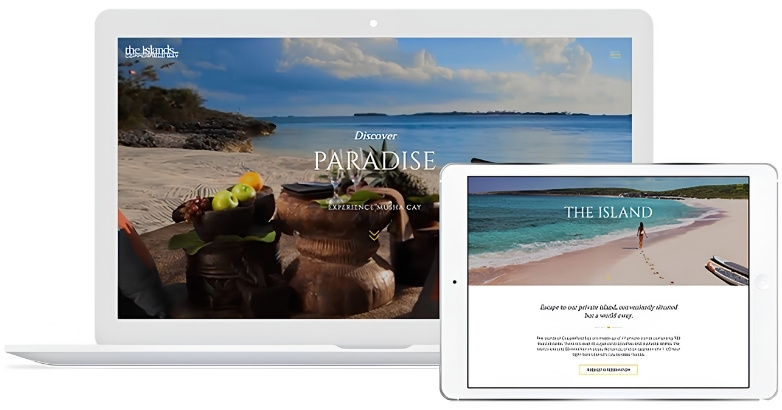
Mediaboom partnered with David Copperfield’s Musha Cay to create a luxury travel website built around emotion, storytelling, and visual immersion. The project included website design, development, animation, and SEO.
We used custom animation to transform a still sandbar photo into a moving scene with waves and clouds. This helped visitors feel the calm, private-island experience before booking.
The outcome? A distinctive digital presence built to attract luxury travelers and support direct vacation inquiries. The client praised Mediaboom’s dedication and attention to detail at 110%.
Overland Summers
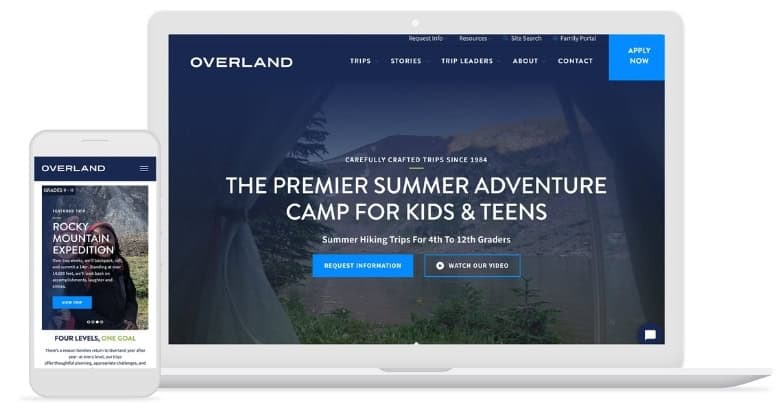
For Overland Summers, we helped to expand its digital reach through website design, website development, SEO, and paid advertising. The new site captured the brand’s sense of adventure, friendship, and personal growth.
We built a custom WordPress CMS, improved the sitemap, created a mobile-friendly mega-menu, and optimized content for search visibility. The Facebook ad campaign helped widen Overland’s reach across its target audience.
The result? +1,860% leads, +410% clicks, and +114.7% impressions, giving Overland Summers a stronger path to connect with families searching for meaningful youth travel programs.
WHAT OUR CLIENTS SAY
Frequently Asked Questions
I. What is the best digital marketing strategy for a travel business?
The best strategy combines a conversion-focused website, high-intent search visibility, persuasive proof, and follow-up through paid media or email. The channel mix should reflect the target traveler, booking window, margins, and whether customers book instantly or speak with an advisor.
II. How can a travel brand increase direct bookings?
Make the direct booking process fast, display pricing and policies clearly, strengthen reviews, use relevant Google travel placements, retarget interested visitors, and offer a meaningful direct-booking advantage.
III. What is GEO in travel marketing?
Generative engine optimization improves the likelihood that accurate brand information is understood and cited in AI-generated answers. It relies on strong SEO foundations, crawlable pages, direct answers, expert authorship, original evidence, consistent business details, and trustworthy citations.
IV. Which metrics matter most in travel marketing?
Prioritize completed bookings or qualified leads, conversion rate, customer acquisition cost, return on ad spend, direct-booking share, and repeat revenue. Traffic, rankings, impressions, and engagement are diagnostic metrics rather than final business outcomes.
Elevate Your Hospitality Brand Today
Schedule Your Free Consultation
Seeking to elevate your business? Let Mediaboom guide you. Secure your exclusive, free consultation with our digital marketing experts today.
Build a Travel Marketing System That Drives Bookings
Successful digital marketing for the travel industry is not about publishing on every channel. It is about matching traveler intent, earning trust, removing booking friction, and investing in the activities that produce profitable growth.
Mediaboom creates integrated website, SEO, content, paid media, and email strategies for travel and hospitality brands. Contact our team to build a measurable plan for increasing qualified demand and direct bookings.
By: Frank DePino
Frank DePino is the Principal and Founder of Mediaboom, a top hotel marketing agency partnering with leading hotel and hospitality brands. With 30+ years of experience, he has led strategic digital initiatives for names including Four Seasons, Ritz-Carlton, JW Marriott, Millennium Partners, and Guardian Jet. Frank helps hospitality businesses strengthen brand presence, drive qualified leads, and elevate guest experiences through website design, SEO, content marketing, and paid media. Under his leadership, Mediaboom is a trusted partner for brands pursuing measurable digital growth in a competitive hospitality landscape.