Internet Marketing for Hotels – The Direct Booking Playbook

By: Frank DePino | July 30, 2026


Loading the Elevenlabs Text to Speech AudioNative Player...
Internet marketing for hotels is the set of online tactics that helps properties attract travelers, win direct bookings, and bring past guests back.
A strong plan starts with a fast, mobile-friendly website and clear booking path, then adds local SEO, Google Business Profile, Hotel Ads, paid media, content, social proof, email, and review management.
The goal is not just more traffic, it is more profitable reservations.
Key takeaways:
- Direct bookings begin with a fast hotel website and a simple booking path.
- Local SEO and Google Business Profile help hotels appear when travelers search by destination, amenity, or nearby attraction.
- Google free booking links and Hotel Ads can place hotel rates in front of high-intent travelers. Google states that free booking links do not charge for clicks, while Hotel Ads are paid placements.
- Social media and AI tools are changing trip planning. Amadeus found that social media became the top U.S. travel inspiration source in 2025, while AI travel planning use also grew.
- Email, reviews, and guest data help hotels raise repeat bookings and protect profit margins.
Is Your Hotel Showing Up in ChatGPT?
Travelers are increasingly using AI tools to research destinations before they ever reach a booking site. See how your hotel appears in these AI-generated answers, where competitors or OTAs may be gaining visibility, and whether there are opportunities to strengthen your presence.
What Is Internet Marketing for Hotels?
Internet marketing for hotels refers to the online strategy a hotel uses to attract, convert, and retain guests.
It includes hotel website design, search engine visibility, Google Business Profile, Google Hotel Ads, paid search, paid social, email marketing, review management, content marketing, and analytics.
For hotels, the best online strategy connects every channel to one goal: profitable bookings. A blog post may bring in a traveler researching “best weekend trips near Charleston.”
Google Business Profile may help that traveler compare photos, reviews, amenities, and rates. Paid search ads may bring them back later. A follow-up email may turn that first stay into a second booking.
When these pieces work together, the hotel gains more control over the guest journey instead of relying only on OTAs.
Why Does Internet Marketing Matter for Hotels Today?
Hotels compete in a crowded online space. Guests compare properties on Google, OTAs, social media, review sites, maps, and travel content before they book.
A property may have excellent rooms and service, but if its website is slow, its Google profile is thin, or its reviews are unanswered, guests may choose another hotel.
Internet marketing matters because it helps hotels:
- Increase direct bookings
- Lower dependence on high-commission channels
- Own more guest data
- Build brand trust before arrival
- Reach guests during research, comparison, booking, and post-stay phases
OTAs can still be useful. They help fill rooms and reach travelers who may not know the property. The issue is balance.
A healthy hotel marketing plan uses OTAs as one channel while building stronger direct booking demand through owned and paid channels.
Which Internet Marketing Channels Work Best for Hotels?
The best channel depends on the hotel’s goals, budget, market, and booking mix. Still, most hotels need a mix of high-intent, trust-building, and retention channels.
| Channel | Best For | Pros | Cons |
| Hotel website | Direct bookings | Full control over guest path and brand | Weak booking UX hurts results |
| Local SEO | Destination searches | Builds long-term visibility | Takes ongoing updates |
| Google Business Profile | Search and Maps visibility | Helps guests compare quickly | Old photos or missing amenities hurt trust |
| Google Hotel Ads | Rate shoppers | Strong for high-intent guests | Needs accurate rates and tracking |
| Paid search | Brand defense and demand capture | Fast visibility | Can waste spend without good landing pages |
| Paid social | Offers and inspiration | Strong for visual properties | Lower intent than search |
| Content marketing | Trip planning searches | Builds trust over time | Slower payoff |
| Social media | Inspiration and proof | Shows the guest experience | Can become vanity posting |
| Email marketing | Repeat guests | Low cost, high relationship value | Needs clean data and consent |
| Reviews | Booking confidence | Supports trust and conversion | Needs staff process |
The strongest direct booking plan usually starts with the website, local SEO, Google Business Profile, and Google hotel booking tools. Paid ads, content, social media, email, and reviews then support each stage of the guest journey.
How Can a Hotel Website Drive More Direct Bookings?
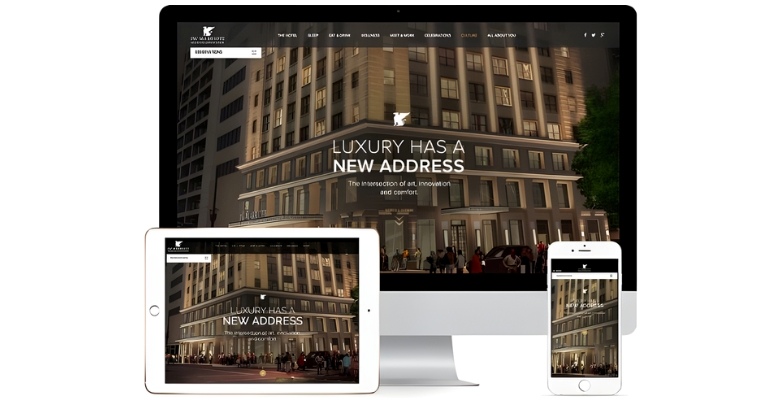
Your hotel website is the center of your online marketing strategy. Every channel should send guests to a page that makes booking easy.
A high-performing hotel website should include:
- Fast mobile loading
- Simple navigation
- Clear room details
- Strong photography and short video
- A visible booking button
- Rate clarity
- Direct booking perks
- Reviews and trust signals
- Easy-to-find policies
- Local attraction and experience pages
- Event, wedding, dining, spa, or package pages where relevant
Before paying for ads, check the booking path. Can a guest move from room selection to checkout without confusion?
Are fees, taxes, policies, and availability clear? Does the booking engine feel like part of the hotel website, or does it look disconnected?
Hotels should also track website performance by source. A campaign is only useful if you know whether it produced bookings, abandoned carts, calls, form fills, or package inquiries.
How Can Hotels Rank in Local Search and Google Travel Results?
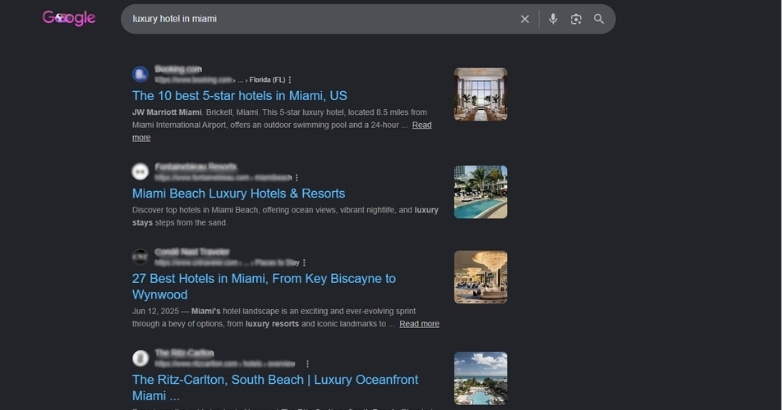
Local SEO helps hotels appear when travelers search for a place to stay in a specific city, neighborhood, or near an attraction.
This is a major part of internet marketing for hotels because many guests search with location-based intent.
Hotels should focus on:
- Google Business Profile accuracy
- Current photos of rooms, lobby, dining, views, amenities, and exterior
- Correct amenities and attributes
- Review volume and response quality
- Local landing pages
- Nearby attraction pages
- Event and seasonal pages
- Schema markup where appropriate
- Consistent name, address, and phone number across directories
Google’s hotel free booking links can show a hotel name, site name, and room rate, then send users to the landing page the hotel provides.
Google also says free booking link ranking can consider signals such as user preference, value, landing page experience, and price accuracy.
This means hotels should not treat Google Business Profile, Hotel Center, rate feeds, and landing pages as separate items.
They all affect how easy it is for travelers to compare and book.
For AI-influenced search results, Google says standard SEO best practices still matter.
Pages should be indexable, easy to find through internal links, useful to people, supported by strong images or video when relevant, and aligned with visible structured data.
Elevate Your Hospitality Brand Today
Schedule Your Free Consultation
Seeking to elevate your business? Let Mediaboom guide you. Secure your exclusive, free consultation with our digital marketing experts today.
How Should Hotels Use Paid Ads, Hotel Ads, and Retargeting?
Paid media works best when it sends guests to specific, booking-ready pages.
Hotels can use paid ads for:
- Brand search campaigns
- Non-brand destination searches
- Google Hotel Ads
- Retargeting
- Paid social offers
- Wedding and event inquiries
- Seasonal packages
- Spa, dining, and local getaway campaigns
Brand campaigns protect searches for the hotel’s own name. Non-brand campaigns can target phrases such as “luxury hotel in Napa Valley” or “boutique hotel near downtown Charleston.”
Google Hotel Ads and free booking links are especially useful because they appear when travelers are comparing dates, rates, and availability.
Retargeting can bring back guests who viewed rooms, packages, or wedding pages but did not book.
The key is to avoid generic ads. A guest who viewed a spa package should see that offer again, not a broad homepage ad.
How Can Hotels Use Content and Social Media to Reach Future Guests?
Travelers often research the trip before they choose the hotel. Content marketing helps your property appear during that early planning stage.
Useful hotel content includes:
- Local travel guides
- Weekend itinerary pages
- “Best things to do near…” articles
- Seasonal event guides
- Wedding planning content
- Meeting and group travel pages
- Restaurant, spa, wellness, and experience content
- Room and suite comparison pages
- FAQs about parking, pets, accessibility, check-in, and policies
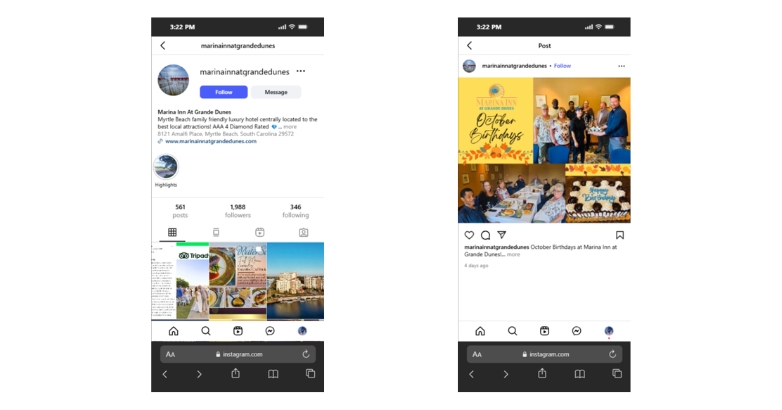
Social media should show the experience, not just the building. Use short videos, guest photos, behind-the-scenes clips, local recommendations, dining content, and seasonal offers.
34% of U.S. travelers used social media for trip ideas in 2025, making it the top inspiration source in that study.
The best hotel content answers real traveler questions and gives guests a reason to picture themselves at the property.
Download Our FREE Guide
Outrank OTAs & Drive Direct Bookings With Our Hospitality Digital Marketing Guide
Learn how leading hotels increase website traffic, reduce OTA commissions, and convert more guests with targeted digital marketing strategies.
How Can Hotels Turn Email, Reviews, and Guest Data Into Repeat Bookings?
Email and reviews are often more profitable than chasing only new traffic.
Hotels should start with these email flows:
- Abandoned booking follow-up
- Pre-arrival welcome email
- Pre-arrival upsell email
- Post-stay thank-you email
- Review request
- Birthday or anniversary offer
- Seasonal repeat-stay offer
Segmentation matters. A guest who booked a couples’ weekend should not receive the same message as a corporate group planner.
Use stay history, interests, location, and past offers to send more relevant messages.
Reviews also have a direct impact on booking confidence. TripAdvisor’s 2025 Transparency Report said travelers shared nearly 80 million contributions in 2024, including 31.1 million reviews, and that business owners responded to more than 11 million reviews.
Hotels should request reviews soon after checkout, respond to positive and negative feedback, and track repeated complaints.
Review management is not only about public replies. It should also guide service improvements.

How Should Hotels Measure Internet Marketing ROI?
Hotels should measure marketing by revenue and booking quality, not only clicks or impressions.
Track these metrics monthly:
- Direct booking share
- Website conversion rate
- Booking engine abandonment
- Net revenue by channel
- Cost per booking
- ROAS
- Organic bookings
- Google Business Profile calls and website clicks
- Hotel Ads and free booking link clicks
- Email revenue
- Repeat guest rate
- Review rating and response rate
- Cancellation rate by channel
The key question is simple: which channels bring profitable guests who are likely to book again?
WHAT OUR CLIENTS SAY

What Should Hotels Do Next?
Start with the foundation before scaling spend.
- Audit the website, mobile speed, booking path, and tracking.
- Update Google Business Profile photos, amenities, policies, and hotel details.
- Check Google Hotel Center, free booking links, and Hotel Ads setup.
- Build or improve direct booking offer pages.
- Add paid search and retargeting once landing pages are ready.
- Publish local content tied to real traveler searches.
- Set up email flows for booking recovery, pre-arrival, post-stay, and repeat stays.
- Review channel ROI every month and shift budget toward the best net revenue.
FAQs
I. What is the difference between hotel internet marketing and hotel digital marketing?
The terms are often used in similar ways. Internet marketing usually refers to online tactics that drive traffic, bookings, and repeat stays. Digital marketing can also include broader digital brand work, analytics, and guest technology.
II. What is the best internet marketing strategy for hotels?
The best strategy starts with a fast website, local SEO, Google Business Profile, and direct booking tracking. From there, hotels can add Google Hotel Ads, paid search, content, social media, email, and review management based on goals and budget.
III. How can hotels get more direct bookings?
Hotels need a clear website, simple booking engine, direct booking benefits, strong local SEO, accurate Google travel listings, retargeting, and email follow-up. Rate clarity and flexible booking perks can also help guests choose the official site.
IV. Should hotels still use OTAs?
Yes, but they should not depend on them alone. OTAs can bring reach, but hotels should track commission cost, guest quality, cancellation rate, and repeat booking potential.
V. Are Google Hotel Ads worth it for hotels?
They can be worth it when rates, availability, landing pages, and tracking are accurate. They are strongest for travelers who are already comparing hotels by date, rate, and location.
VI. How long does hotel SEO take to work?
Some local fixes can help sooner, especially when Google Business Profile details were missing or outdated. Broader organic growth from content and local pages usually takes several months and should be measured by bookings, not just rankings.
Elevate Your Hospitality Brand Today
Schedule Your Free Consultation
Seeking to elevate your business? Let Mediaboom guide you. Secure your exclusive, free consultation with our digital marketing experts today.
Ready to Grow Direct Hotel Bookings?
Internet marketing for hotels works best when every channel supports the same goal: profitable reservations.
A fast website, strong local search presence, accurate Google hotel listings, paid media, content, email, and reviews all play a role in turning searchers into guests.
Mediaboom helps hotels and luxury hospitality brands build digital strategies that increase visibility, strengthen direct bookings, and improve guest relationships.
Contact Mediaboom to plan a hotel marketing strategy built around your property, audience, and revenue goals.
By: Frank DePino
Frank DePino is the Principal and Founder of Mediaboom, a top hotel marketing agency partnering with leading hotel and hospitality brands. With 30+ years of experience, he has led strategic digital initiatives for names including Four Seasons, Ritz-Carlton, JW Marriott, Millennium Partners, and Guardian Jet. Frank helps hospitality businesses strengthen brand presence, drive qualified leads, and elevate guest experiences through website design, SEO, content marketing, and paid media. Under his leadership, Mediaboom is a trusted partner for brands pursuing measurable digital growth in a competitive hospitality landscape.