Tourism Email Marketing – Strategies, Examples & Templates

By: Frank DePino | November 9, 2026


Loading the Elevenlabs Text to Speech AudioNative Player...
Tourism email marketing helps travel agencies, tour operators, hotels, and experience providers turn interested travelers into paying customers.
By sending relevant destination guides, personalized offers, and timely booking reminders, businesses can encourage reservations and repeat visits.
A successful strategy combines audience segmentation, valuable content, and automated campaigns that reach travelers at the right stage of their journey.
Key takeaways:
- Segment your audience: Match destinations, packages, and offers to travelers’ interests and booking history.
- Automate key messages: Use welcome emails, booking reminders, and post-trip follow-ups to maintain contact.
- Provide real value: Share travel inspiration, useful tips, and relevant offers instead of constant promotions.
- Measure bookings: Track clicks, reservations, and revenue rather than relying on email open rates alone.
Download Our FREE Guide
Outrank OTAs & Drive Direct Bookings With Our Hospitality Digital Marketing Guide
Discover how top hospitality brands grow their online presence, attract high-value guests, and increase direct revenue—without over-relying on third-party platforms.
What Is Tourism Email Marketing and Why Does It Matter?
Tourism email marketing is the practice of communicating with potential and existing travelers through targeted email campaigns. These messages promote destinations, experiences, accommodations, or travel services while building relationships throughout the booking journey.
Unlike social media posts that depend on platform algorithms, email gives businesses a direct way to communicate with subscribers who have chosen to hear from them.
For example, a tour operator can recommend family-friendly excursions to travelers who previously booked group activities. A travel agency can share European vacation packages with subscribers interested in international travel.
The main benefits include:
- More bookings: Promote relevant travel experiences to subscribers already considering a trip.
- Customer retention: Stay connected with past travelers and encourage repeat reservations.
- Personalized communication: Recommend experiences based on preferences, previous bookings, and interests.
- Lower manual workload: Schedule campaigns and automatically send messages based on customer actions.
- Measurable performance: Connect campaigns to website visits, inquiries, and completed bookings.
These benefits apply to both large tourism brands and independent professionals. For smaller businesses, email marketing for travel agents can be particularly useful for maintaining relationships without depending entirely on paid advertising.
What Types of Tourism Email Campaigns Drive Bookings?
The most useful tourism email campaigns are welcome emails, destination newsletters, promotional offers, booking reminders, pre-trip communications, and post-trip follow-ups.
Each serves a different purpose, from helping travelers discover an experience to encouraging another booking after their trip.
| Email campaign | When to send | Primary goal |
| Welcome email | Immediately after signup | Introduce the brand and encourage interest |
| Destination newsletter | Monthly or around seasonal planning periods | Inspire future travel |
| Promotional offer | When relevant packages or availability become available | Generate bookings |
| Abandoned booking reminder | After an incomplete booking, where permitted | Recover potential reservations |
| Pre-trip email | Before the scheduled trip | Provide useful information and relevant extras |
| Post-trip follow-up | Shortly after the experience | Request feedback and encourage repeat visits |
These are suggested starting points. Actual timing should reflect customer preferences, booking windows, and campaign performance.
For instance, a European travel agency might promote summer vacation packages several months before peak season, while a local tour operator might advertise last-minute availability a few days before a weekend.
The goal is to match the message to the traveler’s needs, not simply send more emails.
How Do You Build a Successful Travel Email Marketing Strategy?
An effective travel email marketing strategy starts with a quality subscriber list, followed by segmentation, relevant content, automation, and regular performance reviews.
Here are five steps tourism businesses can follow.
1. Build an Email List of Interested Travelers
Start by collecting email addresses from people who genuinely want travel updates, rather than purchasing contact lists.
Useful subscriber sources include:
- Website signup forms offering destination guides or itinerary planners.
- Booking forms with a separate, optional marketing subscription.
- Travel consultation inquiries where customers choose to receive updates.
- Social media campaigns promoting free travel resources.
- Post-trip invitations to join a newsletter.
For example, a travel agency specializing in Italy could offer a free seven-day Tuscany itinerary in exchange for newsletter registration.
Make the signup offer specific and explain what subscribers will receive. Follow applicable consent and privacy requirements.
Elevate Your Hospitality Brand Today
Schedule Your Free Consultation
Seeking to elevate your business? Let Mediaboom guide you. Secure your exclusive, free consultation with our digital marketing experts today.
2. Segment Travelers by Interests and Booking History
Audience segmentation allows tourism businesses to send more relevant recommendations instead of promoting every trip to every subscriber.
Start with three to five useful segments:
| Audience segment | Email content example |
| Family travelers | Kid-friendly resorts and group excursions |
| Adventure travelers | Hiking tours and outdoor activities |
| Luxury travelers | Private experiences and premium accommodations |
| First-time subscribers | Destination guides and introductory offers |
| Returning customers | Related experiences and loyalty offers |
For example, customers who previously booked a coastal kayaking tour might be more interested in another outdoor experience than a general city sightseeing package.
Marketing for travel agents works particularly well when recommendations reflect the client relationships and preferences they already understand.
Use booking and preference data responsibly, and avoid collecting more personal information than necessary.
3. Write Emails That Inspire Travelers to Act
Effective tourism emails combine attractive visuals, useful information, and one clear next step.
Instead of sending a generic message about available tours, focus on a specific traveler benefit.
Example:
Generic subject line: Summer Vacation Packages Available
More specific subject line: Planning Italy This Summer? Start With These 3 Destinations
The second option promises useful information and gives readers a clear reason to open the email.
When writing travel emails:
- Use a descriptive subject line that matches the message.
- Lead with the destination, experience, or traveler benefit.
- Keep paragraphs short and easy to read on mobile devices.
- Include genuine destination photography with descriptive alt text.
- Use one prominent call to action, such as “View Available Tours.”
- Link directly to the relevant experience or booking page.
For more campaign inspiration, see our hotel email marketing examples.
4. Set Up Travel Agent Marketing Automation
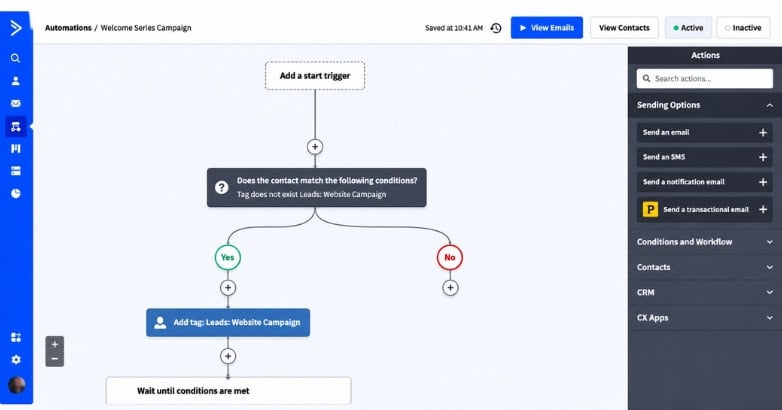
Travel agent marketing automation sends relevant messages after specific actions, such as newsletter registration, a booking inquiry, or a completed trip.
Rather than manually following up with every customer, businesses can create email sequences that respond to these events.
Example: A three-email welcome sequence
- Email 1, immediately: Welcome the subscriber and deliver the promised destination guide.
- Email 2, after three days: Share popular trips, customer reviews, or destination planning advice.
- Email 3, after seven days: Recommend relevant packages and invite the subscriber to request a quote or view availability.
Other useful automations include abandoned-booking reminders and post-trip review requests.
Platforms such as Mailchimp, ActiveCampaign, Klaviyo, and HubSpot offer email campaign and automation capabilities.
When choosing a platform, compare its segmentation, reporting, pricing, and integration options. If your business uses a booking system such as Rezdy or Regiondo, check whether customer and reservation data can be connected to your email software.
Keep essential reservation confirmations separate from promotional messages, and only send marketing where permitted.

5. Review Results and Adjust Your Campaigns
Once campaigns are running, review their performance regularly to identify which messages generate real interest and reservations.
Compare results by audience segment, travel destination, campaign type, and booking period.
For instance, a luxury travel agency might discover that curated itinerary emails produce more inquiries than general promotional newsletters.
Test subject lines, email layouts, offers, and calls to action, changing one major element at a time.
Start with a manageable sending schedule, such as one monthly newsletter and a few automated messages. Increase or reduce frequency based on engagement, bookings, and unsubscribe trends.
Download Our FREE Guide
Outrank OTAs & Drive Direct Bookings With Our Hospitality Digital Marketing Guide
Discover how top hospitality brands grow their online presence, attract high-value guests, and increase direct revenue—without over-relying on third-party platforms.
What Are Some Effective Tourism Email Marketing Examples?
Effective tourism email marketing examples show travelers something relevant, explain why it matters, and make the next action simple.
The following email templates for travel agencies can also be adapted by tour operators, hotels, and activity providers.
Example 1: Welcome Email for New Subscribers
Goal: Introduce the business, build trust, and encourage trip planning.
Subject: Welcome! Your Next Adventure Starts Here
Sample email:
Hi [First Name],
Thanks for joining us!
We’re excited to help you discover memorable destinations, local experiences, and travel ideas worth adding to your plans.
To get started, we’ve put together a guide featuring some of our favorite destinations and helpful planning tips.
Take a look and find inspiration for your next getaway.
CTA: View Your Travel Guide
Why it works: The email immediately delivers value and gives new subscribers a reason to engage without pressuring them to book.

Example 2: Abandoned Booking Reminder
Goal: Encourage interested travelers to finish a reservation.
Subject: Still Interested in Your Sunset Cruise?
Sample email:
Hi [First Name],
It looks like you started booking our sunset cruise but didn’t finish your reservation.
If you’re still interested, you can return to your booking and check the latest availability.
Have questions about the experience or departure times? We’re happy to help.
CTA: Complete Your Booking
Why it works: The message is relevant to an action the traveler already took and removes possible booking concerns.
Use this type of reminder only when your booking system can identify the incomplete reservation and applicable marketing and privacy rules permit the follow-up. Don’t imply that a reservation or price is being held unless that is true.

Example 3: Post-Trip Follow-Up Email
Goal: Collect feedback and encourage another visit.
Subject: How Was Your Experience in Aspen?
Sample email:
Hi [First Name],
We hope you had a wonderful time in Aspen!
We’d love to hear about your experience. Your feedback helps us improve and gives future travelers a better idea of what to expect.
Thinking about another visit? We also have a few seasonal recommendations you might enjoy.
CTA: Share Your Experience
Why it works: The message starts with the customer’s experience rather than another sales pitch. A future-trip recommendation can be added when appropriate and permitted.
The best emails don’t need to be complicated. They need to arrive at a relevant moment and make the next step obvious.

How Do You Measure Tourism Email Marketing Performance?
Tourism email marketing performance should be measured primarily through bookings, revenue, and meaningful engagement, rather than open rates alone.
The most useful metrics include:
| Metric | What it tells you |
| Click-through rate | How often delivered emails lead to clicks |
| Booking conversion rate | How many visitors or recipients complete a reservation |
| Email-attributed revenue | Revenue connected to email campaigns under your reporting model |
| Unsubscribe rate | Whether subscribers still find the content relevant |
| Bounce rate | Whether email addresses are valid and reachable |
| Open rate | An approximate engagement signal with tracking limitations |
For example, a campaign that brings 50 visitors to a booking page and generates five completed reservations has a 10% booking conversion rate among those visitors.
Track booking inquiries, completed reservations, and revenue in your email platform and website analytics. Use consistent campaign tracking and connect email activity to booking records when possible.
Open rates still provide context, but they shouldn’t be the primary success measure. Apple Mail Privacy Protection can load email content in the background, making some messages appear opened even without reader engagement.
For more dependable decisions, compare clicks, qualified inquiries, bookings, and revenue over time.
What Are the Most Common Tourism Email Marketing Challenges?
The biggest challenges are email deliverability, low subscriber engagement, inconsistent content, and privacy compliance.
Most can be addressed through better list management and more relevant communication.
Emails Going to Spam
Use a reputable email platform, keep your subscriber list current, and authenticate your sending domain.
Google’s email sender guidelines require SPF or DKIM authentication for all senders to personal Gmail accounts, with additional SPF, DKIM, and DMARC requirements for bulk senders.
Qualifying bulk marketing senders must also support one-click unsubscribe.
Too Many Promotional Messages
Sending constant discounts can cause subscribers to disengage.
Balance offers with destination guides, travel tips, customer stories, and useful planning information.
There’s no universal content-to-promotion ratio. A monthly destination newsletter may contain little promotional material, while an email specifically requested for travel deals can be more sales-focused.
Low Engagement or Poor List Quality
If campaigns receive few clicks, review their relevance before increasing email frequency.
Check whether subscribers joined for the same reasons, whether your offers match their interests, and whether inactive contacts should receive a re-engagement campaign.
Avoid purchased lists and provide an easy way to update email preferences.
Privacy and Legal Requirements
Travel businesses serving different markets must follow applicable rules, including GDPR in relevant European contexts and CAN-SPAM requirements for US commercial email.
The FTC’s CAN-SPAM guidance explains requirements covering accurate sender information, truthful subject lines, postal addresses, and opt-out mechanisms.
Keep consent records where required and distinguish essential booking communications from promotional campaigns.
Tourism Email Marketing Case Study: Aspen Luxury Concierge
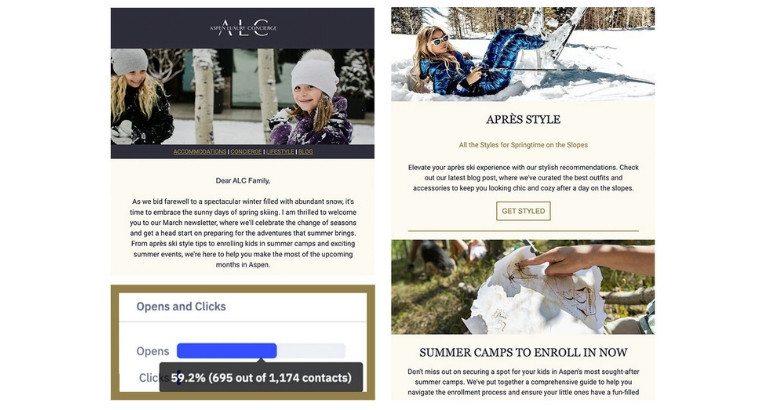
A real example of tourism email marketing comes from Mediaboom’s work with Aspen Luxury Concierge, a luxury concierge business serving travelers and property owners in Aspen.
Mediaboom developed a branded newsletter to share destination insights, travel information, and updates with prospective and existing clients.
The approach helped the business maintain regular communication with its audience while reinforcing its position as a source of Aspen travel expertise.
Reported email marketing results:
- 55% average email open rate for the branded newsletter.
- 50% improvement in email open-rate performance during the engagement.
The broader marketing partnership, which also included SEO, content, and paid advertising, reported:
- 9,530% growth in new organic users.
- 54% increase in conversions.
The broader traffic and conversion gains cannot be attributed to email alone, but the results demonstrate the value of combining ongoing subscriber communication with other digital channels.
The takeaway: Tourism emails can provide useful destination information while maintaining customer relationships between trips. A recognizable newsletter with relevant content gives subscribers a reason to stay connected.
WHAT OUR CLIENTS SAY
Frequently Asked Questions About Tourism Email Marketing
I. What is the best email marketing strategy for travel agencies?
The best starting strategy combines a permission-based subscriber list, audience segmentation, and automated emails tied to the traveler journey. Welcome campaigns, destination recommendations, and post-trip follow-ups are useful starting points. Measure success using inquiries and completed bookings.
II. How often should travel agencies send marketing emails?
A monthly newsletter is a practical starting point for many businesses, with additional messages triggered by relevant customer actions. Some audiences may welcome more frequent deals or destination updates. Monitor clicks, bookings, and unsubscribes to find a suitable schedule.
III. What is the best email marketing platform for travel agents?
The right platform depends on subscriber volume, budget, booking software, and automation needs. Mailchimp and ActiveCampaign are potential options for smaller teams, while HubSpot may suit businesses that also need CRM and sales tools. Compare integrations and reporting before choosing.
IV. Can email marketing help travel agents get more clients?
Yes. Email marketing for travel agencies and independent agents can turn website inquiries and interested subscribers into consultation requests and bookings. It can also generate referrals and repeat business by maintaining relationships with past customers.
V. How can travel agents automate their email campaigns?
Travel agents can connect their email platform to signup forms, CRM records, and booking systems. This allows them to schedule welcome sequences, send relevant travel recommendations, and follow up after completed trips. Start with a few essential workflows before adding more advanced segmentation.
Elevate Your Hospitality Brand Today
Schedule Your Free Consultation
Seeking to elevate your business? Let Mediaboom guide you. Secure your exclusive, free consultation with our digital marketing experts today.
Turn Tourism Email Marketing Into More Bookings
Successful tourism email marketing depends on delivering relevant messages at the right time.
Start with a quality subscriber list, segment travelers by their interests, and introduce campaigns that support the complete booking journey. Use practical email templates, automation, and measurable performance data to improve results over time.
For travel businesses looking for support with their broader digital strategy, Mediaboom provides travel marketing services covering email campaigns, digital advertising, SEO, and website experiences.
Ready to generate more bookings? Contact Mediaboom to discuss your tourism marketing goals.
By: Frank DePino
Frank DePino is the Principal and Founder of Mediaboom, a top hotel marketing agency partnering with leading hotel and hospitality brands. With 30+ years of experience, he has led strategic digital initiatives for names including Four Seasons, Ritz-Carlton, JW Marriott, Millennium Partners, and Guardian Jet. Frank helps hospitality businesses strengthen brand presence, drive qualified leads, and elevate guest experiences through website design, SEO, content marketing, and paid media. Under his leadership, Mediaboom is a trusted partner for brands pursuing measurable digital growth in a competitive hospitality landscape.