
Hotel Marketing KPIs to Streamline Spending & Earn More

By: Frank DePino | January 10, 2026


Hotel marketing KPIs might be an underrated part of your overall strategy at the moment, which is why guidance from a hotel marketing agency can help prioritize the metrics that drive meaningful growth. But key performance indicators (KPIs) enable hotel management to understand performance across all areas: marketing, revenue, and guest experience. All of these KPIs work together to create a more holistic picture of how the business works.
Knowing your KPIs enables you to understand how marketing decisions are directly linked to revenue, a connection a hotel marketing agency can clarify through structured reporting and analysis. You may want to track occupancy rates, average daily rate, conversion rate, return on ad spend, and other key metrics. Hiring a digital agency like Mediaboom streamlines the entire process and eliminates common pitfalls, such as relying on incomplete data.
Hotels rely on KPIs to guide their strategy, improve direct bookings, and measure results with real data, often with support from a hotel marketing agency that translates insights into actionable campaigns. Here’s what you need to know to make the most of hospitality performance benchmarks.
Here’s what’s included:
- What Hotel Marketing KPIs Are
- Why KPIs Matter for Hotels
- Key Hotel Marketing KPIs to Track
- How to Collect and Review KPI Data
- How KPIs Improve Marketing Strategy
- Common Issues When Tracking KPIs
- How a Digital Agency Helps with KPI Tracking
- Improve Ad Spend with Mediaboom’s Marketing Audit
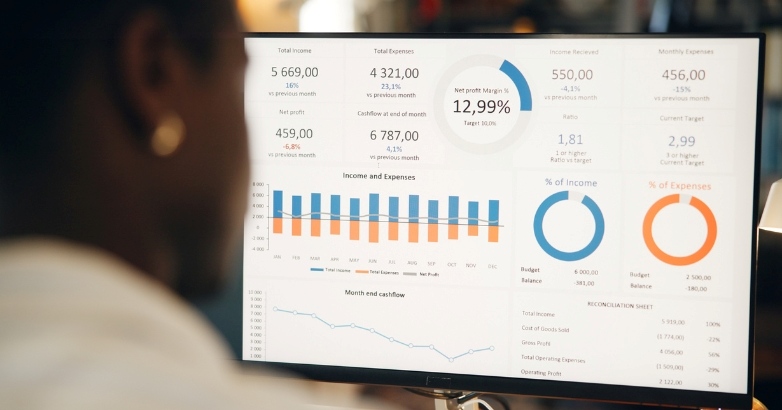
What Hotel Marketing KPIs Are
Taking on the major operational machine of running a hotel means being smart and savvy about how you conduct business. Hotel marketing metrics are the lifeblood of your business, but what exactly are the key performance indicators you should be tracking and why?
The simplest definition of hotel marketing KPIs is that they are measurable values that show how well marketing and operations are performing. The two metrics go hand in hand; hard work in one area often nets a result in the other. If it doesn’t yield the results you want, then it may mean that it’s time to evaluate your strategy.
Hotels require KPIs to track demand, guest behavior, costs, conversions, and revenue. Without a finger on the pulse of these metrics, you have no idea how your marketing performs.
Download Our FREE Guide
Outrank OTAs & Drive Direct Bookings With Our Hospitality Digital Marketing Guide
Learn how leading hotels increase website traffic, reduce OTA commissions, and convert more guests with targeted digital marketing strategies.
Why KPIs Matter for Hotels
If it’s already clear to you that hotel marketing performance stats inform business decisions, then you have already cleared a huge hurdle in mindset. Having KPIs on deck enables hotel owners to easily identify which marketing channels attract the best guests. Then, you can double down on those efforts to bring in more of your dream clients.
When you know which sources bring the most profitable outcome, you can show where money is wasted or where results are weak. Ultimately, hotel marketing metrics facilitate more informed decision-making regarding both budget allocation and campaign objectives.
Sometimes, your key performance indicators will reveal gaps between the guest journey and your overall booking flow. When corrected, you may bring in substantially more money with less effort, the goal of every business.
In other words, you can tie every marketing effort to real business results when you know where the bulk of your profit arrives in your bank account.
Key Hotel Marketing KPIs to Track
Perhaps you’re convinced of the importance of KPIs in keeping your hotel afloat. Now, all you have to do is determine which hospitality marketing benchmarks are most relevant. After all, you don’t want to track data that won’t push the needle forward on marketing and business decisions.
Here are the top ten KPIs that every hotel should know at a quick glance.

Occupancy Rate
This one may be the simplest figure to track, making it a great starting point for hotels that haven’t yet dipped their toes in the water of data management. Occupancy rates indicate the percentage of rooms filled during a specific time period, reflecting demand and informing plans for potential increases in demand.
Average Daily Rate (ADR)
The average daily rate builds upon your occupancy rate, allowing you to see at a glance what each guest pays for their room. Simply put, ADR measures the average revenue per occupied room. It’s a critical data point for evaluating your pricing strength and seeing where you could earn more.
Elevate Your Hospitality Brand Today
Schedule Your Free Consultation
Seeking to elevate your business? Let Mediaboom guide you. Secure your exclusive, free consultation with our digital marketing experts today.
Revenue Per Available Room (RevPAR)
Curious to know how much your hotel could make if all rooms were filled? Revenue per available room combines your ADR and occupancy to show what those empty rooms could earn if all your marketing efforts were to bring in the requisite number of guests. This figure is meant to show total room revenue performance.
Conversion Rate (Website to Booking)
When guests find your hotel, they are most likely to have stumbled upon it online. A conversion rate KPI indicates the percentage of your site visitors who actually complete a reservation. What do these hotel performance indicators really show you?
The conversion rate is a direct reflection of your website’s clarity, visual quality, and the ease of your booking flow. It may even give you new ideas for content marketing. When you know where guests drop off in the booking funnel, you can identify the issue and take steps to secure more bookings.
Direct Booking Ratio
How many of your reservations are made directly with the front desk staff? Hotel marketing KPIs can indicate when people reach out to you, reducing reliance on OTAs.

Customer Acquisition Cost (CAC)
Budgeting your marketing dollars is key. Do you know how much it costs to gain a guest from your current efforts? Customer acquisition cost (CAC) should dominate your budgeting decisions. The lower this number can be, the better it is for your bottom line.
Knowing CAC enables you to make more informed decisions regarding ad and campaign budget allocation. This means that you need to know your PPC rate and what you spend on Google Ads, social media ads, and any content marketing you might undertake.
Return on Ad Spend (ROAS)
Is there anything more exciting than knowing how much you earned from a campaign? Hospitality marketing benchmarks should always include a big-picture look at ad spend costs, but it also means knowing how much you earned in relation. Keeping tabs on ROAS strengthens all of your paid marketing decisions.
Guest Return Rate
Guests will come back again and again because they had a fabulous experience at your hotel. The guest return rate shows the percentage of people who ultimately return, measuring loyalty and managing guests’ post-stay experience.
Online Rating and Review Trends
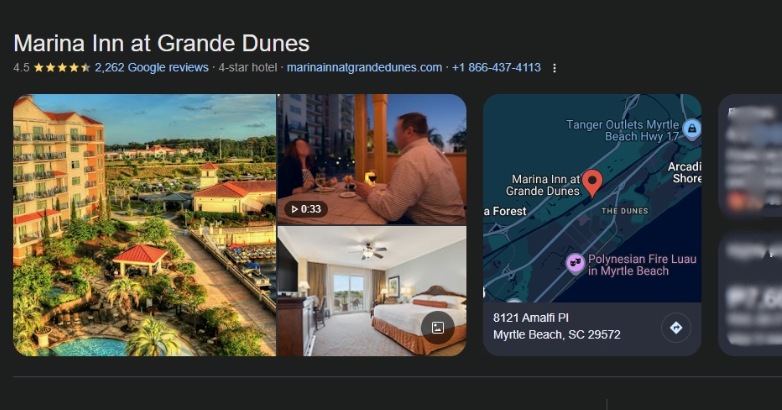
According to research, 98% of consumers consult online reviews before making a purchase. If you have primarily positive reviews, consider it one of your hotel performance measures. Reviews are a reflection of guest satisfaction and, even more importantly, trust.
All of that impacts a hotel’s search visibility and the likelihood of securing a booking. This can be a significant part of your search engine marketing.
Marketing ROI
Eventually, you have to zoom out and decide whether a marketing endeavor was worth all of the money spent. Marketing return on investment (ROI) measures the effectiveness of marketing spend in generating revenue. Long-term planning relies on this figure because you don’t want to continue spending on areas that don’t earn back their investment.
Download Our FREE Guide
Outrank OTAs & Drive Direct Bookings With Our Hospitality Digital Marketing Guide
Learn how leading hotels increase website traffic, reduce OTA commissions, and convert more guests with targeted digital marketing strategies.
How to Collect and Review KPI Data
With all of these hospitality KPIs laid out, where do you start to measure them?
Implementing a system for maintaining these success metrics isn’t as simple as deciding one day that you need to have your finger on the pulse, and it’s not a one-time decision either.
Marketing metrics can be measured with a number of tools that you likely already have at your disposal. Analytics tools, booking engines, PMS reports, and reputation platforms are great places to start your journey into KPIs. Know how to leverage each tool that you have at your disposal to mine it for data.
Remember to track results over time. One moment in time might be where you need to start, but you won’t see patterns and growth without monitoring KPIs over the long term. The same principle applies to SEO for hotels. Time gives you all the information you need.
You may find that this becomes part of a daily or weekly routine. Maybe you hire someone to track metrics on a more regular basis.
Either way, it’s important to compare past results to present efforts. Not only do you need to be competing against yourself, but you should also know your competitor benchmarks so that you know you’re effective in the industry as a whole.

How KPIs Improve Marketing Strategy
Hotel success metrics build on each other over time. Once you start tracking, you have the tools to improve your marketing strategy, maybe without even hiring a specialist to tell you when the campaign has been a runaway success.
Your hotel marketing KPIs reveal your strongest channels where you may want to funnel more of your dollars into increased efforts. Likewise, they highlight those that aren’t pulling their weight. These can easily be cut, and the dollars redirected into more profitable ads and campaigns.
Even a small shift into better-performing campaigns can have ripple effects on your business. For example, if email marketing isn’t panning out for you, you can shift to a more profitable avenue.
You can also use hotel analytics indicators to support clearer content and visual updates to your website. If you notice that your conversion rate drops, you can identify the cause and address it at its source, without all of the trial and error.
Overall, these KPIs will enhance the booking flow by implementing data-driven improvements. Gone are the days when you had to shoot in the dark, hoping that what you do will make enough of a difference to make payroll and turn a profit. Data means that every move hits the mark.
Common Issues When Tracking KPIs
It may be obvious that your key performance indicators can help keep a hospitality business on track to financial solvency. However, there are also pitfalls that many hotel owners fall into when navigating the early days of tracking these metrics.
For example, relying solely on occupancy rates without considering all costs might not reveal the entire picture. It only gives you a glimpse into how well your hotel is doing without considering what it costs to fill those rooms in the first place.
All marketing data should be linked to revenue data for optimal results, just as it is for local SEO efforts.
You may also be missing some important data regarding mobile-specific results. Accessing your site and marketing on mobile is different than desktop, and both should be tracked. All of this can contribute to clearer and more consistent tracking, vital to overall success.
Don’t forget to account for what your guests are telling you directly. Feedback, in the form of comment cards, complaints, and online reviews, all provide a glimpse into the inner workings of your hotel. Never underestimate the power of customer feedback to improve and streamline.

How a Digital Agency Helps with KPI Tracking
A digital agency can partner with any hotel to streamline data collection and allocate resources effectively for targeted marketing campaigns, making a hotel marketing agency a valuable ally in sustained performance improvement. Why should you consider working with a digital agency over doing the work yourself or hiring someone in-house to manage your efforts?
First, a digital agency is skilled at setting up clean dashboards and tracking tools. This will provide the hotel with all the necessary information in a less overwhelming manner, with clear hotel marketing KPIs readily available at a glance.
Next, they consistently scan and review your website, ads, content, and channels to evaluate KPI trends. This effort is all that businesses like Mediaboom offer, enabling them to get to the heart of low marketing ROI or ROAS more quickly, so you can evolve and adapt in real-time.
They may even give you more hotel marketing ideas that allow you to flourish and thrive.
We guide hotels toward stronger direct bookings and better ROI on every effort. When your goal is long-term digital performance, you need a digital agency in your back pocket for maximizing an effort to secure more bookings for a luxury hotel without spending a fortune you can’t afford.
Elevate Your Hospitality Brand Today
Schedule Your Free Consultation
Seeking to elevate your business? Let Mediaboom guide you. Secure your exclusive, free consultation with our digital marketing experts today.
Improve Ad Spend with Mediaboom’s Marketing Audit
Hotel marketing KPIs provide clarity, informed decisions, and improved revenue outcomes. Every hospitality-based business can benefit from having a secret weapon in its arsenal, and that means hiring Mediaboom.
Hotel owners and managers should take this reminder to review their KPIs or request a full KPI and marketing audit with Mediaboom. We’re here to take something off your plate so that your business can thrive with less effort and a more targeted approach.
Reach out to us today to discover how Mediaboom can help you increase your bookings and grow your hotel branding!
By: Frank DePino
Frank DePino is the Principal and Founder of Mediaboom, a top hotel marketing agency partnering with leading hotel and hospitality brands. With 30+ years of experience, he has led strategic digital initiatives for names including Four Seasons, Ritz-Carlton, JW Marriott, Millennium Partners, and Guardian Jet. Frank helps hospitality businesses strengthen brand presence, drive qualified leads, and elevate guest experiences through website design, SEO, content marketing, and paid media. Under his leadership, Mediaboom is a trusted partner for brands pursuing measurable digital growth in a competitive hospitality landscape.


READY TO IGNITE YOUR MARKETING STRATEGY?


