Future of Hotel Digital Marketing – Trends Shaping 2026

By: Frank DePino | December 12, 2025


The future of hotel digital marketing is shifting quickly as travelers rely on AI search, short-form video, and mobile-first booking, creating more demand for strategic insights from a hotel marketing agency that understands how to connect these trends to guest behavior. Hotels now need clearer identities, smoother digital touchpoints, and content that converts. This article explores emerging trends redefining visibility, engagement, and bookings through 2026 and the years to come.
Table of Contents
- What is the future of hotel digital marketing?
- Why Hotel Marketing is Changing Quickly?
- AI Search & GEO
- The Rise of Short-Form Video
- Personalization Through First-Party Data
- Mobile First Booking
- Local Content & Real Experiences
- Smart Ads & Retargeting
- Previews, UGC, & Guest Stories
- Sustainability & Shared Values
- The Blend Of Digital & On-Site Experience
- How Agencies Help Hotels Prepare For The Future
- Final Thoughts
What is the future of hotel digital marketing?
The future of hotel digital marketing in 2026 is moving toward earlier discovery, intelligent personalization, and booking experiences that match every traveler’s intent. Key transformations include:
- AI-driven hotel search and generative recommendations
- Short-form video across social platforms
- Mobile-first booking flows
- Personalization powered by first-party guest data
- Stronger emphasis on visuals, trust signals, and local content
Why Hotel Marketing is Changing Quickly?
The way travelers discover and book hotels is changing faster than ever, shaping the future of hotel digital marketing. You’re no longer competing only in search results. You’re competing in AI tools, social feeds, travel apps, and mobile-first journeys that shape decisions before guests even reach your website.
Travelers now plan trips through a mix of AI recommendations, social platforms, and hyper-personalized mobile search. They want quick answers, strong visuals, and confidence that your property matches their style. If your digital presence feels unclear or outdated, guests move on in seconds.
At the same time, third-party cookies are disappearing, prompting hotels to strengthen their first-party data. You need email signups, past stay insights, and on-site behavior to power personalization and direct communication. These owned channels help build trust without depending on OTAs or the changing rules of paid ads.
And because travelers make decisions quickly, simple booking paths and strong visuals matter more than ever. Guests expect immediate clarity: Where will I sleep? What does it look like? How easy is it to book?
This shift demands a clear hotel identity, fast digital touchpoints, and an effortless booking experience. Hotels that embrace these changes position themselves for greater visibility and more direct bookings.
Download Our FREE Guide
Outrank OTAs & Drive Direct Bookings With Our Hospitality Digital Marketing Guide
Discover how top hospitality brands grow their online presence, attract high-value guests, and increase direct revenue—without over-relying on third-party platforms.
AI Search & GEO (Generative Engine Optimization)
AI-assisted planning is now part of every hotel booking journey. When someone asks tools like ChatGPT, Google’s AI Overviews, or Gemini where to stay, these systems pull from the most structured hotel content available. That means your digital presence must be easier for AI to understand heading into 2026.
Generative Engine Optimization (GEO) focuses on how your hotel appears when travelers ask AI for recommendations on neighborhoods, experiences, amenities, or stays that fit specific needs. You’re not optimizing only for keywords anymore. You’re optimizing for clarity, structure, and strong descriptive language.
Here are actionable ways to strengthen GEO visibility:
- Use Q&A sections to answer common guest questions
- Add descriptive alt text to core visuals
- Include neighborhood references and local markers
- Structure room types using header formatting
- Feature amenities in clear bullet lists
- Add pricing-based value statements where possible
Examples of structured content that help AI:
- “Rooms near the business district in downtown ___”
- “Hotels with quiet rooms and late check-in”
- “Hotels close to waterfront cafés in ___”
- “Rooms with private balconies and ocean views”
Hotels with organized content, precise answers, and simple page architecture stand out in AI results. When AI clearly understands your property, it can confidently recommend your hotel, positioning it in front of travelers early in the planning process.
Explore GEO-ready content creation with Mediaboom’s SEO for hotels.
The Rise of Short-Form Video
Short-form video shapes how travelers judge a hotel long before they click “Book.” Guests want a quick, honest sense of mood, lighting, sound, and comfort, and video communicates that in seconds. A single clip often answers questions that photos or text can’t.
In the future of hotel digital marketing, platforms such as Instagram Reels, TikTok, and YouTube Shorts will make it easier for travelers to discover hotels through fast, immersive content.
Hotels perform well with simple formats such as:
- Room walkthroughs
- Lobby moments
- Pool and spa views
- Food clips
- Local neighborhood scenes
These videos spark interest and drive clicks by helping travelers imagine the stay. A short clip can spark emotion, reinforce your brand identity, and create a visual connection that drives bookings.
As short-form video grows, it becomes one of the strongest drivers of visibility and conversions, especially for hotels trying to reach new audiences across multiple social channels.
Understand how social media for hotels supports visibility here.
Elevate Your Hospitality Brand Today
Schedule Your Free Consultation
Seeking to elevate your business? Let Mediaboom guide you. Secure your exclusive, free consultation with our digital marketing experts today.
Personalization Through First-Party Data
Personalization is entering a new phase as hotels shift toward first-party data, and partnering with a hotel marketing agency helps properties translate those insights into tailored campaigns that resonate with today’s travelers. With cookies disappearing and guest behavior spread across multiple channels, you need direct insights to understand how travelers search, plan, and book.
You can collect this data through past stays, website behavior, email signups, mobile actions, and loyalty interactions. These touchpoints reveal what travelers value, whether it’s quiet rooms, local experiences, specific dates, or exceptional amenities. With this insight, your messaging becomes more relevant and more effective.
Hotels now use this data to create:
- Targeted email flows
- Personalized landing pages
- Tailored offers
- Smart on-site recommendations
Direct guest connections are increasingly more valuable than third-party channels. With strong first-party data, you can reduce your reliance on OTAs, improve ad efficiency, and build long-term relationships that drive predictable revenue.
Learn more about how hotel email marketing supports personalization.
Mobile First Booking
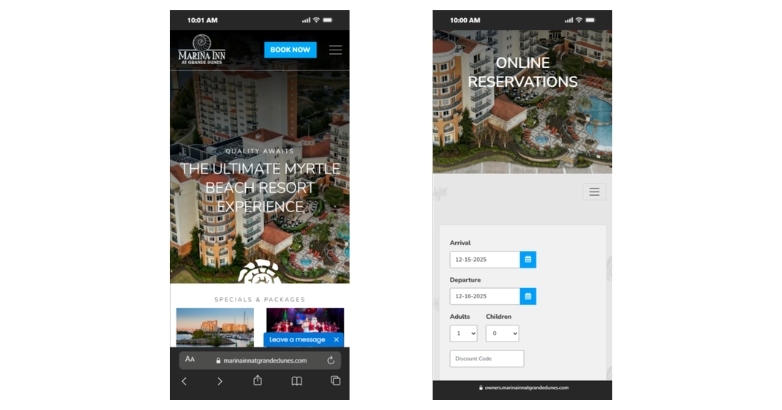
Most travelers now research and book rooms directly from their phones. This shift is the future of hotel digital marketing and makes your mobile experience a key part of your hotel’s digital strategy. If pages load slowly or look cluttered, travelers leave before they ever see your rooms.
A strong mobile flow starts with speed, clarity, and simplicity. Your pages must load fast, display clean layouts, and use short steps that guide guests from browsing to booking. Every extra tap creates friction, and friction leads to drop-offs.
Mobile guests also expect complete transparency from the start. They want quick access to room visuals, pricing, availability, and amenities without scrolling through multiple screens. When your mobile site answers those questions instantly, visitors stay longer and convert more often.
A refined mobile journey does more than support bookings; it boosts trust. Guests feel confident choosing your property when everything looks polished, modern, and easy to use on the device they rely on most.
Explore luxury hotel website design for mobile experiences.

Local Content & Real Experiences
Travelers want more than a room; they want a stay that fits their style, interests, and plans. That’s why local content is becoming a powerful driver of trust and visibility. When you highlight the experiences around your property, guests get a clearer sense of what their trip could feel like.
Hotels are leaning into guides, photos, short clips, and honest recommendations that showcase nearby shops, cafés, parks, and events. This helps guests understand the neighborhood and picture how they’ll spend their days. It also positions your property as a local expert rather than just a place to sleep.
Local content strengthens SEO as well. Search Engines reward pages that answer destination-focused questions, offer helpful insights, and connect travelers to relevant experiences. These signals help your hotel appear for broader discovery searches like “best cafés near…” or “things to do in…” long before someone chooses a hotel.
For guests, this type of storytelling builds credibility. When you showcase the surrounding culture, energy, and atmosphere, travelers feel more confident that your property aligns with the trip they want.
Discover Hotel’s content marketing strategies with Mediaboom.
Download Our FREE Guide
Outrank OTAs & Drive Direct Bookings With Our Hospitality Digital Marketing Guide
Discover how top hospitality brands grow their online presence, attract high-value guests, and increase direct revenue—without over-relying on third-party platforms.
Smart Ads & Retargeting
Digital ad platforms now give the future of hotel digital marketing sharper tools to reach travelers at the exact moment they show intent, and the expertise of a hotel marketing agency ensures those tools are used to drive higher converting campaigns. With improved targeting, clearer signals, and stronger visual formats, your ads can speak directly to guests who are actively planning trips.
Brilliant ad campaigns rely on visual storytelling to help travelers picture the stay. Room photos, lobby clips, pool views, and local scenes all play a significant role in capturing attention. These visuals guide travelers back to your property as they compare options across search and social platforms.
Retargeting is becoming even more valuable as first-party data expands. You can reconnect with travelers who viewed rooms, checked dates, or explored amenities. These reminders often turn curiosity into action by picking up where guests left off.
As technology evolves, ads will grow more dynamic and personalized. Travelers will see content that aligns with their browsing patterns, travel windows, or interests, making each impression more relevant and more likely to convert.
Explore hotel advertising and retargeting strategies.
Previews, UGC, & Guest Stories
Travelers trust real experiences more than polished marketing messages. That’s why reviews, guest videos, and user-generated content (UGC) are becoming essential parts of a hotel’s digital presence. These authentic moments help travelers picture their stay through the eyes of real guests.
Short clips recorded during check-in, room tours, poolside moments, or on-site dining help travelers understand what it actually feels like to stay at your property. These real-life snapshots feel relatable, unscripted, and honest, qualities that build confidence quickly.
Hotels are now highlighting UGC and reviews across multiple channels because they reinforce credibility. When guests see others enjoying the space, it reduces uncertainty and strengthens trust. These assets also support SEO by providing fresh, experience-driven content that aligns with what travelers search for every day.
Guest stories create an emotional connection that’s hard to replicate with traditional marketing alone. They convey personality, culture, and atmosphere, helping potential guests envision their own time on the property before booking.

Sustainability & Shared Values
Many travelers now choose hotels that reflect their values. Sustainability, community involvement, and mindful design have shifted from bonus features to meaningful decision-making factors, aligning with the future of hotel digital marketing. Guests want to feel good about where they stay, and your digital presence can help communicate those commitments.
Hotels are highlighting their design choices, sourcing practices, energy initiatives, and community partnerships to demonstrate what they stand for. These details help travelers understand how your property supports the local environment and culture. When you showcase these choices through visuals, stories, and on-site descriptions, guests can see how your values influence their experience.
Sustainability-focused messaging builds trust by going beyond amenities. It shows intention. It shows responsibility. It attracts travelers who want their stays to contribute positively to the places they visit.
Digital storytelling plays a key role here. When you weave sustainability into your branding, videos, onsite pages, and social moments, guests connect with your hotel on a deeper level, often leading to stronger loyalty and long-term bookings.

The Blend Of Digital & On-Site Experience
The line between digital marketing and on-site experience is dissolving. Travelers expect a smooth journey from the moment they search for your hotel until they check out. Every touchpoint, digital or physical, shapes how they feel about the stay.
Your booking flow, mobile communication, check-in process, and on-site service now work together as a cohesive story. When these elements feel connected, guests experience your brand consistently across every stage of their journey.
Digital tools help guide guests throughout their stay. Mobile check-in, digital keys, SMS updates, concierge apps, and interactive guides all support convenience and clarity. These tools reduce friction and help travelers feel supported without adding pressure on your staff.
For hotels, this blend is a significant opportunity. When your digital presence aligns with your on-site experience, you create a narrative that feels trustworthy, modern, and intentional. The result is stronger guest satisfaction and a higher likelihood of repeat stays and referrals.

How Agencies Help Hotels Prepare For The Future
With the future of hotel digital marketing shifting quickly, hotels often need expert support to stay ahead. Digital agencies play a key role in helping properties adapt, strengthen their online presence, and build guest journeys that convert. The right agency becomes an extension of your team, guiding strategy and execution with clarity.
Agencies help hotels create smooth, high-performing websites built around identity, fast load speeds, and direct booking paths. These sites deliver clean layouts, strong visuals, and persuasive storytelling that align with how travelers search for and compare stays.
They also shape GEO-ready content that improves how AI tools understand the property. Clear structure, consistent messaging, and descriptive language help your hotel surface in AI-driven recommendations across planning platforms.
Short-form video creation is another key support. Agencies produce clips tailored for Instagram, TikTok, and YouTube Shorts, giving your property more reach and more authentic ways to connect with travelers.
Agencies also build ads, email flows, and content plans powered by first-party data. With this insight, your messaging becomes more personalized and more relevant, helping you meet travelers at every stage of the decision-making process.
Finally, agencies bring the strategy, visuals, technical expertise, and testing needed to grow. They help your hotel navigate digital shifts with confidence while keeping your brand consistent and compelling across all channels.
Elevate Your Hospitality Brand Today
Schedule Your Free Consultation
Seeking to elevate your business? Let Mediaboom guide you. Secure your exclusive, free consultation with our digital marketing experts today.
Final Thoughts
The future of hotel digital marketing isn’t defined by one channel. It’s shaped by the entire guest journey, from how travelers discover your property to how they compare experiences and move from curiosity to booking. Success comes from blending technology, personalization, storytelling, and a smooth digital experience that builds trust.
As hotel marketing trends continue to evolve, properties that remain competitive will balance AI insights, first-party data, strong visuals, lightning-fast mobile experiences, and value-driven messaging, all informed by partners like a hotel marketing agency to keep strategy aligned with traveler intent. This mix supports guests at every stage while strengthening direct bookings and long-term loyalty.
For hotels preparing for the next phase of hotel digital marketing, now is the time to refine your strategy. That includes improving hotel SEO visibility, creating richer content through storytelling, and building a strong digital foundation with luxury hotel website design.
You can also elevate conversion paths with targeted email flows using hotel email marketing and optimize discovery through local SEO for hotels. When combined with strategic ad support such as hotel advertising and hotel search engine marketing, you create momentum that moves travelers from interest to action.
Digital agencies like Mediaboom help hotels navigate these shifts with custom strategies built around identity, guest intent, and long-term growth. If you want a partner who can guide your digital marketing outlook for hotels, refine your content, enhance your visuals, and improve performance across channels, you’re in the right place.
Connect with Mediaboom today to build a future-ready hotel marketing strategy designed for the next wave of hotel digital marketing. Whether you need stronger storytelling, more innovative data use, refined booking pathways, or brand-aligned creative, their team can help you move confidently into the era of digital growth.
By: Frank DePino
Frank DePino is the Principal and Founder of Mediaboom, a top hotel marketing agency partnering with leading hotel and hospitality brands. With 30+ years of experience, he has led strategic digital initiatives for names including Four Seasons, Ritz-Carlton, JW Marriott, Millennium Partners, and Guardian Jet. Frank helps hospitality businesses strengthen brand presence, drive qualified leads, and elevate guest experiences through website design, SEO, content marketing, and paid media. Under his leadership, Mediaboom is a trusted partner for brands pursuing measurable digital growth in a competitive hospitality landscape.

READY TO IGNITE YOUR MARKETING STRATEGY?


