
AI Search Engine for Hotels – The Future of Hotel Visibility

By: Frank DePino | November 5, 2025


Artificial intelligence is revolutionizing hospitality marketing and guest discovery, and a hotel marketing agency can help hotels adapt their digital strategies to benefit from this shift.
The rise of the AI search engine for hotels is transforming how travelers find, compare, and book accommodations, prompting many to partner with a hotel marketing agency to optimize visibility in this evolving landscape. Instead of typing short search terms like “hotel in Rome,” guests are now asking detailed, conversational questions such as “Which boutique hotel near Piazza Navona includes breakfast and terrace views?”
This shift matters profoundly. Recent hospitality market reports show that over half of travelers already use AI‑powered planners such as ChatGPT and Perplexity to research destinations and compare stays. The future of hospitality SEO is conversational, predictive, and intent‑driven. If you want to explore more about the evolving AI tools in hotel marketing , this article will provide valuable insight.
In this comprehensive guide, we’ll break down what AI search means for your hotel, how it’s changing traveler behavior, and how teaming up with a hotel marketing agency can help your property stay visible in this new ecosystem while complementing established hotel marketing channels.
Table of Contents
- What Is an AI Search Engine for Hotels
- Why Hotel Visibility Is Changing: The Rise of AI‑Driven Discovery
- Top Competitors and Technologies in AI Hotel Search
- Framework: How to Prepare Your Hotel for AI Search – 5‑Step Blueprint
- Strategic Considerations for Hotels Competing in AI Search Globally
- Future Trends: What’s Next in AI Hotel Search
- FAQs
- Conclusion: Future-Proof Your Hotel’s Visibility
1. What Is an AI Search Engine for Hotels?
An AI search engine for hotels goes far beyond traditional metasearch or OTA platforms. It uses natural language processing (NLP), generative AI, and data aggregation to interpret traveler intent and generate personalized hotel recommendations.
Unlike a metasearch tool that prioritizes price and filters, AI search tools consider experience, understanding what kind of stay the user envisions and the emotional or practical context behind it.
Key Examples of AI Hotel Search Tools:
- ChatGPT integrations that summarize and recommend accommodations based on user preferences.
- Perplexity AI’s hotel search assistant, using conversational prompts to generate custom travel itineraries.
- Early models like iMean’s AI Hotel Finder or research projects such as HotelMatch‑LLM focused on intent‑based retrieval.
For hotel marketers, understanding AI in the hotel industry is crucial because appearances in these AI responses are not guaranteed, and working with a hotel marketing agency can ensure your digital presence, structured data, and reputation are aligned with AI relevance signals.
2. Why Hotel Visibility Is Changing: The Rise of AI‑Driven Discovery
Travelers increasingly search with natural, multi‑layered questions, for example, “family‑friendly resorts in the Maldives with water villas and kids’ activities.” AI systems then evaluate thousands of data signals to craft a single, narrative‑style recommendation.
Data signals analyzed include:
- External sources (OTA listings, brand mentions, reviews)
- Structured data (schema markup, XML sitemaps, metadata accuracy)
- Reputation indicators (recency and sentiment of online reviews)
If your hotel ignores this shift, it risks losing organic visibility, not just in AI‑driven assistants, but indirectly on Google as well, where AI summaries now appear prominently in search results. Hotels that prioritize SEO for hotels and adopt content marketing strategies will gain a decisive competitive advantage.
3. Top Competitors and Technologies in AI Hotel Search
Several leading technologies define how hotel discovery evolves in this space:
- Perplexity Travel Vertical: Combines conversational hotel recommendations with verified booking data to refine accuracy.
- iMean’s AI Hotel Finder: Pioneers preference‑driven discovery using large language models to interpret traveler intent.
- HotelsCombined AI: Uses deep learning to filter listings based on user behavior and interest mapping.
- HotelMatch‑LLM (Industry Prototype): Demonstrates how AI can process preferences like “eco‑friendly,” “romantic,” or “pet‑friendly” directly through contextual tagging.
What hotel marketers should learn:
- Structured data is the new SEO backbone. Schema markup helps AI understand your content’s meaning, not just its words.
- Authority and credibility matter. Verified data, consistent listings, and authentic reviews directly influence ranking. You can enhance your hotel reputation management efforts to support AI visibility.
- Engaging multimedia such as alt-tagged images or video tours enhances AI retrieval likelihood, which complements content marketing for hotels
You don’t need to build an AI engine, just adapt your website and content for the systems already indexing hotels through AI‑driven frameworks.
Download Our FREE Guide
Outrank OTAs & Drive Direct Bookings With Our Hospitality Digital Marketing Guide
Learn how leading hotels increase website traffic, reduce OTA commissions, and convert more guests with targeted digital marketing strategies.
4. Framework: How to Prepare Your Hotel for AI Search – 5‑Step Blueprint
Step 1. Audit Your Current AI Visibility
Test your hotel’s presence by searching phrases like “eco‑friendly hotel in Lisbon with rooftop bar” on ChatGPT, Perplexity, and other AI engines.
Record whether your hotel appears, whether via OTAs, review sites, or blogs, and note the dominant competitors. This audit aligns with steps recommended in hotel search engine marketing.
Step 2. Decode What AI Prefers
Analyze AI responses for tone, detail, and structure. Identify which sources (TripAdvisor, Booking.com) and styles (FAQ formats, testimonials) AI prioritizes. This insight allows you to tailor your hotel email marketing examples and overall content marketing more effectively.
Step 3. Build AI‑Friendly Website Architecture
Make your site easier for AI to comprehend:
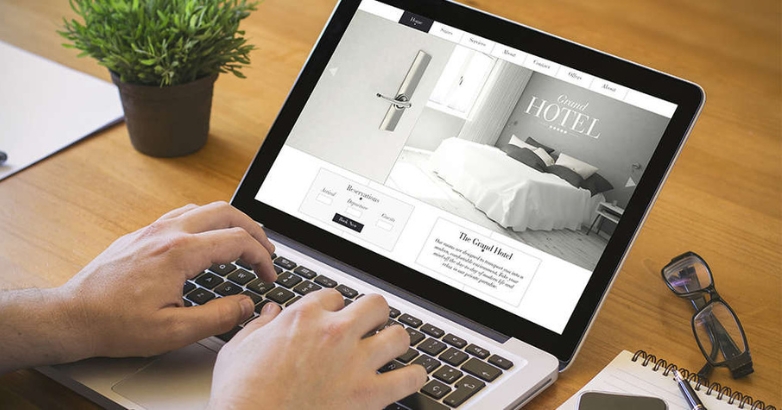
- Use Schema.org/Hotel markup for amenities, prices, and reviews.
- Employ conversational, long-tail keywords like “best romantic hotel in Florence with spa.”
- Add context-rich content such as detailed itineraries, guest stories, and experience highlights.
- Include optimized images and videos that AI can utilize for multimodal queries.
These steps are strongly related to advancements in internet marketing for hotels.
Step 4. Strengthen External Validation Signals
AI heavily weighs third-party validation:
- Keep OTA and Google Business listings accurate and fully optimized.
- Encourage verified guest reviews and respond promptly.
- Build digital PR through travel articles, influencer collaborations, and backlinks from high-authority sites.
Tactics here overlap with effective hotel marketing ideas.
Step 5. Measure and Optimize Performance
Define KPIs relevant to AI search: direct bookings from AI referrals, conversational query traffic growth, and AI-generated content visibility. Use Google Analytics, Search Console, and AI analytics platforms to test and iterate. This approach is aligned with practices in hotel marketing strategies.

5. Strategic Considerations for Hotels Competing in AI Search Globally
a. Understand Global Traveler Search Behavior
Travelers differ by region and language with natural queries like
- “Luxury eco-friendly ski resort near Zermatt with spa and shuttle service.”
- “Pet-friendly business hotel in Tokyo with coworking space.”
Your content should reflect these conversational nuances, integrating insights from local SEO for hotels.
b. Address Language and Cultural Nuances
Multilingual AI models customize recommendations by region and target language. Create localized content, schema markup, and multilingual FAQs in your top guest languages.
This supports global targeting and matches trends discussed in social media for hotels.
c. Embrace Mobile and Voice Search
With most AI searches done via mobile or voice, optimize your site for rapid loading, responsive design, and voice-compatible FAQs.
Check guidance on hotel advertising for emerging voice ad opportunities.
d. Strategies for Independent and Boutique Hotels
Niche hotels can differentiate through storytelling about heritage, design, or sustainability, key elements in hotel branding. Authentic reviews and community involvement further validate trust, essential in AI-driven recommendations.
e. Build Authority and Online Trust
AI search engines aggregate trust from every digital signal. Generate reviews, obtain quality backlinks, and create fresh content to bolster your authority.
See best practices in hospitality marketing for comprehensive strategies.

6. Future Trends: What’s Next in AI Hotel Search
AI‑powered hotel search is rapidly evolving. Key trends to watch:
- Voice assistants and multimodal queries combining visuals with text.
- AI booking assistants facilitating live, conversational reservation experiences.
- Zero-click booking enables transactions directly within AI chats, reducing friction.
- Greater emphasis on GDPR-compliant, ethical data handling and personalization.
Hotels poised for this future invest in structured data, seamless PMS integrations, and compelling storytelling for hotels.
FAQs
AI shifts focus from keyword-stuffing to optimized, structured, and user-centric conversational content.
Yes, through rich schema markup, strong external signals, and highly relevant, authoritative content.
Perplexity AI, ChatGPT travel integrations, iMean’s AI Finder, and emerging metasearch AI tools.
AI tools provide personalized recommendations, often sending travelers directly to booking, whereas OTAs process transactions.
AI adoption is accelerating; hotels should optimize now to maintain visibility in 2026 and beyond.
Elevate Your Hospitality Brand Today
Schedule Your Free Consultation
Seeking to elevate your business? Let Mediaboom guide you. Secure your exclusive, free consultation with our digital marketing experts today.
Conclusion: Future-Proof Your Hotel’s Visibility
AI hotel search is redefining traveler discovery and booking behavior. Early adaptation will drive increased visibility, direct bookings, and stronger brand trust.
Start with auditing your hotel’s AI presence, enhancing structured data, and boosting your digital authority through strategic content and external validation.
For expert support, contact Mediaboom, specialists in AI-driven hotel marketing and digital visibility strategies.
By: Frank DePino
Frank DePino is the Principal and Founder of Mediaboom, a top hotel marketing agency partnering with leading hotel and hospitality brands. With 30+ years of experience, he has led strategic digital initiatives for names including Four Seasons, Ritz-Carlton, JW Marriott, Millennium Partners, and Guardian Jet. Frank helps hospitality businesses strengthen brand presence, drive qualified leads, and elevate guest experiences through website design, SEO, content marketing, and paid media. Under his leadership, Mediaboom is a trusted partner for brands pursuing measurable digital growth in a competitive hospitality landscape.


READY TO IGNITE YOUR MARKETING STRATEGY?


