
Content Marketing for Hotels – 2026 Playbook

By: Frank DePino | December 28, 2025


Hotel marketing has a math problem: Every time a guest books through an Online Travel Agency (OTA), you give up margin through commissions that directly compress net revenue. Commission rates vary by market and agreement, but Booking.com commissions are commonly reported in the 10% to 25% range, with many industry sources citing around 15% as a typical average.
Content marketing is one of the few levers that can reduce that dependence without destabilizing your pricing strategy. It builds demand earlier, answers traveler questions faster, and gives people a reason to book directly when they are finally ready.
This guide breaks down what content marketing for hotels means at the end of 2025, what’s changing as we head into 2026, and how to build a hotel content marketing strategy that produces measurable results.
Here’s an overview of what will be covered in this guide:
- What Content Marketing Means for Hotels
- Why Content Marketing Is Critical in Hospitality
- How Content Fits Into the Hotel Booking Journey
- High-Performing Content Types for Hotels
- Building a Hotel Content Marketing Strategy
- SEO and Local Content Strategy for Hotels
- Using Content to Support Paid Media
- Measuring Hotel Content Marketing ROI
- Common Content Marketing Mistakes Hotels Make
- When Content Marketing Works Best for Hotels
- How Mediaboom Approaches Content Marketing for Hotels
- FAQs
- Conclusion
What Content Marketing Means for Hotels
Content marketing for hotels is the planned creation and distribution of useful, experience-led content that helps travelers choose your destination, trust your property, and book with confidence, with the strategic guidance of a hotel marketing agency to ensure visibility and relevance throughout the booking journey.
It’s not posting blogs. It’s an operating system for:
- Demand capture: Ranking for searches travelers use while researching (destination, events, neighborhoods, seasonal travel, best time to visit, things to do near…).
- Conversion support: Improving the booking experience with content that answers objections (parking, check-in, policies, room differences, amenities, accessibility, family needs).
- Retention and upsell: Nurturing booked guests with pre-arrival guides, on-property experiences, dining, spa, and itinerary suggestions.
The best hotel content reads like a helpful concierge, not a marketer trying to win an argument.

Why Content Marketing Is Critical in Hospitality
Travelers Keep Researching, Even After They Book
Travel planning is not linear. Think With Google reports that 95% of travelers continue visiting travel-related sites after booking, and 74% re-research their trip even after the booking is complete, which is why aligning your content strategy with a hotel marketing agency can maximize your reach and conversion opportunities at every stage.
That matters because content doesn’t stop at the booking. It can also influence upgrades, add-ons, reviews, and repeat stays.
Content Supports Direct Bookings by Shrinking the “Trust Gap”
OTAs tend to win because they reduce uncertainty through photos, reviews, comparisons, and quick filters that make decision-making easier. Your content marketing job is to remove uncertainty on your own site, using clarity, proof, and relevance.
Content Reduces Reliance on Discounts
Discounts are easy. Brand preference is harder. Content marketing builds preference by making your hotel feel like the obvious choice for a specific type of traveler, whether that’s food-first weekenders, conference guests, families, wellness travelers, or remote workers.
Content Improves Performance Across Channels
Good content improves:
- Organic visibility (hotel SEO content),
- Paid efficiency (better landing pages improve ad engagement and conversion),
- Email performance (useful guides beat generic promos),
- Social performance (real experiences beat stock photos).
Download Our FREE Guide
Outrank OTAs & Drive Direct Bookings With Our Hospitality Digital Marketing Guide
Learn how leading hotels increase website traffic, reduce OTA commissions, and convert more guests with targeted digital marketing strategies.
How Content Fits Into the Hotel Booking Journey
A hotel booking is rarely a single click. Your content should match the stage the traveler is in.
Inspiration
At the inspiration stage, travelers are not choosing hotels yet. They are choosing destinations and reasons to travel. This content captures demand before OTAs dominate the conversation, positioning your hotel as a trusted local authority.
- Best time to visit
- 3-day itinerary
- Neighborhood guide
- Hidden gems
- Events calendar
This is where destination content marketing for hotels shines. You are not selling rooms yet. You are selling a trip idea.
Consideration
They are comparing areas, property types, and values.
- Boutique hotel near [landmark]
- Hotel with parking and breakfast
- A family-friendly hotel near…
Content here should be fit by clearly explaining location, amenities, and room options in a way that helps travelers quickly decide whether your hotel matches their needs.
Conversion Confidence
At this stage, travelers are ready to book but want reassurance that they won’t regret the decision. Clear, detailed content reduces hesitation and prevents last-minute OTA comparisons.
- Clear policies
- Transparent fees
- Check-in and arrival expectations
- Accessibility details
- Transport guidance
- What’s actually nearby?

Post-Booking and Pre-arrival
This stage is underrated and highly leveraged because it increases upsells, improves guest satisfaction, and reduces post-booking anxiety.
- Pre-arrival email series
- Itineraries
- Restaurant guides
- Packing lists for the season
- Upsell pages for breakfast, spa, parking, and airport transfer.
Post-Stay
Turn guests into repeat business and reviewers.
- Thank you + local highlights you missed
- Loyalty nudges
- Review prompts
- Seasonal return offers
High-Performing Content Types for Hotels
Destination and Local Experience Content
This is your biggest long-term opportunity because it creates a moat. OTAs can list rooms. They cannot convincingly be the local expert for your specific neighborhood, vibe, and guest type.
Examples include short itineraries, seasonal guides, remote-work-friendly recommendations, and walking routes starting at your property.
Hotel Website Content Strategy Pages That Convert
Hotels often underbuild the pages that actually close bookings:
- Rooms and suites (with clear differences)
- Amenities (with proof, not claims)
- Location pages (with landmarks and transit)
- Event and wedding pages (with packages and FAQs)
- Pet policy, parking, and resort fee explanations
Partnering with a hotel marketing agency to optimize these key conversion points can significantly increase direct reservations.
Evergreen Hotel Blog Content With SEO Intent
Blog content works when it targets:
- Real search demand
- Clear intent
- A specific traveler profile
- A next step that makes sense (newsletter, itinerary download, booking page)
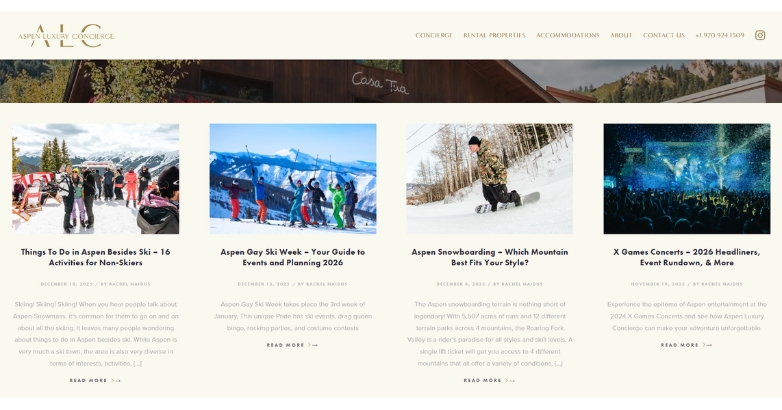
Skip generic “Top 10 Things to Do” posts. Win with specificity: seasonal guides, event-week planning content, and packing or logistics posts tied to real search intent.
Visual Content and Video
Hotels sell what words struggle to: atmosphere, light, space, comfort. Pair written content with:
- Short room walkthroughs
- Neighborhood clips
- Staff picks
- Guest experience reels
- Seasonal visuals
Email Content That Feels Like Service, Not Sales
Email is where hotels can win direct bookings repeatedly because you own the relationship.
- Pre-arrival guides,
- Seasonal return reasons,
- Member-only benefits,
- Local event calendars,
- New experiences announcements.
Reviews and User-Generated Content (UGC)
Trust is built socially. Hotels that consistently request and showcase reviews tend to convert better. Review behavior is a major trust signal in hospitality. TrustYou research has shown that the vast majority of travelers read reviews before booking, reinforcing how critical social proof is in the decision process.
Elevate Your Hospitality Brand Today
Schedule Your Free Consultation
Seeking to elevate your business? Let Mediaboom guide you. Secure your exclusive, free consultation with our digital marketing experts today.
Building a Hotel Content Marketing Strategy
Step 1: Define Your Guest Segments
Your ideal guest is not everyone with a credit card. Segment guests by purpose, party type, values, and booking behavior. Each group has different objections and search patterns.
Step 2: Map Content To Intent, Not to Your Internal Org Chart
Build around the questions travelers ask:
- Where should I stay to be near…
- Is this area safe and walkable?
- How far is it from the airport?
- What does parking cost?
- Is breakfast worth it?
Step 3: Build a Content Pillar + Cluster Model
Use one core guide (like this page) supported by clusters around hotel SEO content, destination content, website content strategy, direct booking content, and ROI tracking. This builds topical authority and cleaner internal linking.
Step 4: Create an Editorial Calendar That Matches Operations
Hotels are seasonal and event-driven. Your calendar should be, too:
- 90 days before peak season: publish planning guides and booking nudges.
- 30 to 60 days out: publish logistics content (parking, itinerary, what’s open).
- Post-peak: publish shoulder-season value content.
Step 5: Repurpose Aggressively
Hotels do not need more content. They need fewer, stronger assets used everywhere. Repurpose each strong guide across your website, email, and on-property guest communication.

SEO and Local Content Strategy for Hotels
Build Destination Authority, Not Just Property Pages
A hotel that ranks only for branded searches is invisible to new demand. Build content that captures:
- Things to do near [area]
- Best neighborhoods in [city]
- Where to stay for [event]
- Hotel near [landmark]
Strengthen Local Visibility With Consistent, Useful Signals
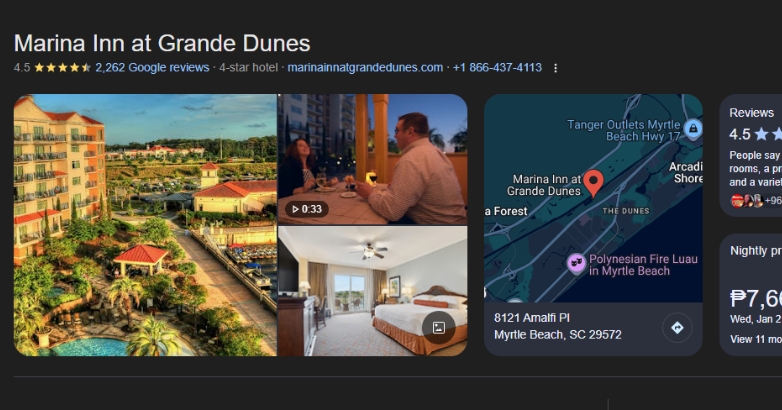
Local search depends on trust and relevance signals across listings, reviews, and your website. Hospitality businesses use Google Business Profiles, and imagery plays a role in local engagement.
Practical moves that help: keep photos and key details current, and publish location content that matches how travelers search.
Internal Linking That Supports Booking Pages
Every destination article should link naturally to:
- Relevant room types
- Packages
- Getting here info
- Amenities that matter for that traveler
This is how hotel SEO content becomes hotel content for direct bookings.
Prepare for AI-Influenced Travel Search
Travel planning is being shaped by AI tools that summarize options and build itineraries. Recent reporting shows how search experiences are adding AI itinerary planning features and placing more emphasis on structured information, reviews, and visual clarity.
Your defensive move for 2026:
- Publish content that answers specific questions cleanly
- Use clear headings and short sections
- Keep facts consistent across the site and listings
- Include rich media and strong review volume
Using Content to Support Paid Media
Paid media does not fail simply because ads are expensive. In many cases, performance breaks down because landing pages fail to match intent or answer booking objections.
Content marketing improves paid performance by aligning landing pages with intent, reducing bounce rates, improving Quality Score, and lowering cost per acquisition over time without defaulting to discounts. When content answers booking objections upfront, paid traffic converts more efficiently and supports long-term profitability.
The strongest setup pairs high-intent landing pages with helpful content that captures email, answers objections, and supports retargeting without defaulting to discounts.

Measuring Hotel Content Marketing ROI
Hotel content marketing ROI is real, but it’s rarely a single metric. You need a measurement stack that respects how bookings happen.
Track these layers:
Visibility and Demand Capture
- Organic sessions to the destination and planning content
- Impressions and clicks for non-branded queries
- Ranking improvements for “near me” and landmark queries.
Engagement Signals Tied To Booking Intent
Engagement signals tied to booking intent include time on page, clicks into rooms and packages, and email signups.
Conversion and Assisted Conversions
Content often assists bookings rather than directly converting.
- Look at assisted conversion paths
- Segment by channel (organic, paid, email)
- Compare new vs returning visitor behavior
Revenue-Adjacent Metrics
- Direct booking share growth over time
- Reduction in paid dependency for branded terms
- Email-driven revenue
- Pre-arrival upsell revenue
Download Our FREE Guide
Outrank OTAs & Drive Direct Bookings With Our Hospitality Digital Marketing Guide
Learn how leading hotels increase website traffic, reduce OTA commissions, and convert more guests with targeted digital marketing strategies.
Common Content Marketing Mistakes Hotels Make
Only Publishing Promotions
Promos are not content marketing. They are rate tactics. Content marketing earns attention when you are not discounting.
Writing Content Without Intent
If the page does not answer a real search question or reduce a real booking objection, it will not perform.
Inconsistency
A hotel that posts once a quarter looks abandoned. If you cannot commit to volume, commit to quality and repurposing.
Siloed Content
Content must connect to booking pages. Otherwise, you create traffic that never becomes revenue.
Treating SEO as “Add Keywords”
Hotel SEO content is architecture: topic clusters, internal linking, and pages that match intent.
When Content Marketing Works Best for Hotels
Content marketing delivers the biggest payoff when you have:
- A destination that travelers actively research
- A clear guest profile you can own
- A website that can convert once visitors arrive and the patience to build compounding results over several months, depending on competition, site quality, and execution.
It works especially well for:
- Boutique hotels that can differentiate through story and local expertise
- Resorts and experience-led properties
- Multi-property groups that can build destination coverage at scale
- Hotels in event-driven markets (festivals, conferences, seasonal peaks)

How Mediaboom Approaches Content Marketing for Hotels
Most hotel marketing agency partners can write blogs, but the difference lies in whether the content is built to drive direct bookings, reduce OTA dependence, and support paid media and SEO as one cohesive system.
A strong hospitality content marketing approach typically includes:
- A keyword and intent map built around booking journeys
- Destination authority content that earns demand
- Conversion content that removes booking objections
- On-site structure that supports internal linking to booking pages
- Measurement that ties content to revenue outcomes, not vanity traffic
Mediaboom’s positioning as a hotel marketing agency is strongest when content is connected to the entire digital performance stack: SEO, paid media, landing page conversion, and attribution discipline, not a standalone blog program.
FAQs
Content marketing for hotels is the consistent creation of helpful, experience-led content that attracts travelers, builds trust, and supports direct bookings through SEO, on-site conversion, and retention content.
It can, especially when content reduces booking friction and ranks for destination and “where to stay” searches, then links users to relevant rooms, packages, and booking pages.
Destination guides, neighborhood content, evergreen planning content, high-converting website pages (rooms, amenities, policies), visual content, and pre-arrival email guides tend to perform well.
Many hotels see early engagement improvements in weeks, while meaningful organic growth and booking impact often compound over 90 to 180 days, depending on competition and content quality.
Elevate Your Hospitality Brand Today
Schedule Your Free Consultation
Seeking to elevate your business? Let Mediaboom guide you. Secure your exclusive, free consultation with our digital marketing experts today.
Conclusion
Content marketing for hotels is not about publishing more. It’s about publishing what travelers actually need at the exact moment they need it, then guiding them toward a direct booking that feels easy and safe.
If you want a practical next step, audit your current content against three questions: Does it target real traveler intent? Does it reduce a booking objection? And does it connect naturally to a booking path? That’s where a real hotel content marketing strategy begins. Mediaboom helps hotels align content, SEO, and paid media into a single performance-driven strategy.
Get in touch with Mediaboom to discuss your hotel’s content marketing goals.
By: Frank DePino
Frank DePino is the Principal and Founder of Mediaboom, a digital marketing agency that partners with top hospitality and luxury brands. With over 30 years of experience, Frank has led strategic digital marketing initiatives for iconic names including Four Seasons, Ritz-Carlton, JW Marriott, Millennium Partners, and Guardian Jet. He specializes in helping hospitality businesses elevate their brand presence, generate leads, and enhance guest experiences through website design, SEO, content marketing, and paid media. Under Frank’s leadership, Mediaboom is a trusted partner for brands seeking meaningful digital growth in the competitive hospitality landscape.


READY TO IGNITE YOUR MARKETING STRATEGY?


