
Digital Marketing Services for Hotels – Driving Direct Bookings in 2026

By: Frank DePino | March 9, 2026


Digital marketing services for hotels have evolved from a simple line item into the primary engine for reclaiming profit margins from Online Travel Agencies (OTAs). In 2026, with over 75% of travelers beginning their journey on a search engine or through AI-driven assistants, your property’s digital presence determines whether you pay a 20% commission to a third party or capture a high-value direct reservation.
Modern online marketing for a hotel requires a shift from passive visibility to high-velocity acquisition. By integrating hospitality-specific SEO, Google Hotel Ads (Metasearch), and Conversion Rate Optimization (CRO), these specialized services bypass third-party intermediaries to build a direct, profitable relationship with your guests.
As we navigate the rise of Search Generative Experience (SGE) and Agentic AI, where AI agents proactively plan and book trips, your property’s digital footprint must be both machine-readable and human-inspiring. At Mediaboom, we provide the integrated ecosystem of hotel digital marketing services required to dominate the 2026 traveler’s journey, from the first “I need a getaway” search to the final booking confirmation.
Ready to map the must-have strategies your property needs to thrive? Let’s get into it.
Table of Content
- Search Engine & “Answer Engine” Optimization (SEO)
- High-Conversion Website Design & UX: Your #1 Direct Revenue Asset
- Precision Digital Advertising & Metasearch: Dominating the 2026 Guest Journey
- Content Marketing & Social Authority: Driving Discovery and Trust
- Email Marketing & Guest Retention (CRM): The High-ROI Revenue Engine
- Specialized Hospitality Strategies: Tailored Playbooks for 2026
- Analytics & Reporting: Turning Data into Net RevPAR
- Choosing the Right Hotel Marketing Partner for 2026
- Case Studies: Real-World Results for the Modern Hotelier
- FAQs: Navigating Hotel Digital Marketing in 2026
- Conclusion: The Direct Booking Mandate for 2026
Download Our FREE Guide
Outrank OTAs & Drive Direct Bookings With Our Hospitality Digital Marketing Guide
Learn how leading hotels increase website traffic, reduce OTA commissions, and convert more guests with targeted digital marketing strategies.
1. Search Engine & “Answer Engine” Optimization (SEO)
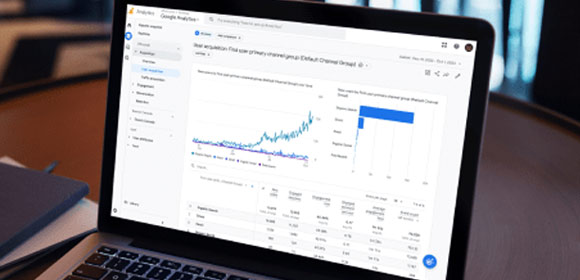
In 2026, traditional SEO has undergone a paradigm shift. It is no longer enough to rank #1 on a blue-link results page; your property must be the “cited source” for Search Generative Experience (SGE) and the primary recommendation for Agentic AI trip planners. Modern digital marketing services for hotels focus on GEO (Generative Engine Optimization)—ensuring your hotel is the definitive answer when a traveler asks, “Which boutique hotel in New York has the best rooftop bar for a sunset corporate event?”
The Three Layers of 2026 Hotel SEO
To dominate the search landscape and reclaim revenue from OTAs, a property’s strategy must satisfy both legacy algorithms and modern AI models across three critical layers:
- Technical Performance & Core Web Vitals: Speed is a direct booking factor. Prioritizing Interaction to Next Paint (INP) and Largest Contentful Paint (LCP) ensures a site remains lightning-fast and responsive. In 2026, if a mobile booking engine takes more than 2.0 seconds to become interactive, the property risks losing search rankings and conceding high-intent guests to high-speed OTA platforms.
- Entity-Based Content & Intent Optimization: Modern SEO for Hotels strategies move beyond generic keywords to build authority through intent-based content. Key focus areas include:
- Hyper-Local Destination Guides: Neighborhood itineraries and “near me” attraction pages designed to capture top-of-funnel discovery.
- Entity-Rich Room Pages: Utilizing advanced Schema.org to define specific “entities,” allowing AI search engines to identify nuanced room attributes like “hypoallergenic bedding” or “Tesla destination charging.”
- Direct-Response FAQs: Capturing “Featured Snippets” by providing explicit answers to high-intent questions regarding check-in flexibility, parking costs, and pet policies.
- Local SEO & Google Travel Ecosystem: The “Map Pack” remains the most valuable digital real estate for the hospitality industry. Maintaining a Google Business Profile (GBP) with geotagged 8K imagery, AI-responsive review management, and real-time attribute updates ensures a property appears first when travelers utilize voice search or map-based discovery.
The 2026 Edge: Advanced Schema & Agentic Readiness
Implementing Advanced Structured Data allows AI agents to verify real-time rates and specific amenities—such as Peloton bikes or Dyson hair dryers-without a user ever leaving the search interface. By making property data “machine-readable,” a hotel is positioned as the frictionless choice for AI-automated bookings and voice-assisted travel planning.
The Goal: SEO as a Direct Revenue Channel
In the current landscape, SEO is no longer a vanity metric for traffic; it is a Direct Revenue Channel. A high-performance SEO for Hotels strategy focuses on moving a traveler from a broad discovery query on Google to a confirmed, commission-free reservation. Leading best SEO hotel agencies prioritize this data-first approach to outpace generic marketing firms and outperform the organic reach of major OTA giants.
2. High-Conversion Website Design & UX: Your #1 Direct Revenue Asset
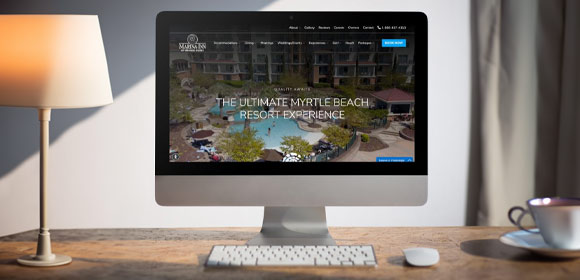
In 2026, your website is far more than a digital brochure; it is your only 100% commission-free sales channel. While OTAs focus on volume, your site must focus on value and velocity. A high-converting website is the cornerstone of effective digital marketing services for hotels, acting as the final destination where high-intent traffic is transformed into confirmed revenue.
To outperform third-party giants like Expedia or Booking, your digital storefront must be designed to plug the “conversion leak”—the moment a guest leaves your site because of friction, slow load times, or a lack of trust.
The Four Pillars of 2026 Hotel Web Design
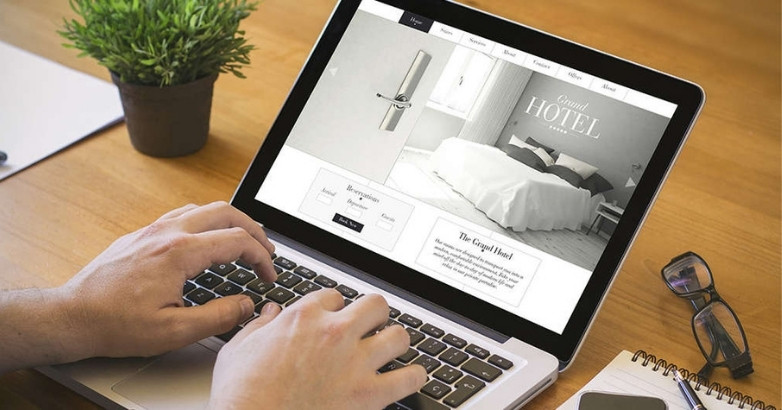
To outperform third-party giants like Expedia or Booking.com, a property’s digital storefront must be architected to prevent “conversion leaks.” In the 2026 landscape, digital marketing services for hotels center on a website that serves as a high-velocity booking engine rather than a static brochure. Success is built on these four foundational pillars:
- Mobile-First, “Thumb-Friendly” UX: With over 80% of travelers researching and booking on mobile devices, site performance is critical. Focus is placed on Interaction to Next Paint (INP)—the current gold standard for responsiveness—to ensure every interaction within the booking engine is instantaneous. Integrating biometric payments (Apple Pay/Google Pay) is essential to enable one-tap bookings and remove the friction associated with manual data entry.
- The “Direct Booking” Value Proposition: Breaking the OTA habit requires a clear logical and emotional incentive for guests to book direct. Strategic hotel website redesign focuses on highlighting exclusive perks, such as member-only rates, flexible 24-hour cancellation policies, and value-add credits (e.g., resort credits for spa or dining) that are intentionally unavailable on third-party platforms.
- High-Fidelity Trust Signals & Immersive Media: Modern travelers prioritize authenticity and “vibe checks.” Utilizing 8K video headers and unscripted 360-degree room tours provides a level of transparency that static photography cannot match. Implementing current hotel website design trends, such as AI-driven concierges and dynamic pricing displays, provides the real-time reassurance necessary to drive immediate confirmations.
- Continuous Conversion Rate Optimization (CRO): High-performance sites are never “finished.” Employing heat-mapping and rigorous A/B testing of headlines, CTA placements, and booking funnel steps allows for incremental improvements in user flow. In 2026, a 1% increase in conversion rate can represent significant annual revenue that remains with the property rather than being diverted to OTA commissions.
Our Specialized Design Services
- Luxury Hotel Website Design: We build immersive, high-end digital storefronts that mirror the on-property white-glove experience, specifically tailored for affluent travelers.
- Data-Driven Redesign: We transform underperforming sites into high-velocity booking engines by focusing on technical SEO and user psychology.
- Why Select Mediaboom? As one of the best hotel website design agencies, we prioritize revenue over just “pretty pictures.” We understand that a beautiful site is useless if it doesn’t convert, which is why our designs are built on a foundation of hospitality-specific data.
Download Our FREE Guide
Outrank OTAs & Drive Direct Bookings With Our Hospitality Digital Marketing Guide
Learn how leading hotels increase website traffic, reduce OTA commissions, and convert more guests with targeted digital marketing strategies.
3. Precision Digital Advertising & Metasearch: Dominating the 2026 Guest Journey
In 2026, digital marketing services for hotels must be aggressive. While SEO builds long-term equity, precision advertising is your immediate lever for generating demand, protecting your brand identity, and filling occupancy gaps during “need periods.”
The hospitality landscape is now a battleground of AI-driven bidding and OTA encroachment. To win, a premium hotel advertising strategy must move beyond simple keywords to focus on high-intent data and brand defense.
The Three Pillars of High-Performance Paid Media
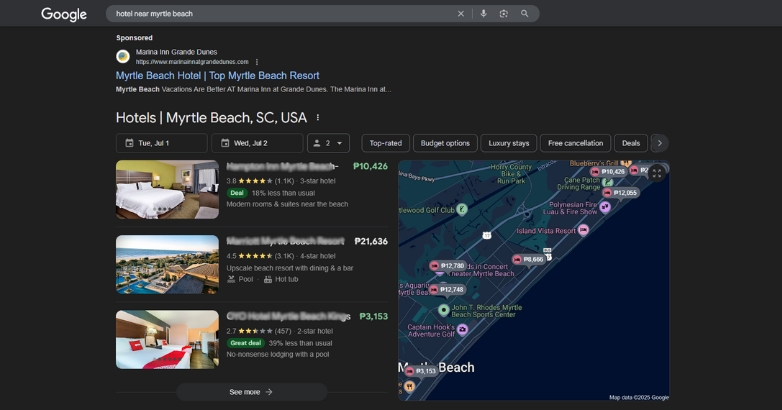
While organic growth builds long-term equity, precision advertising is the primary lever for generating immediate demand and protecting a property’s brand identity. In a high-competition landscape, digital marketing services for hotels must focus on three core pillars to ensure a profitable distribution mix:
- Aggressive Brand Protection: Online Travel Agencies (OTAs) frequently bid on a hotel’s specific name to hijack direct traffic. Deploying sophisticated brand-defense campaigns via Google Ads for Hotels ensures the “Book Direct” link remains the primary choice for guests already searching for the property. Securing the top search position lowers the cost-per-acquisition (CPA) and preserves 100% of the booking revenue.
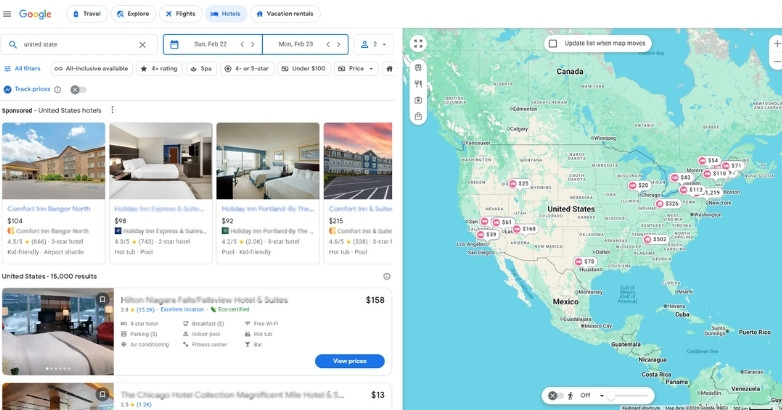
- Metasearch Dominance: In 2026, travelers utilize Metasearch as their primary comparison tool. If a direct rate is not visible or competitive, the guest is likely to be lost to a third party. Maintaining seamless connectivity to Google Hotel Ads, TripAdvisor, and Trivago ensures the Best Available Rate (BAR) is front and center. This transparency allows a hotel to compete head-to-head with OTAs, serving as a critical tool for direct guest acquisition.
- Full-Funnel Social Commerce: Because travel is inherently visual, high-impact Instagram Ads for Hotels and Facebook Advertising for Hotels are essential for driving discovery. These platforms leverage short-form video and “vibe-check” content to facilitate social commerce. Strategic hotel ad campaigns utilize dynamic remarketing to re-engage travelers who abandoned the booking engine, delivering tailored, limited-time offers that drive conversion.
Advanced Targeting
For high-end properties, generic ads won’t cut it. Our PPC for luxury hotels focuses on precision targeting of high-net-worth individuals (HNWI) using first-party data and lifestyle layering (e.g., targeting frequent luxury travelers interested in fine dining or wellness).
This luxury hotel advertising approach ensures that your budget is spent on “whale” guests who drive high Average Daily Rate (ADR) and ancillary revenue.
Strategic Budget Allocation
The most successful hotels in 2026 use a hybrid bidding model.
For example, we prioritize high-converting branded terms to secure immediate ROI, while layering in seasonal bidding strategies—ramping up spend during peak holidays and shifting to “leisure-intent” keywords like “best luxury spa resort in [City]” during off-peak windows to maintain a steady flow of direct revenue.
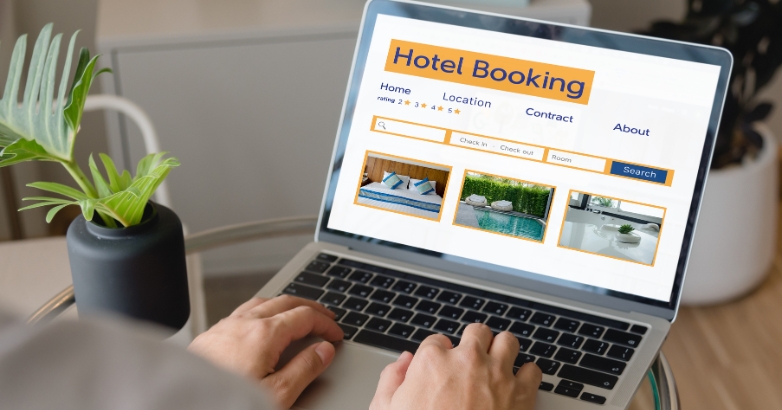
4. Content Marketing & Social Authority: Driving Discovery and Trust
In 2026, digital marketing services for hotels have shifted from static blogging to dynamic, multi-platform storytelling. Travelers no longer just “search” for a room; they seek a “vibe check.” Platforms like TikTok and Instagram have become primary search engines for Gen Z and Millennials, who use them to find everything from “best aesthetic hotels in Miami” to “hidden gem resorts with private pools.”
To maintain a competitive edge, your content must be optimized for Social SEO, using keyword-rich captions, location tags, and trending audio to ensure your property surfaces in discovery feeds and AI-curated travel recommendations.
The 2026 Content Pillars for Hospitality
To maintain a competitive edge, a property’s content strategy must shift from static information to dynamic, multi-platform storytelling. In 2026, digital marketing services for hotels rely on these high-impact pillars to drive direct discovery:
- Establish Authority with Content Marketing for Hotels: High-authority content strategies focus on building hyper-local neighborhood guides and destination itineraries that position a property as the definitive local expert. Rather than being purely “informative,” this content serves as a strategic funnel designed to move travelers from broad inspiration at the discovery stage to a confirmed direct booking.
- Leverage Employee & User-Generated Content (EGC/UGC): Authenticity is the primary currency of the 2026 traveler. Spotlighting “local secrets” from concierge staff or curating unscripted guest stories humanizes the brand and provides the essential social proof required to build immediate trust. This transparency effectively shortens the gap between a social media scroll and a confirmed reservation.
Reputation Management: The Digital First Impression
In the era of AI-driven search, reputation is no longer just PR—it is “conversion fuel.” A proactive reputation strategy serves as a critical, yet often hidden, SEO lever that directly influences search visibility and overall cost-per-acquisition. Within the suite of modern digital marketing services for hotels, managing a property’s “digital first impression” is essential for converting high-intent traffic.
- AI-Enhanced Sentiment Analysis: Modern review monitoring involves using AI to analyze recurring themes within guest feedback. If guests frequently highlight “rooftop yoga” but cite “slow elevators,” these data points allow an operations team to amplify unique selling points and address service bottlenecks before they impact long-term ratings.
- Rapid, Brand-Aligned Responses: Speed of response acts as a vital trust signal for both prospective guests and search algorithms. Professional, timely engagement across platforms like Google, TripAdvisor, and OTAs demonstrates that a property is active, guest-centric, and attentive to detail.
- Review Velocity & SEO Linkage: Maintaining a steady stream of fresh, five-star reviews is essential for Search Generative Experience (SGE) optimization. High ratings and consistent review volume significantly improve the Click-Through Rate (CTR) within the Local Map Pack, ensuring that all organic and paid efforts achieve maximum impact.
The Bottom Line: Even the most aggressive ad campaigns can be undermined by a lagging reputation. Integrating reputation data into the broader marketing ecosystem turns guest feedback into a tangible asset that reduces ad spend and increases direct booking confidence.
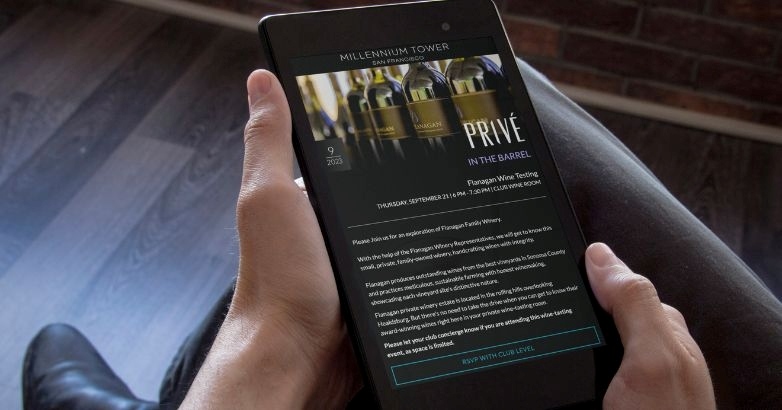
5. Email Marketing & Guest Retention (CRM): The High-ROI Revenue Engine
In 2026, digital marketing services for hotels must prioritize the guest’s lifetime value (LTV). With the cost of acquiring new guests through paid search and OTAs at an all-time high, your most profitable booking is the one you don’t have to “buy” twice. Modern hotel email marketing has evolved from generic monthly newsletters into a hyper-personalized, automated revenue engine driven by real-time data.
By integrating your Property Management System (PMS), such as Opera, Cloudbeds, or Mews, with a sophisticated CRM, we create a “Single Guest Profile” that allows for “Predictive Next-Best-Offer” messaging. This ensures your guests receive the right offer at the exact moment they are ready to book again.
The 2026 Lifecycle Automation Strategy
To maximize direct revenue and minimize OTA dependency, a sophisticated hotel email marketing strategy must encompass the entire guest journey. By leveraging data from the Property Management System (PMS), automated workflows ensure timely, high-relevance communication that drives both occupancy and incremental spend.
- Abandoned Booking Recovery: Often referred to as the “OTA killer,” this automation targets travelers who begin a reservation but leave before confirming. Multi-step recovery sequences can help properties recover 15–30% of otherwise lost revenue by addressing friction points or offering exclusive direct-booker perks.
- The “Profit-Boosting” Pre-Arrival: Automated sequences triggered 48–72 hours before check-in serve as a primary vehicle for ancillary revenue. By offering room upgrades, spa treatments, or dining reservations, hotels can increase total guest value by 10–15% before the guest even arrives on-site.
- The OTA-to-Direct Pivot: Specific campaigns are deployed to target guests who originally booked via third-party platforms like Expedia or Booking.com. By highlighting the “Best Rate Guarantee” and loyalty perks available only on the official site, these high-commission guests are converted into high-margin direct advocates for future stays.
- Post-Stay Loyalty & Reactivation: Behavioral data is utilized to trigger “We Miss You” offers based on specific stay histories. For instance, if a guest previously booked an anniversary stay, a personalized invitation can be automatically sent 11 months later, pre-populating their preferred room type and amenities to streamline the re-booking process.
Download Our FREE Guide
Outrank OTAs & Drive Direct Bookings With Our Hospitality Digital Marketing Guide
Learn how leading hotels increase website traffic, reduce OTA commissions, and convert more guests with targeted digital marketing strategies.
Creative Campaigns & Guest Engagement
Successful online marketing for a hotel requires a blend of data and creativity. We help you move beyond the “one-size-fits-all” approach with:
- Hotel Email Marketing Examples: Leveraging high-performing templates for seasonal flash sales, holiday packages, and local event tie-ins.
- Email Marketing Ideas: Implementing “Founder-style” plain-text emails for luxury properties to build a sense of exclusivity and personal connection.
The 2026 Edge: Omnichannel Integration
In 2026, email doesn’t work in a vacuum. We synchronize your email campaigns with WhatsApp Marketing and SMS triggers for urgent updates (like room-ready notifications), ensuring a seamless, frictionless guest experience that drives five-star reviews and repeat bookings.
6. Specialized Hospitality Strategies: Tailored Playbooks for 2026
In the complex landscape of digital marketing services for hotels, a “one-size-fits-all” approach is a recipe for wasted ad spend and high OTA dependency. A 500-room convention hotel requires a fundamentally different digital ecosystem than a 20-suite ultra-luxury hideaway.
At Mediaboom, we develop segment-specific strategies that align your property’s unique DNA with the high-intent travelers most likely to book direct.
Digital Marketing for Boutique Hotels: Authenticity & Design
Boutique properties thrive on character and local connection. Our approach to digital marketing for boutique hotels focuses on “The Vibe” over “The Volume.”
- Precision Paid Advertising: Sophisticated hotel advertising moves beyond broad demographics to target “Ultra-High-Net-Worth Individuals” (UHNWI). By utilizing behavioral layering—identifying travelers who frequent private aviation terminals or high-end fashion galas—ad spend is concentrated on “whale” guests who drive high ADR and substantial ancillary revenue.
- Concierge-Level Website UX: A premium luxury hotel website design acts as a digital butler. It prioritizes frictionless navigation and integrated AI-driven “Digital Concierges” that offer personalized pre-stay itineraries. This ensures the guest feels recognized and valued long before they arrive at the front desk.
- Search Authority & GEO: High-end SEO for Hotels focuses on “long-tail” queries. The goal is to ensure the property is the definitive “cited source” for AI-driven search engines when travelers ask for specific elite experiences, such as “Which hotel in London offers private rooftop dining with a view of the Shard?”
- Social Search Dominance: Boutique guests are the primary users of TikTok and Instagram for travel discovery. We optimize your “aesthetic” to ensure your property is the top result for “lifestyle hotel” searches in your city.
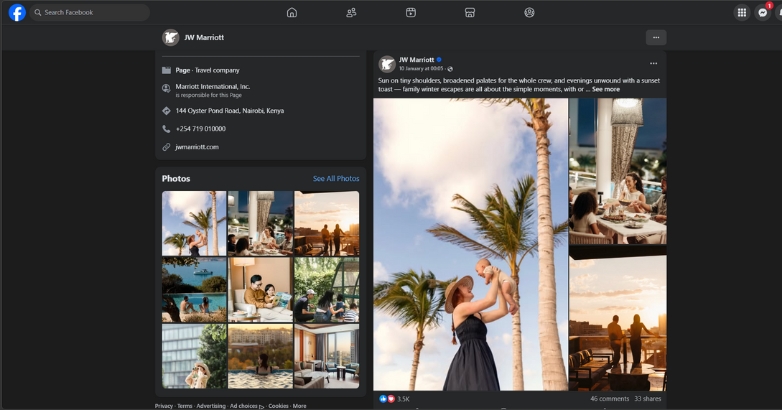
Strategic Planning: Optimizing Your Distribution Mix
The ultimate goal of professional digital marketing services for hotels is to find the “Golden Ratio” between direct bookings and OTA support. We help you navigate the full spectrum of hotel marketing channels to ensure you aren’t over-relying on high-commission third parties.
- Channel Management: We analyze your current production to identify which channels are cannibalizing your direct traffic and where you can aggressively deploy hotel marketing strategies to win back the guest.
Performance-Driven Influencer Partnerships
In the current travel landscape, high follower counts are often secondary to audience engagement and trust. Performance-driven digital marketing services for hotels now prioritize collaborations with Nano (1k–10k followers) and Micro-Influencers (10k–100k followers). These niche creators often yield significantly higher conversion rates because their followers are more loyal and their content feels more authentic than broad, celebrity-level endorsements.
Niche Alignment: Success depends on selecting creators whose personal brand and audience values align perfectly with the property, whether the focus is on sustainable travel, architectural design, or culinary excellence.
Data-Backed Collaborations: Influencer partnerships are increasingly managed through a performance marketing lens. Utilizing unique promo codes and GA4 attribution links allows a property to track the specific Cost Per Direct Booking generated by each creator, moving beyond vanity metrics to focus on tangible revenue.
Content Licensing & Longevity: A strategic partnership includes securing licensing rights for all generated assets. This allows a hotel to repurpose high-quality creator content across hotel ad campaigns and official channels, extending the lifecycle and ROI of the original collaboration.
Elevate Your Hospitality Brand Today
Schedule Your Free Consultation
Seeking to elevate your business? Let Mediaboom guide you. Secure your exclusive, free consultation with our digital marketing experts today.
7. Analytics & Reporting: Turning Data into Net RevPAR
In 2026, “traffic” is a vanity metric. If you cannot measure the direct impact of your digital marketing services for hotels on your bottom line, you cannot scale. Modern hospitality reporting has moved past fragmented PDFs; it is now a Unified Data Ecosystem that connects your Property Management System (PMS), CRM, and digital media spend into a single source of truth.
At Mediaboom, we don’t just report on clicks; we report on profitable guest acquisition. Our analytics framework is designed to help you understand exactly where your commission-free revenue is coming from and where your “conversion leaks” are happening.
The 2026 Integrated Dashboard
To stay competitive, your reporting must unify five critical data streams:
- Commercial Performance: Real-time tracking of hospitality-specific KPIs like RevPAR (Revenue Per Available Room), ADR (Average Daily Rate), and GOPPAR (Gross Operating Profit Per Available Room).
- Direct vs. Assisted Conversions: Understanding the guest journey across multiple touchpoints. A guest might discover you on Instagram, research you on Google SGE, and finally book via an email link. We track this full-funnel attribution to prove the ROI of every channel.
- Metasearch & Brand Defense: Monitoring your price parity and impression share on Google Hotel Ads. If an OTA is undercutting your direct rate, our system flags it instantly.
- Booking Funnel Granularity: Identifying exactly where users drop off in your booking engine. Is it the room selection page? The payment gate? We use heat-mapping and session recordings to fix friction in real-time.
- First-Party Data Health: Measuring the growth of your “owned” audience. In a cookie-less 2026, your CRM’s health—segmentation accuracy, open rates, and Repeat Booking Ratio—is your hotel’s most valuable asset.
The Goal: Decisions Over Data
The most successful hotels in 2026 don’t need more data; they need better decisions. Our reporting provides an Executive Summary every month that answers three questions:
- How much did we spend?
- How much direct revenue did it generate?
- What are we changing next month to increase your Net RevPAR?
8. Choosing the Right Hotel Marketing Partner for 2026
Not every agency understands the nuances of the “guest journey.” To ensure your digital marketing services for hotels deliver a high ROI, evaluate potential partners based on these four criteria:
- Hospitality-Specific Expertise: Proven experience managing the technical nuances of the travel ecosystem, including Metasearch connectivity (Google Hotel Ads, TripAdvisor), Booking Engine/CRS integration, and Local SEO within the Google Travel Map Pack.
- Full-Funnel Integration: A unified strategy that connects Discovery (SEO/GEO and Paid Search), Conversion (high-fidelity website design and CRO), and Retention (CRM automation and guest loyalty).
- Revenue-First Analytics: Transparency beyond vanity metrics. Reporting should focus on Net RevPAR growth, Cost Per Acquisition (CPA), and clear multi-channel attribution to show exactly which touchpoints drive the final reservation.
- OTA Reduction Strategy: A sustainable plan to protect brand search terms, incentivize direct bookings through exclusive perks, and build first-party data to own the guest relationship long-term.
Ready to elevate your property?
At Mediaboom, our positioning is built around hospitality outcomes, not just digital activity. Contact us today to build a 2026 strategy that puts your hotel back in control of its revenue.
Download Our FREE Guide
Outrank OTAs & Drive Direct Bookings With Our Hospitality Digital Marketing Guide
Learn how leading hotels increase website traffic, reduce OTA commissions, and convert more guests with targeted digital marketing strategies.
9. Case Studies: Real-World Results for the Modern Hotelier
Marina Inn at Grande Dunes: Reclaiming the Booking Funnel
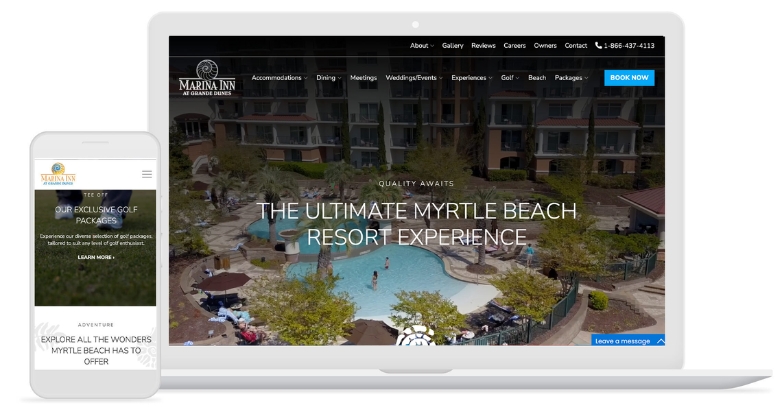
At Marina Inn at Grande Dunes, the challenge was clear: high OTA dependency was eroding the property’s Net RevPAR. Mediaboom deployed a full-funnel strategy designed to capture travelers at the “dreaming” stage and keep them within the property’s owned ecosystem.
- The Impact: This case study demonstrates how an integrated approach to online marketing for a hotel, from elite web design to precision CRO, builds a resilient, profitable booking pipeline.
- The Strategy: We executed a complete high-fidelity website redesign, prioritizing Interaction to Next Paint (INP) for a frictionless mobile booking experience. This was paired with an aggressive SEO for Hotels strategy targeting high-intent terms like “luxury Myrtle Beach resorts” and “oceanfront golf getaways.”
- The Results: By integrating hotel ad campaigns with exclusive “Direct-Only” value-add credits, we successfully pivoted the guest behavior. The property saw a measurable surge in direct conversion rates and a significant reduction in third-party commissions.
JW Marriott: A High-Velocity Luxury Launch
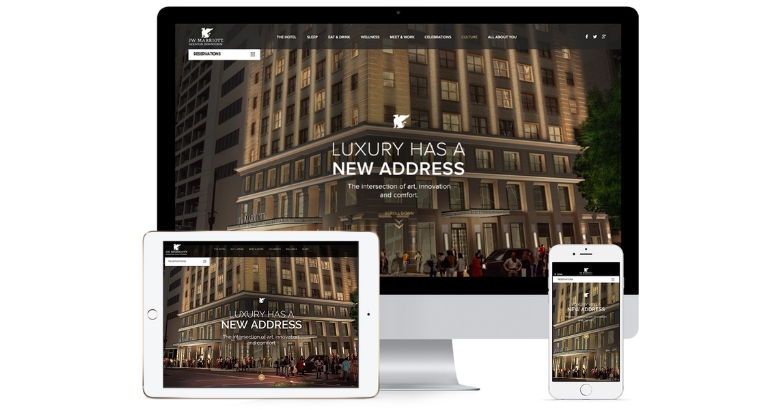
Launching a luxury property in a competitive urban market requires more than just visibility; it requires Brand Authority. Mediaboom partnered with JW Marriott to introduce their new Downtown Houston property to a global audience of affluent business and leisure travelers.
- The Impact: This rollout serves as a blueprint for how multi-channel digital marketing services for hotels can accelerate brand equity and drive occupancy in even the most crowded luxury markets.
- The Strategy: We utilized luxury hotel advertising to build early awareness, combining immersive digital storytelling with geo-targeted Google Ads for Hotels. To ensure long-term organic growth, we implemented a robust Local SEO and Map Pack strategy, ensuring the property dominated “near me” searches from day one.
- The Results: Through curated visual branding and performance-driven PPC, JW Marriott established a dominant online presence immediately upon opening. Custom landing pages and social media branding synchronized to create a seamless “vibe-check” for incoming guests.
Ready to grow your brand with a dedicated hotel marketing agency that drives direct revenue? Contact Mediaboom today to explore the right strategy for your property.
FAQs: Navigating Hotel Digital Marketing in 2026
Hotels reduce OTA dependency by reclaiming the “direct booking value proposition.” This involves using Metasearch (Google Hotel Ads) to show price parity, offering “Direct-Only” perks (like flexible check-in or resort credits), and leveraging first-party data to build a direct relationship with guests before they ever visit a third-party site.
Generative Engine Optimization (GEO) is the 2026 evolution of SEO. It ensures your property is the “cited source” when AI agents (like ChatGPT or Google Gemini) answer traveler queries. Success requires Advanced Schema Markup and “Answer-Ready” content that explicitly tells AI models about your specific amenities, pet policies, and real-time availability.
Beyond traffic, you must track Net RevPAR (Revenue Per Available Room after commissions) and your Direct Booking Ratio. In 2026, we also prioritize Interaction to Next Paint (INP) for mobile speed and Customer Lifetime Value (LTV), which measures the long-term profitability of a guest acquired through your CRM.
Look for an agency with a “Hospitality-First” tech stack. A partner must demonstrate expertise in integrating your Property Management System (PMS) with your marketing tools, managing high-velocity Metasearch bidding, and deploying AI sentiment analysis for reputation management. Avoid generic firms; niche expertise is required to outrank global OTAs.

Conclusion: The Direct Booking Mandate for 2026
In 2026, digital marketing services for hotels are the engine of independent growth. The most profitable properties are those that have transitioned from “OTA-dependent” to “direct-first” by unifying AI-ready SEO, frictionless website UX, and data-driven CRM automation.
At Mediaboom, we don’t just manage your online presence; we build a high-velocity revenue engine that bypasses intermediaries and speaks directly to the traveler’s intent. The goal is clear: lower your commission costs and reclaim your guest relationships.
Ready to Outpace the OTAs?
The digital landscape moves fast, and your property shouldn’t be left behind. Schedule your free consultation with Mediaboom today to build a 2026 digital marketing strategy that puts you back in control of your revenue and your brand.
Would you like me to generate a 160-character meta description and a high-CTR SEO title tag for this updated pillar page?
By: Frank DePino
Frank DePino is the Principal and Founder of Mediaboom, a top hotel marketing agency partnering with leading hotel and hospitality brands. With 30+ years of experience, he has led strategic digital initiatives for names including Four Seasons, Ritz-Carlton, JW Marriott, Millennium Partners, and Guardian Jet. Frank helps hospitality businesses strengthen brand presence, drive qualified leads, and elevate guest experiences through website design, SEO, content marketing, and paid media. Under his leadership, Mediaboom is a trusted partner for brands pursuing measurable digital growth in a competitive hospitality landscape.
READY TO IGNITE YOUR MARKETING STRATEGY?


