
Performance Max for Travel Goals

By: Frank DePino | November 9, 2026


Loading the Elevenlabs Text to Speech AudioNative Player...
Performance Max for travel goals is a Google Ads campaign type designed to help hotels reach travelers across Google’s advertising channels and generate direct bookings.
It uses AI to manage bidding, select audiences, and deliver property-specific ads.
However, successful hotel campaigns still depend on competitive room rates, accurate booking tracking, and an effective reservation experience.
This guide covers how Hotel PMax works, how to set it up, and how to improve campaign performance.
Key takeaways:
- Multi-channel advertising: Reach travelers across Google Search, Maps, YouTube, Display, Discover, Gmail, and eligible Hotel Ads placements.
- Hotel-specific campaigns: Create property asset groups and review performance by hotel.
- Direct booking goals: Focus on completed reservations and booking revenue rather than traffic alone.
- Accurate hotel data: Property information, pricing feeds, and conversion tracking influence campaign results.
- Performance management: Automated bidding saves manual work but still requires monitoring and adjustments.
Is Your Hotel Showing Up in ChatGPT?
Travelers are increasingly using AI tools to research destinations before they ever reach a booking site. See how your hotel appears in these AI-generated answers, where competitors or OTAs may be gaining visibility, and whether there are opportunities to strengthen your presence.
What Is Performance Max for Travel Goals, and How Does It Work?
Performance Max for travel goals, also known as Hotel PMax, is a specialized Google Ads campaign that uses AI to advertise hotels across Google’s network.
Hotels provide their advertising goals, budgets, property details, and creative assets. Google then determines where to show ads, which audiences to reach, and how much to bid based on predicted conversion opportunities.
Unlike standard Performance Max, Hotel PMax includes features specifically for hotel advertisers:
- Property-specific asset groups containing hotel images, descriptions, and URLs.
- Travel-related audience suggestions based on hotel characteristics.
- Individual hotel performance reporting.
- Access to eligible Hotel Ads placements when suitable pricing data is available.
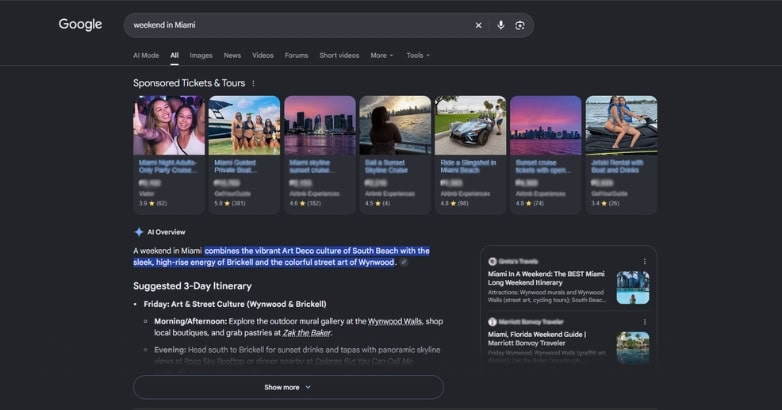
Where Do Performance Max for Travel Goals Ads Appear?
According to Google Ads documentation, campaigns can appear across Google Search, Maps, YouTube, Display, Discover, Gmail, and Google Travel.
For example, someone researching a weekend in Miami might first encounter a hotel on YouTube, see an advertisement in Google Search, and later compare accommodation rates.
Hotel PMax can reach travelers at these different stages through one campaign.
However, Hotel Ads inventory requires eligible room pricing data. Creating a Performance Max campaign alone does not automatically provide access to rate-based hotel placements.
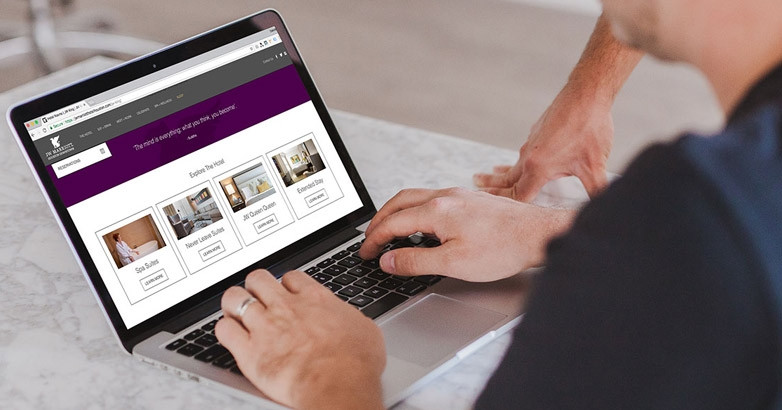
What Are the Benefits and Limitations of Performance Max for Hotels?
Performance Max for hotels can expand advertising reach and reduce manual campaign management. The trade-off is less direct control over individual channels and some automated decisions.
| Benefits | Limitations |
| Access to multiple Google channels | Less control over channel-level spending |
| Automated bidding and ad selection | Relies heavily on conversion data |
| Property-specific advertising assets | Requires quality hotel images and content |
| Hotel-level performance reporting | Some reporting details remain limited |
| Potential to reach more travelers | No guarantee of profitable bookings |
The main advantage is managing several advertising channels through a single campaign while tracking results by property.
However, automation cannot compensate for an uncompetitive booking offer or poor reservation experience.
Hotels should evaluate these fundamentals before investing heavily in Performance Max campaigns.
Elevate Your Hospitality Brand Today
Schedule Your Free Consultation
Seeking to elevate your business? Let Mediaboom guide you. Secure your exclusive, free consultation with our digital marketing experts today.
How Do You Set Up Performance Max for Travel Goals?
Setting up PMax for travel goals requires hotel property information, a campaign budget, bidding settings, advertising assets, and reliable booking conversion tracking.
Step 1: Prepare Your Hotel Property and Pricing Feeds
First, confirm that your hotel is correctly identified in Google Ads and that the relevant property information is available.
Google supports hotel property lists through Google Ads and linked Google Hotel Center accounts.
Two types of data serve different purposes:
- Hotel property feed: Identifies the hotels being advertised and supplies property information.
- Hotel price feed: Supplies room rates, availability, and booking information for eligible rate-based advertisements.
Important update: Google discontinued Google-sourced third-party hotel rates after September 30, 2026.
Affected campaigns relying on those rates stopped serving Hotel Ads inventory, although Hotel PMax campaigns could continue across other Google channels.
To restore affected Hotel Ads placements, advertisers need to establish a direct price feed through Hotel Center or an integration partner, connect it to Google Ads, and recreate affected campaigns.
Read Google’s explanation of the hotel pricing changes.
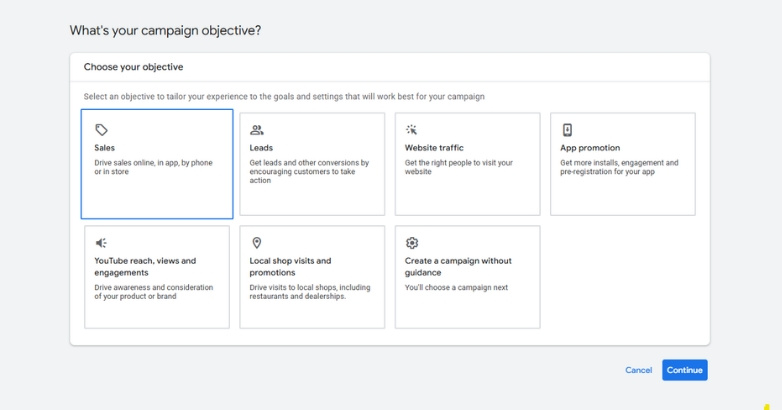
Step 2: Set Your Campaign Goals
Create a sales-focused campaign in Google Ads and select the appropriate Performance Max for travel goals setup.
Prioritize completed reservations as your primary conversion goal.
Booking engine visits and checkout starts can provide additional information, but they should not be counted as completed bookings.
Whenever possible, track the actual reservation value so Google can distinguish between bookings generating different amounts of revenue.

Step 3: Choose Your Budget and Bidding Strategy
Choose a budget based on your hotel’s booking goals, margins, and available advertising spend.
Common automated bidding options include:
| Strategy | Primary objective |
| Maximize conversions | Generate more bookings |
| Target CPA | Pursue conversions around a target acquisition cost |
| Maximize conversion value | Generate greater booking value |
| Target ROAS | Pursue a specific advertising revenue return |
Hotels tracking accurate booking revenue should consider value-based bidding.
If booking values are unavailable, conversion-focused bidding may be more practical until revenue tracking is reliable.

Step 4: Create Hotel-Specific Asset Groups
Asset groups contain the materials Google uses to assemble advertisements.
Include relevant:
- Hotel and room photographs
- Headlines and descriptions
- Logos and videos
- Property-specific landing pages
- Amenities and booking offers
Google can suggest assets based on property information, but advertisers should review them before launch.
A beachfront resort, for example, should emphasize its location, rooms, and amenities rather than generic travel messaging.
Also check landing page settings to avoid directing travelers to unrelated properties or offers.
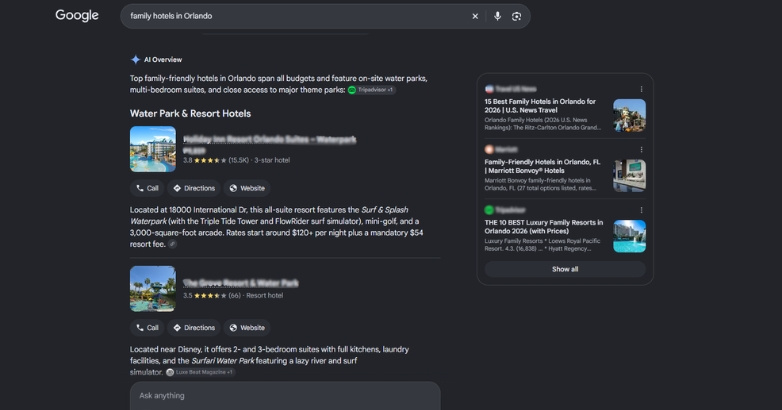
Step 5: Add Audience Signals and Search Themes
Audience signals help Google’s AI identify potentially valuable travelers.
Hotels can provide relevant first-party audiences, previous website visitors, and travel-related interests where supported.
Search themes provide additional context. A hotel could use themes such as “family hotels in Orlando” or “business hotels near convention center.”
These are signals for automated targeting, not strict keyword restrictions.
Is Your Hotel Showing Up in ChatGPT?
Travelers are increasingly using AI tools to research destinations before they ever reach a booking site. See how your hotel appears in these AI-generated answers, where competitors or OTAs may be gaining visibility, and whether there are opportunities to strengthen your presence.
Step 6: Verify Booking Conversion Tracking
If reservations are completed through a third-party booking engine, tracking must cover that booking process.
Verify that:
- Successful reservations trigger the correct conversion event.
- Booking values and currencies are accurate.
- Cross-domain tracking works when required.
- Duplicate conversions are not inflating results.
One important detail: Hotel Ads can use a booking link different from the asset group’s landing page.
Review the Booking Link URL in Google Ads’ Hotels tab and confirm that the final booking confirmation page records conversions correctly.
Google provides further instructions in its Performance Max for travel goals FAQ.

How Should Hotels Structure Their Performance Max Campaigns?
Campaign structure should reflect each hotel’s budget, audience, language, and revenue objectives.
A single independent hotel may need only one campaign with a property-specific asset group.
Hotel groups should consider separating campaigns when properties have significantly different budgets or return targets.
For example, a beachfront resort targeting vacationers and a city hotel targeting business travelers might benefit from separate campaigns if their advertising goals and budgets differ.
Google currently allows up to 100 property asset groups per Hotel PMax campaign.
It also discourages running standard Performance Max and Hotel PMax campaigns targeting the same locations and languages because they can compete in unexpected ways.
Avoid creating unnecessary campaigns when properties share similar goals. Campaigns need sufficient conversion activity for meaningful performance evaluation.
How Can Hotels Improve Performance Max Results?
Improving Hotel PMax results involves both advertising adjustments and changes to the booking experience.
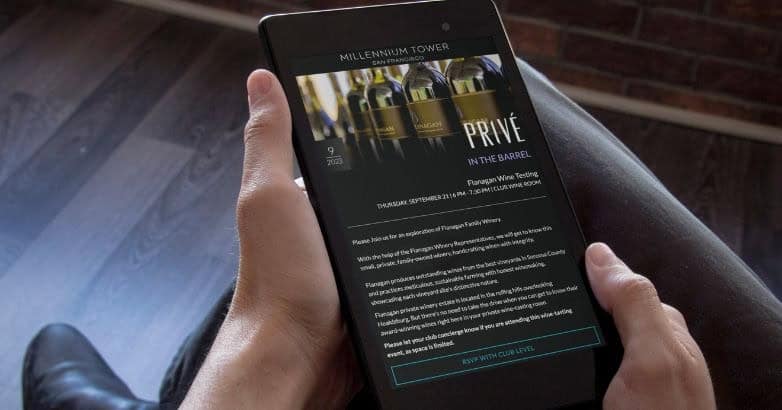
Make Direct Booking Rates and Offers Competitive
Compare your hotel’s direct-booking offer with rates available through online travel agencies (OTAs).
If guests find a better offer for the same room and dates elsewhere, they may leave your booking engine to reserve through a third party.
When appropriate, consider direct-booking benefits such as:
- Complimentary breakfast
- Flexible cancellation
- Room upgrades
- Early check-in or late checkout
The objective isn’t necessarily to offer the lowest rate. It’s to provide compelling value while protecting booking margins.
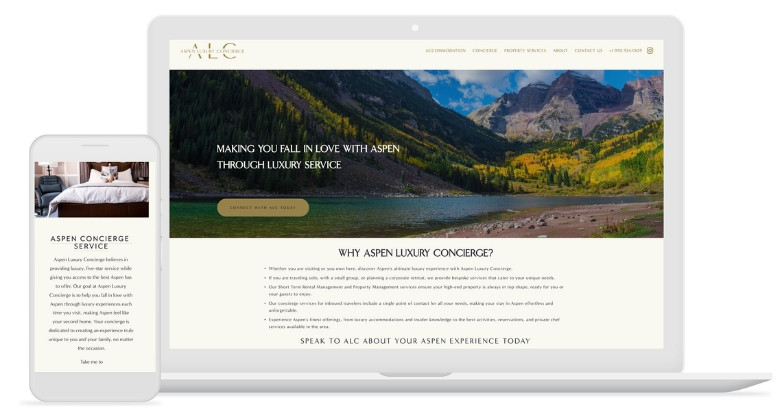
Improve Landing Pages and Creative Assets
Travelers should immediately understand what your hotel offers and how to book.
Hotel landing pages should feature clear room information, availability, relevant amenities, and prominent reservation options.
Pay particular attention to mobile usability and booking speed.
Creative assets should also communicate the property’s strengths. For example, a family resort might highlight connecting rooms and recreational facilities, while a business hotel emphasizes workspace amenities and convenient transportation.
Relevant imagery and messaging give travelers a clearer reason to choose your property.

Review Conversion Tracking and Booking Revenue
Accurate booking data is essential for automated bidding.
If conversions are duplicated, missing, or assigned incorrect values, Google may make bidding decisions using misleading information.
Regularly review conversion actions, revenue data, and the performance of individual hotels.
Use the Google Ads Hotels tab to examine property-level metrics, booking links, and eligibility issues.
Allow Campaigns Time to Gather Data
Google recommends waiting at least six weeks before assessing Hotel PMax performance.
During this period, monitor campaign delivery, spending, tracking errors, and hotel eligibility.
Avoid making frequent major changes without sufficient evidence.
After collecting meaningful data, identify which properties and booking offers are generating the strongest returns, then adjust your campaign accordingly.
How Much Does Performance Max for Travel Goals Cost?
There is no fixed budget or universal cost per booking for Performance Max for travel goals.
Advertising costs depend on hotel competition, seasonality, target markets, and campaign objectives.
Hotels should evaluate spending against booking revenue and acquisition costs.
Consider this hypothetical example:
| Metric | Example |
| Advertising spend | $1,200 |
| Completed bookings | 20 |
| Booking revenue | $8,400 |
| Cost per booking | $60 |
| ROAS | 7:1 |
The campaign generates $7 in attributed booking revenue for every $1 in advertising spend.
However, ROAS measures revenue, not profit. Hotels must also consider cancellations, room servicing costs, taxes, and other expenses when judging whether a campaign is profitable.

Google Hotel Ads vs. Performance Max: Which Is Better for Hotels?
Google Hotel Ads and Performance Max for travel goals serve related but different advertising purposes.
Google Hotel Ads are rate-based placements that reach travelers comparing hotel prices and booking options.
Hotel PMax offers broader advertising coverage across Google channels while also supporting eligible Hotel Ads placements.
Traditional Google Search campaigns provide greater control over individual keywords and campaign targeting.
| Campaign type | Best for | Main consideration |
| Hotel PMax | Advertising across Google’s channels | More automation, less channel control |
| Google Hotel Ads | Travelers comparing accommodation rates | Requires eligible pricing data |
| Google Search Ads | Specific hotel searches and booking offers | More direct keyword control |
Hotels prioritizing rate comparisons may benefit from dedicated Hotel Ads campaigns, while Hotel PMax can reach travelers across a wider range of advertising placements.
Search campaigns remain useful for brand-related searches and specific offers.
The right approach depends on booking goals, budget, available data, and existing advertising performance. These campaign types can complement one another when managed carefully.
For additional context, see our guides to Google Ads for hotels and hotel ad campaigns.
Frequently Asked Questions About Performance Max for Travel Goals
I. Is Performance Max for travel goals only for hotels?
Performance Max for travel goals is designed for hotel suppliers advertising accommodation properties. Other travel businesses, including online travel agencies, generally use standard Performance Max campaigns for online sales.
II. Do hotels need Google Hotel Center for Performance Max?
Google supports hotel property lists through certain Google Ads workflows, but direct pricing information is necessary for eligible Hotel Ads placements. Following the September 2026 change, affected advertisers need a direct price feed connected through Hotel Center or an integration partner.
III. Can small independent hotels use Hotel PMax?
Yes. Independent hotels can run Hotel PMax campaigns when they have suitable creative assets, reliable booking tracking, and a workable advertising budget. Their main consideration should be whether the campaign can generate bookings at a profitable acquisition cost.
IV. How long does Performance Max for travel goals take to work?
Google recommends allowing at least six weeks before assessing campaign performance. Results depend on booking demand, competition, available conversion data, and campaign configuration.
V. Can hotels run Google Hotel Ads and Performance Max together?
Yes. Hotels can use dedicated Hotel Ads campaigns alongside Performance Max, provided they review overlapping advertising activity, budgets, and performance. Google specifically discourages overlapping standard Performance Max and Hotel PMax campaigns targeting the same locations and languages.
VI. Can you exclude keywords from Performance Max for travel goals?
Google supports negative keywords and brand exclusions for applicable Performance Max inventory. However, these exclusions do not apply to Hotel Ads inventory within Hotel PMax campaigns.
See Google’s brand suitability documentation for details.
How Should Hotels Get Started With Performance Max for Travel Goals?
Performance Max for travel goals can help hotels reach potential guests across Google while focusing advertising efforts on direct bookings.
Start by reviewing your booking conversion tracking, confirming hotel pricing-feed eligibility, and setting realistic acquisition and revenue goals. Then choose an appropriate campaign structure, prepare property-specific assets, and monitor results after launch.
The goal isn’t simply more advertising traffic. It’s more profitable direct bookings.
Mediaboom’s hotel paid advertising services help hospitality businesses develop advertising strategies focused on qualified travelers and measurable booking results.
Contact Mediaboom to discuss how paid advertising can support your hotel’s booking and revenue goals.
By: Frank DePino
Frank DePino is the Principal and Founder of Mediaboom, a top hotel marketing agency partnering with leading hotel and hospitality brands. With 30+ years of experience, he has led strategic digital initiatives for names including Four Seasons, Ritz-Carlton, JW Marriott, Millennium Partners, and Guardian Jet. Frank helps hospitality businesses strengthen brand presence, drive qualified leads, and elevate guest experiences through website design, SEO, content marketing, and paid media. Under his leadership, Mediaboom is a trusted partner for brands pursuing measurable digital growth in a competitive hospitality landscape.