Top 13 Hotel Website Design Trends for 2026 – What Guests Expect

By: Frank DePino | March 14, 2026


Loading the Elevenlabs Text to Speech AudioNative Player...
In 2026, a hotel website is no longer a digital brochure—it’s your most powerful sales engine. With 72% of travelers booking online and 60% of all traffic flowing through mobile devices, your design is the thin line between a confirmed reservation and a lost lead.
When guided by a strategy-first marketing agency, your site does more than just show rooms; it builds trust. This guide breaks down the essential 2026 design trends and real-world examples you need to transform your digital presence into a direct-booking powerhouse.
Here’s what’s included:
- Minimalist & Clean Layouts
- Immersive Visual Storytelling
- Seamless Direct Booking Experiences
- Social Proof Integration
- Mobile-First & Responsive Design
- Personalization & AI-Powered UX
- Accessibility & Inclusive Design
- Performance & Speed Optimization
- UX & Conversion Best Practices
- Design Inspiration & Best-in-Class Examples
- Real-World Application Tips
- FAQs
- Conclusion
1. Minimalist & Clean Layouts
Less is more in modern hotel web design. Clean layouts with plenty of white space help guests focus on what really matters: your rooms, amenities, and booking options. Minimalist design uses clear CTAs, bold fonts, and well-planned visual hierarchy.
This kind of approach helps reduce mental effort and naturally guides visitors toward booking.
2. Immersive Visual Storytelling
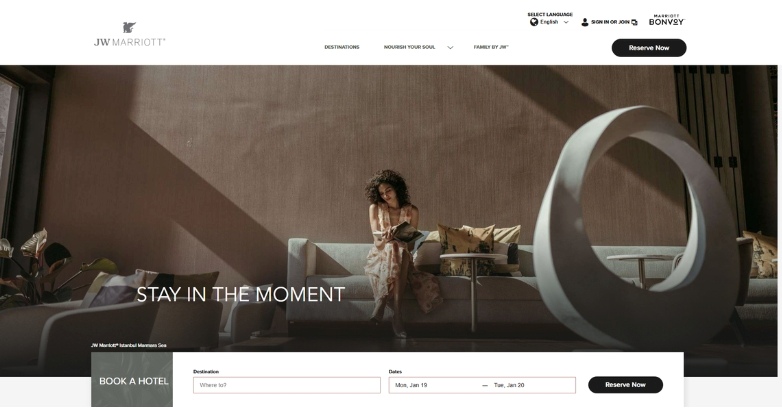
High-quality visuals are non-negotiable in 2026. Things like hero images, professional photography, and scroll-driven storytelling all help guests picture their stay before they even book.
The best hotel websites use large-format imagery that authentically showcases the property. And short video clips of rooms, amenities, and locations help create those emotional connections.
3. Seamless Direct Booking Experiences
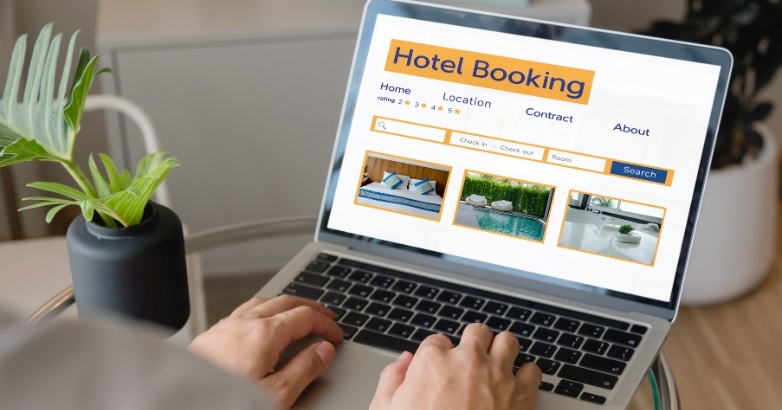
Your booking engine should feel like a natural part of your website, not some clunky third-party tool. Integrated booking experiences keep guests right on your site and help bump up direct reservation rates.
Top-performing hotels embed booking widgets directly into homepage designs. Guests can check availability, compare room types, and complete reservations without ever leaving your site. Try out some of these ideas to get more bookings if you struggle with getting reservations.
4. Social Proof Integration
Trust signals matter more than ever. Real guest reviews, TripAdvisor ratings, and trust badges all help reassure potential guests that your property actually delivers on its promises.
Smart hotels work with a hotel marketing agency to integrate social proof throughout their websites in ways that build credibility and increase conversions. Reviews should pop up on homepage sections, room pages, and near booking CTAs as well. This kind of strategic placement catches visitors at those key decision-making moments, which leads to more overall bookings.
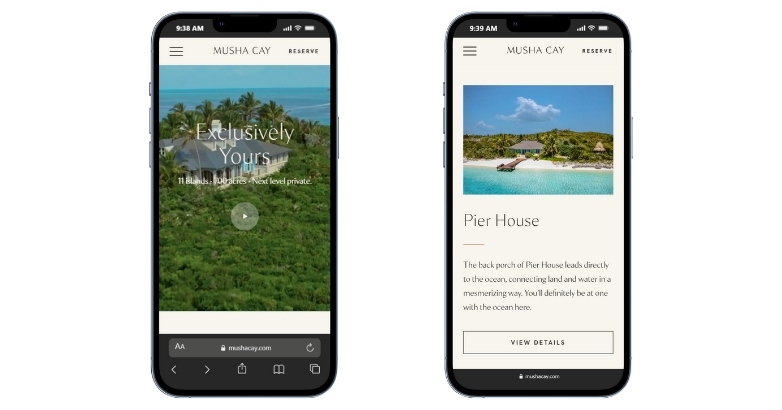
5. Mobile-First & Responsive Design
With over 60% of hotel traffic coming from mobile devices, mobile-first design isn’t optional anymore, and a hotel marketing agency can help ensure your responsive layout meets guest expectations. Your site has to work smoothly on smartphones and tablets.
Basically, a responsive hotel design means your website adapts to any screen size. Buttons stay easy to tap, text stays readable, and images load at the right size.
6. Personalization & AI-Powered UX
Personalized experiences often increase engagement and conversions. In practice, this means using data to fine-tune content based on visitor behavior, location, and preferences.
Smart personalization includes things like showing relevant room types based on search history, displaying location-specific offers, and remembering return-visitor preferences. All of this creates a more tailored experience for each guest.
7. Accessibility & Inclusive Design
When your site works for everyone, including those using assistive technologies, you’re able to reach a much larger audience.
ADA compliance is the common standard for making websites accessible to people with disabilities. This includes things like proper color contrast, keyboard navigation, screen reader compatibility, and clean content structure. Basic adherence here will go a long way.
8. Performance & Speed Optimization
Your page speed has a real impact on bounce rates and conversions. In general, fast-loading pages keep visitors engaged while slow pages just send them elsewhere.
We’ve learned that top-performing hotel websites load in under 3 seconds on mobile. And it usually comes down to some basics like compressing images, using lazy loading, keeping code lightweight, and running on solid hosting. Check out this Google tool to discover your website’s current speed.
Elevate Your Hospitality Brand Today
Schedule Your Free Consultation
Seeking to elevate your business? Let Mediaboom guide you. Secure your exclusive, free consultation with our digital marketing experts today.
9. UX & Conversion Best Practices
Great design looks nice, but it still needs to actually convert. With that in mind, here are a few hotel UX trends and ideas that help turn visitors into bookings.
Booking Button Best Practices
Your main booking button should be easy to spot right away. Use a high-contrast color that stands out from the rest of your site, and place it above the fold so guests don’t have to hunt for it. Then repeat it across key pages so it’s always within reach.
The wording matters too. Something like “Check Availability” is usually stronger than something vague like “Learn More,” because it tells guests exactly what happens next.
Site Navigation That Converts
Remember, fewer clicks equal more bookings. In practical terms, that means guests should be able to reach rooms, amenities, and booking pages within just 1 or 2 clicks from anywhere on your site.
A big help here is using a clear menu structure to reduce confusion for web visitors. Also, use descriptive labels like “Rooms & Suites” instead of generic terms like “Accommodations” so it’s instantly clear to them what they’re looking at.
And try to keep your navigation menu visible at all times. Sticky navigation fixes your menu to the top of the screen as guests scroll, so they can book whenever they’re ready without having to hunt for the button.
Heatmaps & Behavioral Testing
Websites like Hotjar and Crazy Egg have tools that show you how visitors are actually using your site. One useful feature inside these tools is heatmaps, which highlight what people click on, scroll past, and ignore.
Once you have that data, it’s way easier to tighten up your layout, improve CTAs, and remove friction points. And with a bit of A/B testing, you can use this data to compare versions side by side and see what converts better.
10. Design Inspiration & Best-in-Class Examples
Marina Inn at Grande Dunes
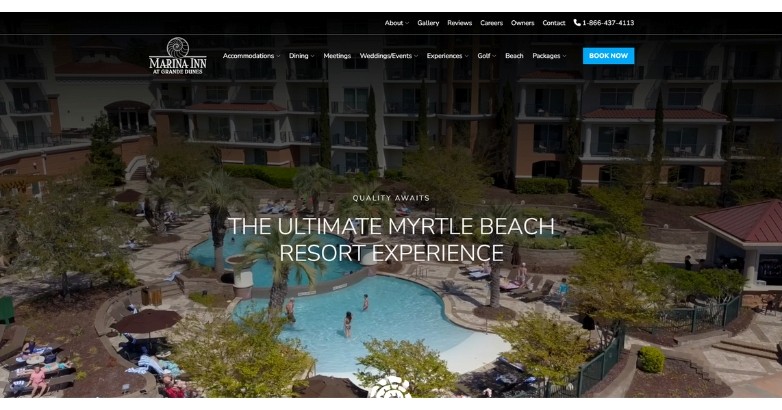
Marina Inn at Grande Dunes leads with a large hero video and a clear direct booking CTA above the fold. The site also does a really nice job highlighting key resort amenities with visual sections for things like golf, dining, and the spa. Plus, since the booking button stays visible as you scroll (top right), guests can reserve anytime without having to search for it.
WHAT OUR CLIENTS SAY
The Hoxton
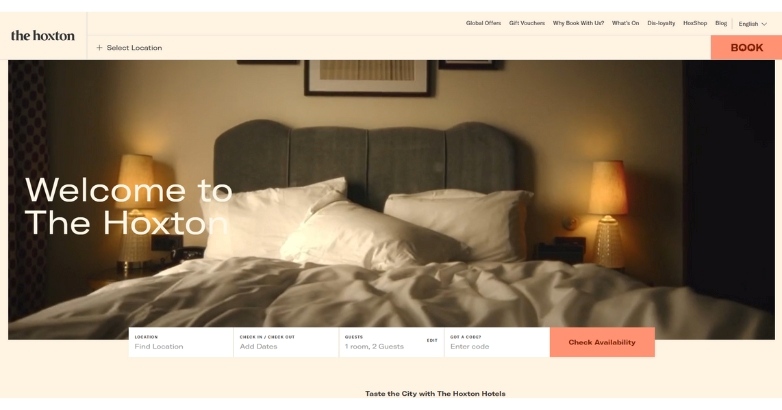
The Hoxton goes for a bold, editorial style with full-screen imagery and location-based storytelling. It ends up feeling way more like a lifestyle brand than a traditional hotel chain.
The site is organized by city, which makes it easy to explore specific locations without having to dig around. And their casual, conversational copy fits the brand really well, too, especially for creative, design-minded travelers.
The Ned London
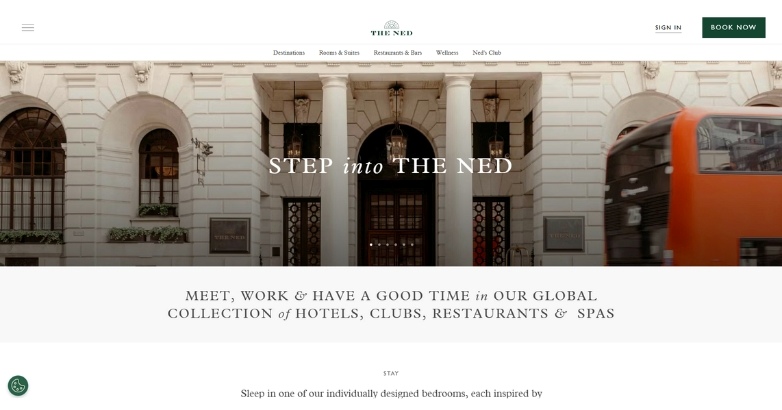
The Ned London keeps things elegant and minimalist, which really fits the property’s luxury positioning. The site highlights the members’ club side of the brand, while still making it easy for regular hotel guests to browse and book.
Clean typography and a restrained color palette set the tone, and the navigation clearly separates hotel stays, dining, and membership info so visitors don’t get lost.
Elivi Hotels
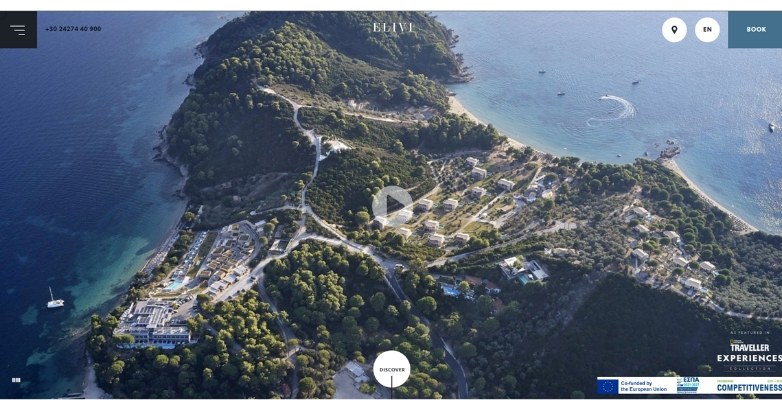
Elivi Hotels leans heavily into visual storytelling, using resort imagery that quickly sells the Mediterranean luxury vibe. Even with all that visual content, the site still loads fast, which keeps the whole experience smooth.
Booking is simple too. With just a few clicks, guests can see clear date options and room selections without any confusion.
Download Our FREE Guide
Outrank OTAs & Drive Direct Bookings With Our Hospitality Digital Marketing Guide
Learn how leading hotels increase website traffic, reduce OTA commissions, and convert more guests with targeted digital marketing strategies.
Casa Cook
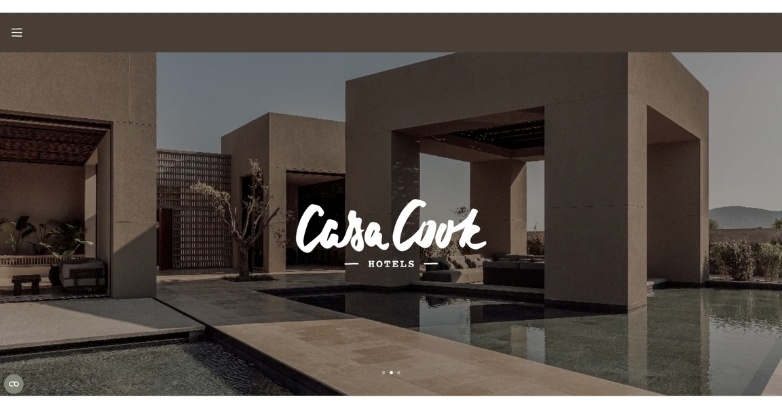
Casa Cook uses a magazine-style layout with editorial photography and lifestyle-focused content. The design really leans into the adults-only, boutique feel of their properties across Greece, Egypt, and Italy.
Beyond that, the site is also fun to browse. Smooth scrolling and subtle interactive elements keep things engaging without distracting from the main message.
Beaverbrook
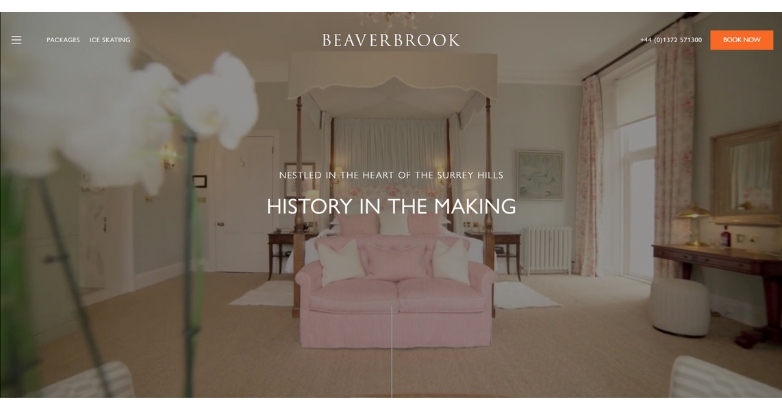
Beaverbrook organizes its site around what guests care about most. Spa, dining, and accommodations each have their own clear section, so visitors can find what they want without having to dig. The design also fits the property’s English country estate feel, with elegant typography and refined imagery throughout.
11. Real-World Application Tips
If you’re planning a redesign, focus on a few core areas first. Most results come from getting the basics right:
- Redesign Checklist: Start with the basics that impact conversions the most. That usually means a mobile-first layout, a booking bar on the homepage, clear CTAs on key pages, and images that load fast while still looking high-end.
- Platforms & Tools: WordPress + Elementor is a solid choice if you want flexibility and quick update potential, while Webflow is great for clean, modern design control. Either way, try to make sure your booking engine feels like part of the site, not a separate tool.
- Testing & Optimization: Google Analytics shows you what’s happening, Hotjar helps you see how people are actually moving through your pages, and A/B testing lets you compare what works best. In most cases, small tests and steady improvements beat big redesign guesses.
- SEO & Content Best Practices: Design helps people trust you, but SEO helps them find you in the first place. So it’s worth building in a few basics like schema markup, descriptive alt text, and clean H1/H2/H3 headers that make pages easier to scan and understand.
Once your updates are live, track a few core KPIs, so you know what’s actually improving.
Start with bounce rate, time on page, and booking conversion rate, especially on mobile. Then monitor your direct bookings vs. OTA percentage over time, since that’s where the revenue impact shows up. Finally, use your KPI data to spot trends over a few weeks and make small, focused updates so you can see what truly drives conversions.
FAQs
I. Why is hotel website design so important in 2026?
Your hotel website is now your top sales tool. With 72% of travelers booking online and over 60% of traffic coming from mobile, poor design means lost revenue. A great website builds trust, improves conversions, and reduces dependency on OTAs.
II. What role does mobile-first design play in guest experience?
Since most travel traffic comes from smartphones, your site must load fast, look great, and function flawlessly on mobile. Responsive layouts and tap-friendly buttons are now essential for keeping guests engaged and converting on-the-go.
III. Why is social proof so effective for hotel websites?
Real reviews, TripAdvisor ratings, and trust badges build instant credibility. Strategic placement near booking CTAs reassures potential guests during critical decision-making moments.
IV. How can AI and personalization improve hotel website UX?
AI-driven personalization tailors content based on visitor behavior, location, or past stays. This means relevant offers, dynamic recommendations, and smoother experiences, which all contribute to better engagement and conversion.
Do You Have More Questions?
If you didn’t find the answers you were looking for, Mediaboom is here to help. Our team of hotel marketing experts can build a tailored strategy to boost your visibility, increase direct bookings, and reduce OTA costs. Contact us today to explore how digital marketing can grow your hotel’s revenue in 2026 and beyond.
Elevate Your Hospitality Brand Today
Schedule Your Free Consultation
Seeking to elevate your business? Let Mediaboom guide you. Secure your exclusive, free consultation with our digital marketing experts today.
Conclusion
Hotel website design trends in 2026 come down to three things: mobile-first design, strong visuals, and a smooth path to booking. When your site builds trust and removes friction, more visitors turn into direct reservations.
Interested in a great hotel website design that drives more direct bookings? Reach out today to schedule a consultation.
By: Frank DePino
Frank DePino is the Principal and Founder of Mediaboom, a top hotel marketing agency partnering with leading hotel and hospitality brands. With 30+ years of experience, he has led strategic digital initiatives for names including Four Seasons, Ritz-Carlton, JW Marriott, Millennium Partners, and Guardian Jet. Frank helps hospitality businesses strengthen brand presence, drive qualified leads, and elevate guest experiences through website design, SEO, content marketing, and paid media. Under his leadership, Mediaboom is a trusted partner for brands pursuing measurable digital growth in a competitive hospitality landscape.