Top 10 Hospitality Marketing Trends in 2026

By: Frank DePino | January 15, 2026


Staying ahead of evolving hospitality marketing trends is crucial, and partnering with a hotel marketing agency can help brands implement these strategies effectively. The hospitality market grew to $4.9 trillion in past years, underscoring the industry’s resilience and adaptability.
Hospitality marketing trends are evolving strategies and techniques that help hospitality brands connect with guests, build trust, and drive business growth. Staying aware of these trends ensures brands can adapt to changing customer expectations, leverage innovative tools, and maintain a competitive edge in the market
Are your current marketing efforts falling short of connecting with potential guests? This guide explores the most impactful industry trends of 2026, helping you refine your approach and achieve meaningful results.
Here are the 10 hospitality marketing trends you should be following in 2026.
- AI-powered personalization becomes table stakes
- The drive for direct bookings intensifies
- Short-form video dominates discovery
- Social commerce collapses the booking funnel
- Reputation management turns into a revenue lever
- Sustainability storytelling shifts from “nice” to “needed”
- Bleisure bundles blur work and play
- Influencer & guest-generated content builds trust
- First-party data and privacy-centric targeting take over
- Immersive VR & AR previews win pre-stay decisions
Let’s dive in!
Download Our FREE E-Book
Outrank OTAs & Drive Direct Bookings With our SEO Blueprint
Learn the secrets to driving more traffic to your hotel website, generating more leads, and ultimately increasing sales.
1. AI-powered personalization becomes table stakes
Hospitality and marketing go hand in hand, however the AI era has made traditional marketing ineffective.
Forget broad segments—2026’s guest now expects a stay that feels like it was built for one. Behind that expectation sits a surge in hotel-side adoption of artificial intelligence.
A recent benchmark survey shows that 69.1 % of marketers already have AI working inside their campaigns—upgrading everything from pricing engines to in-stay messaging.
- Predictive pricing & inventory – Machine-learning revenue tools read market demand hour-by-hour and adjust nightly rates before human analysts would even spot a trend.
- Dynamic emails & app pushes – CRM platforms tap guest history and intent signals to send perfectly-timed upgrades or late-checkout offers, lifting ancillary spend.
- Gen-AI chatbots – Multilingual assistants handle booking questions, itinerary tweaks, and local tips 24/7, freeing staff for higher-value touches.
For brands, the message is clear: personalised tech is no longer a nice-to-have differentiator—it’s the new baseline required to stay in the consideration set.
2. The drive for direct bookings intensifies
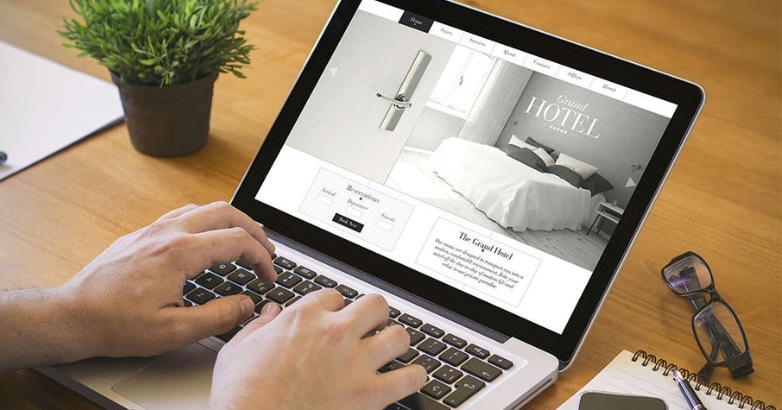
With online travel agencies now charging 15 – 30 % commission, hotels that partner with a hotel marketing agency to steer traffic to their own domains keep more of each reservation—up to 9–20 % higher profit per booking. Expect an industry-wide push on three fronts in 2026:
- Search & metasearch supremacy
- Revamped website schema, lightning mobile loads, and location-based content drive higher organic rank.
- Aggressive bidding on Google Hotel Ads, Trivago, and TripAdvisor funnels clickers straight into the brand engine, not the OTA page.
- On-site conversion boosters
- Members-only rates, room-type exclusives, and add-ons (think free parking or spa credits) give guests an instant reason to lock in direct.
- One-tap payment wallets and local-currency pricing shrink checkout friction.
- Always-on guest acquisition loops
- Loyalty sign-ups at Wi-Fi login capture first-party data, fuelling retargeting that sidesteps the cookie crackdown.
- Post-stay email series highlight best-rate guarantees and book-again codes, turning OTA customers into lifelong direct bookers.
As the cost gap between OTA and direct widens, every percentage point shift toward “book-on-brand” drops straight to the bottom line—making direct strategy the revenue battleground of 2026.
3. Short-form video dominates discovery
Short-form videos are one of the marketing trends in hospitality industry that can’t be emphasized enough.
Vertical clips are no longer a “nice extra”—they’re the first touchpoint for many would-be guests. Recent data shows:
- 39 % of video marketers say sub-60-second clips deliver their best ROI.
- More than 50 % of brands already publish short-form videos.
- On Instagram, reels reach on average 30.8 % of an account’s audience—twice that of photos or carousels.
- Videos under 90 seconds keep half of viewers watching to the end, a retention rate static images can’t match.
For hotels, working with a hotel marketing agency can make this translate into punchy room walk‑throughs, lobby ‘first‑look’ clips, and chef‑cam tastings that load fast, autoplay with captions, and end with a single swipe‑up to ‘Book direct.
Work with creators who can shoot vertical footage in under an hour on-site; fresh reels every week will keep you in algorithmic favor.
Elevate Your Hospitality Brand Today
Schedule Your Free Consultation
Seeking to elevate your business? Let Mediaboom guide you. Secure your exclusive, free consultation with our digital marketing experts today.
4. Social commerce collapses the booking funnel
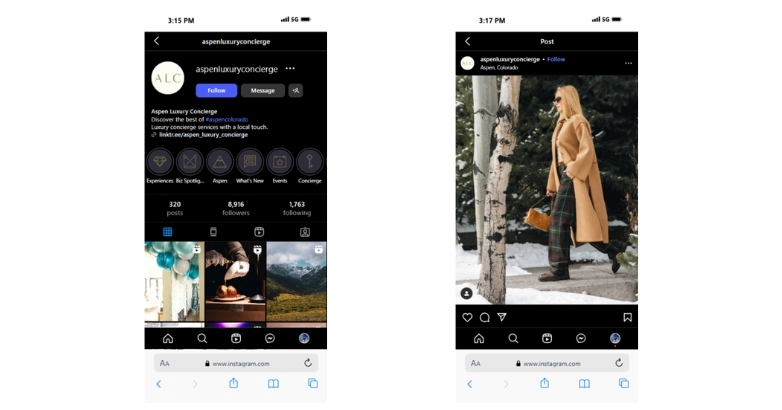
The gap between That looks amazing and Reservation confirmed is shrinking to a tap:
- Social media continues to cement itself as a crucial ingredient for many travelers, with 75% using social platforms as a source of inspiration for travel.
- Marriott’s pilot of Instagram’s native checkout lifted direct bookings 15 %, while a Hilton short-video push delivered a 13 % bump across Instagram and TikTok
- Meta is piloting in-app travel ecommerce by combining dynamic Travel Ads inventory with native Book Now, Reserve, and Get Ticket buttons.
What to do next:
- Add shoppable tags to every suite showcase, spa teaser, or mixology reel. Drop guests straight onto a pre-filled booking page.
- Train front-desk teams to monitor DMs—many viewers still ask quick questions before tapping the button. A rapid, authentic reply can save the sale.
- Reward in-feed bookings with extras (late checkout, welcome cocktail); early adopters need a visible win to shift behaviour.
The upshot: social feeds are evolving from glossy brochures into point-of-sale storefronts. Hotels that treat every post as both story and checkout line will keep the commission—and the guest relationship—inside their own walls.
5. Reputation management turns into a revenue lever
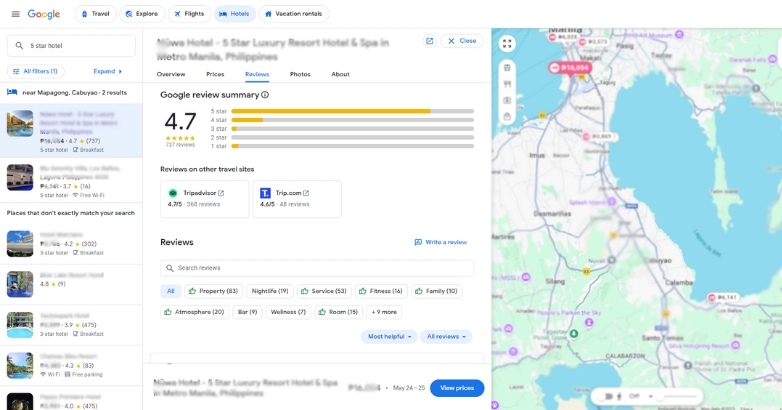
Online word‑of‑mouth now sways the bottom line more than almost any ad campaign, which is why a hotel marketing agency often prioritizes reputation management to increase conversions.
- 90 % of consumers say they trust online reviews when choosing where to spend their money.
- Properties with strong recent scores see 15-20 % higher booking-engine conversion on Booking.
- An internal hotel study found that 96 % of guests are more likely to book when they see custom, heartfelt replies rather than boiler-plate responses.
What this means for hotels in 2026:
- Tone over templates. Guests can spot copy-and-paste responses instantly; personal acknowledgements tied to specific feedback convert browsers into bookers.
- Cross-posting triumphs. Sharing positive Google or TripAdvisor reviews in social Stories and email nurtures keeps the booking funnel warm at zero media cost.
As the time goes, users are more informed and more suspicious, therefore it’s no wonder custom and heartfelt replies are increasing in value.
6. Sustainability storytelling shifts from “nice” to “needed”
Eco-cred is no longer a fringe request—it’s baked into buying behaviour:
- 83 % of global travellers now say that sustainable travel matters to them, according to Booking.com’s 2024 survey of 31,000 respondents.
- Seeing a certified “More Sustainable” label makes 45 % of travellers more inclined to book a property.
- A separate 2024 poll shows 88 % of guests factor a hotel’s green practices into their booking decision.
Winning moves in 2026:
- Quantify, don’t claim. Publish annual CO₂-per-stay numbers, water-use cuts, and waste-diversion rates on the booking page.
- Zero-waste breakfasts and local sourcing. Menus that list farm distance or up-cycled ingredients give guests a story to share.
- In-stay proof points. QR codes on bedside cards can link to live dashboards tracking the hotel’s energy draw in real time.
- Reward the behaviour you want. Offer bike-rental credits or refillable-bottle discounts to guests who waive daily linen changes.
Clear data turns climate concern into confident clicks—and lets hotels that walk the talk protect both planet and price.
Download Our FREE E-Book
Outrank OTAs & Drive Direct Bookings With our SEO Blueprint
Learn the secrets to driving more traffic to your hotel website, generating more leads, and ultimately increasing sales.
7. Bleisure bundles blur work and play
Monday’s board call and Friday’s zip-line tour now fit in the same trip. The numbers explain why hotels are rewriting packages: the bleisure market sat at US $594 billion in 2023 and is forecast to top US $3.5 trillion by 2033. On top of that, 83 % of business travellers added leisure days to at least one work trip last year.
Hotels that win this hybrid guest are:
- Bundling workday basics – ergonomic chairs, extra-fast Wi-Fi, and free meeting-room hours rolled into the mid-week rate.
- Adding “play credits.” Think sunset kayak tours, barista classes, or museum passes redeemable after 5 p.m.
- Flexing the clock. Adjust check-in and check-out times according to needs of those on bleisure trips so they don’t miss their work or vacation.
- Targeting corporate IDs. Email promos that surface only to domain-verified company addresses swing share from nearby apartments or home-shares.
A small adjustment can make your hotel a perfect choice for guests looking for a hybrid vacation. Changes in preferences and lifestyle are the reason to stay up to date with the hospitality marketing news to understand your target audience.
8. Influencer & guest-generated content builds trust
Polished studio shots still look nice—but what seals the booking is proof from real people. The trend is backed by hard data:
- The creator economy is set to double to US $480 billion by 2027, up from US $250 billion in 2023.
- 92 % of consumers trust posts from other people over brand ads.
- 32-39% millennials won’t book a stay if the brand doesn’t show guest-made content.
Smart moves for 2026:
- Work with micro-creators, not mega-stars. Local storytellers with 10–50 k followers often deliver higher comment rates and cost a fraction of a celebrity fee.
- Surface social proof at checkout. A rotating gallery of recent tagged posts next to the credit-card form can nudge hesitant shoppers to finish the reservation.
- Answer in public. When guests tag the property with questions, reply on-feed; visible interaction signals openness and reassures future bookers.
Elevate Your Hospitality Brand Today
Schedule Your Free Consultation
Seeking to elevate your business? Let Mediaboom guide you. Secure your exclusive, free consultation with our digital marketing experts today.
9. First-party data and privacy-centric targeting take over
Google’s long-promised “cookie crumble” never happened: Last year, the company scrapped plans to remove third-party cookies from Chrome, saying users can simply pick their own settings. That U-turn keeps the signal alive for now, but it doesn’t change two hard facts for hotels:
- Roughly 15 % of global browsing already sits in browsers that block third-party cookies by default (Safari and Firefox).
- Regulators on both sides of the Atlantic continue to tighten rules on cross-site tracking, and Apple’s Intelligent Tracking Prevention shows the direction of travel.
10. Immersive VR & AR previews win pre-stay decisions

Scrolling past flat images is easy; “walking” the room in 360° is not. AR technology for travel is forecast to grow 40.9 % a year through 2030, and hotels are already putting it to work:
- Marriott’s Caribbean & Mexico resorts app lets prospects experience the amenities and surroundings before making a booking.
- AR-powered navigation can assist on-property guests to gyms or conference halls just by aiming their phone at signage.
VR is showing the money too: over 70 % of global hotel chains now run virtual tours, and the best examples lift booking-page conversion by as much as 85 %..
What guests get
- Clarity—no more guessing.
- Confidence—the ability to measure desk space or crib fit lowers friction.
What hotels get
- Higher web-to-booking ratios (browsers spend longer and bounce less).
- Bigger basket size—AR menus and upgrade previews spark impulse buys.
The implication for marketers is straightforward: embed an AR or VR walk-through next to the “Reserve” button, tag it for instant payment, and watch inspiration flip into revenue in a single session.
Download Our FREE E-Book
Outrank OTAs & Drive Direct Bookings With our SEO Blueprint
Learn the secrets to driving more traffic to your hotel website, generating more leads, and ultimately increasing sales.
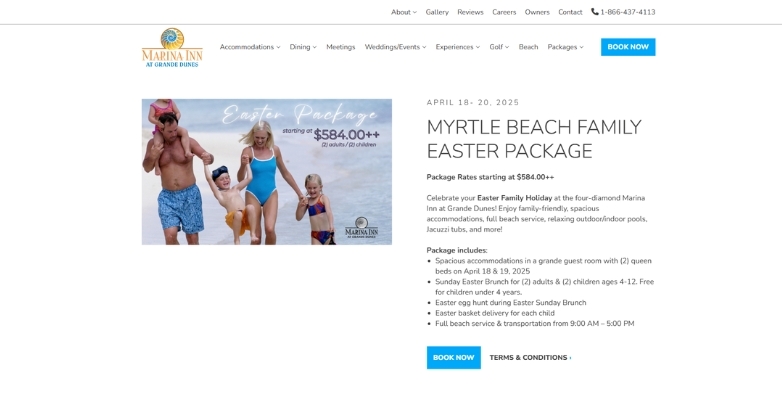
Marina Inn at Grande Dunes
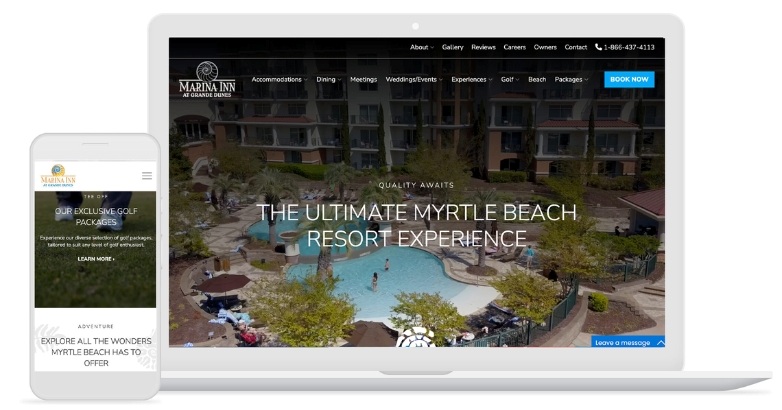
Marina Inn sought to modernize its online presence to better capture the attention of potential guests and reflect its unique charm. Mediaboom conducted an in-depth analysis of the property’s digital footprint and identified areas for improvement, including outdated design, limited functionality, and insufficient SEO performance.
The result was a fully revamped website that transformed the Marina Inn’s digital presence:
- Visually stunning design: Highlighted the property’s picturesque location, comfortable amenities, and guest-centric services.
- User-friendly experience: Incorporated intuitive navigation for seamless browsing across the website.
- Engaging content: Crafted compelling messaging to capture potential guests’ attention and encourage bookings.
- Mobile-optimized design: Ensured smooth functionality and accessibility on all devices.
- Targeted SEO strategies: Improved site visibility by optimizing for relevant search queries, driving more organic traffic.
This holistic approach led to a 35% increase in online bookings and higher user engagement. The new site not only reflected the Marina Inn’s values but also became a cornerstone for building trust with guests and driving long-term success in the competitive hospitality market.
Aspen Luxury Concierge
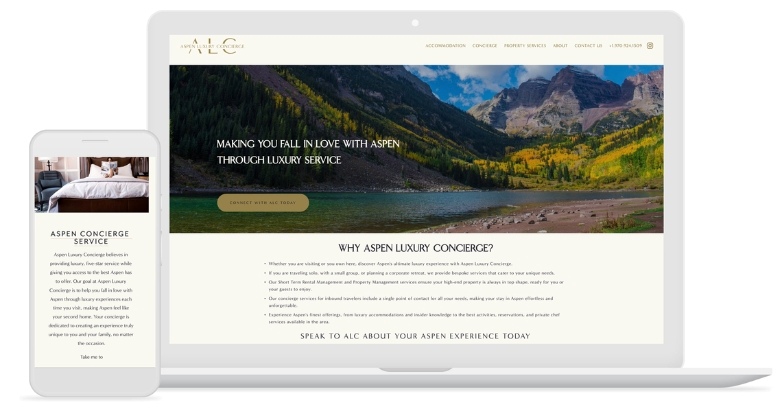
Aspen Luxury Concierge (ALC) sought a digital platform that reflected the sophistication and exclusivity of its luxury concierge services in the hospitality industry. Mediaboom conducted a detailed evaluation of ALC’s online presence, identifying opportunities to enhance brand storytelling, improve engagement, and increase visibility among discerning travelers.
The result was a custom-designed website that elevated ALC’s digital presence through:
- Sophisticated design: Developed a visually elegant platform showcasing ALC’s personalized hospitality and travel services.
- Compelling storytelling: Highlighted exclusive experiences through rich visuals and persuasive narratives tailored to ALC’s elite clientele.
- User-friendly navigation: Created an intuitive interface that made it seamless for users to explore services and submit inquiries.
- SEO optimization: Leveraged targeted SEO strategies to improve rankings for high-end hospitality and concierge-related searches.
- Lead generation focus: Integrated effective calls-to-action and inquiry forms to convert website visitors into loyal clients.
The new website positioned ALC as a leader in luxury hospitality services, driving a significant increase in inquiries and strengthening its reputation as the go-to concierge for bespoke travel experiences.
Musha Cay
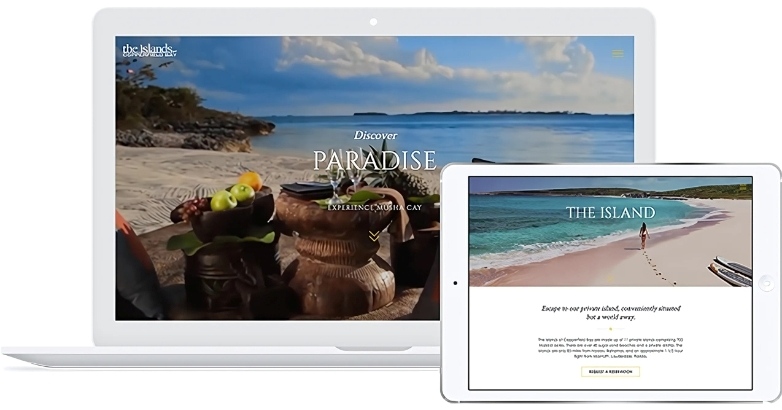
Musha Cay, an ultra-exclusive private island retreat, required a website as extraordinary as the experiences it offers. Mediaboom embarked on a mission to create a digital presence that showcased the island’s unparalleled luxury while engaging its elite clientele.
The result was a captivating website that brought Musha Cay’s unique offerings to life through:
- Immersive visuals: Featured breathtaking imagery and videos that captured the island’s beauty, exclusivity, and opulence.
- Engaging storytelling: Crafted compelling narratives highlighting the personalized services and unforgettable experiences available to guests.
- Seamless navigation: Developed an intuitive and elegant interface, ensuring an effortless user journey across the site.
- SEO-driven strategy: Optimized the site to rank prominently in searches related to private island escapes, targeting affluent travelers.
- Lead generation tools: Integrated user-friendly inquiry forms to convert interest into bookings.
This transformative approach enhanced Musha Cay’s global visibility, increased guest inquiries, and solidified its position as one of the world’s most coveted private island destinations. The website now serves as a digital gateway to luxury, offering prospective guests an unforgettable preview of paradise.
FAQs
A key trend in hospitality is the use of artificial intelligence (AI) for personalized guest experiences. From chatbots to tailored recommendations, AI enables real-time engagement, enhancing customer satisfaction while streamlining operations. Brands adopting this technology are seeing higher customer loyalty and better reviews, making it a must for staying competitive.
The four P’s—Product, Price, Place, and Promotion—form the foundation of hospitality marketing. Product refers to guest experiences and services. Price involves strategic pricing models, including dynamic pricing. Place emphasizes distribution channels like booking platforms. Promotion covers advertising and campaigns to attract and retain guests, ensuring a seamless and compelling guest journey.
– AI-guided personalisation. Hotels now run machine-learning engines that set prices, room settings and upgrade offers in real time, replacing broad segments with one-to-one decision-making.
– Mobile and contact-free guest journeys. Digital keys, self-check-in kiosks and wallet payments shrink queues and cut labour pinch-points.
– Regenerative sustainability. The conversation has moved from “green extras” to net-positive goals such as carbon-negative builds and zero-waste dining.
– Short-form video and social commerce. TikTok walk-throughs, Reels and in-feed “Book Now” buttons push inspiration straight into paid reservations.
– Well-being travel. Demand for sleep tech rooms, spa-plus-fitness packages and mindful menus keeps rising, driven by health-first Gen Z and millennial guests.
– People-centred staffing. Flexible shifts, wellness perks and AI hiring tools tackle retention and close the skills gap.
– Immersive tech. AR way-finding and VR room tours hold browsers longer and lift web-to-booking conversion.
1. AI personalisation engines deliver chatbots, dynamic pricing, and smart room presets tailored to each guest.
2. IoT smart rooms use sensors to adjust lighting, curtains, and climate while flagging issues before they affect the stay.
3. Contact-free, mobile services—phone keys, tap-to-pay dining, and kiosk checkout—remove front-desk queues.
4. VR and AR previews provide 360-degree tours and on-site navigation, letting guests virtually walk spaces or locate amenities with their phone camera.
5. Service robots handle luggage delivery, room-service runs, and hallway cleaning tasks.
6. Blockchain and biometric security enable fraud-resistant payments, decentralised loyalty points, and face-scan room access.
7. Voice-controlled guest interfaces bring in-room assistants that take requests and adjust settings hands-free.
8. 5G connectivity offers property-wide high-bandwidth links for cloud gaming, hybrid meetings, and real-time IoT data.
9. Smart energy management platforms reduce power and water consumption while meeting stricter eco targets.
10. Big-data and predictive analytics merge PMS, POS, and web behaviour to forecast demand and tailor offers in real time.
Do you have more Questions?
Still have questions about boosting your hospitality brand? Contact Mediaboom today for expert guidance and tailored marketing strategies to elevate your business!
Elevate Your Hospitality Brand Today
Schedule Your Free Consultation
Seeking to elevate your business? Let Mediaboom guide you. Secure your exclusive, free consultation with our digital marketing experts today.
Boost Your Hospitality Marketing Results in 2026
Undoubtedly, embracing these hospitality marketing trends in 2026 (and the future hospitality trends that are to come) can give your brand a competitive edge and increase profitability. Strategic marketing helps you connect with guests, enhance brand visibility, and showcase your unique selling points effectively.
If your marketing efforts aren’t delivering the results you need, Mediaboom is here to help. Our team of experts specializes in implementing cutting-edge strategies tailored to the hospitality industry. Elevate your marketing game with our proven expertise.
Contact us today for a free, 30-minute online consultation and take the first step toward achieving impactful results!
By: Frank DePino
Frank DePino is the Principal and Founder of Mediaboom, a top hotel marketing agency partnering with leading hotel and hospitality brands. With 30+ years of experience, he has led strategic digital initiatives for names including Four Seasons, Ritz-Carlton, JW Marriott, Millennium Partners, and Guardian Jet. Frank helps hospitality businesses strengthen brand presence, drive qualified leads, and elevate guest experiences through website design, SEO, content marketing, and paid media. Under his leadership, Mediaboom is a trusted partner for brands pursuing measurable digital growth in a competitive hospitality landscape.
READY TO IGNITE YOUR MARKETING STRATEGY?


